As an Amazon Associate, we earn from qualifying purchases. Some links on this site are affiliate links at no extra cost to you. Our recommendations are based on thorough research and editorial judgment.


What Is Coaxial Audio Cable?

Coaxial audio cables are essential for transmitting digital audio signals with clarity and minimal interference. They feature a single conductor, 75-ohm impedance, and various construction materials. Key components include solid copper conductors, dielectric insulation, and robust shielding to reduce noise. These cables are commonly used in home theater systems, connecting devices like Blu-ray players to amplifiers. By understanding their structure and benefits, you can enhance your audio experience. There’s much more to discover about the advantages and applications of these cables.
Key Takeaways
- Coaxial audio cables transmit digital audio signals, enhancing sound clarity in home theater systems.
- They feature a single conductor with a standard impedance of 75 ohms, minimizing electromagnetic interference.
- These cables typically consist of solid copper or copper-plated materials, foam or solid polyethylene dielectrics, and various shielding options.
- Common applications include connecting CD and Blu-ray players to amplifiers and supporting 5.1 surround sound systems.
- Proper impedance matching and shielding are crucial for optimal audio quality and minimal signal loss.
Definition of Coaxial Audio Cable
When you think about audio connections, coaxial audio cables stand out as an essential component in digital sound systems. These cables transmit digital audio signals, allowing for clearer sound than traditional analog cables. They’re designed with a single conductor and conform to a standard impedance of 75 ohms, ensuring effective signal transmission.
Key features include:
- Minimization of electromagnetic interference, enhancing audio quality.
- Optimization for high-frequency electrical signals to reduce loss.
- Connection compatibility with devices like music streamers and digital-to-analog converters (DACs).
Unlike analog cables, coaxial options carry discrete digital data, making them ideal for high-fidelity audio needs. So, for anyone looking to enhance their audio experience, understanding coaxial audio cables is essential to get the most out of their audio systems. Additionally, using coaxial cables can significantly improve audio quality, similar to how short throw projectors enhance viewing experiences in limited spaces.
Structure and Components
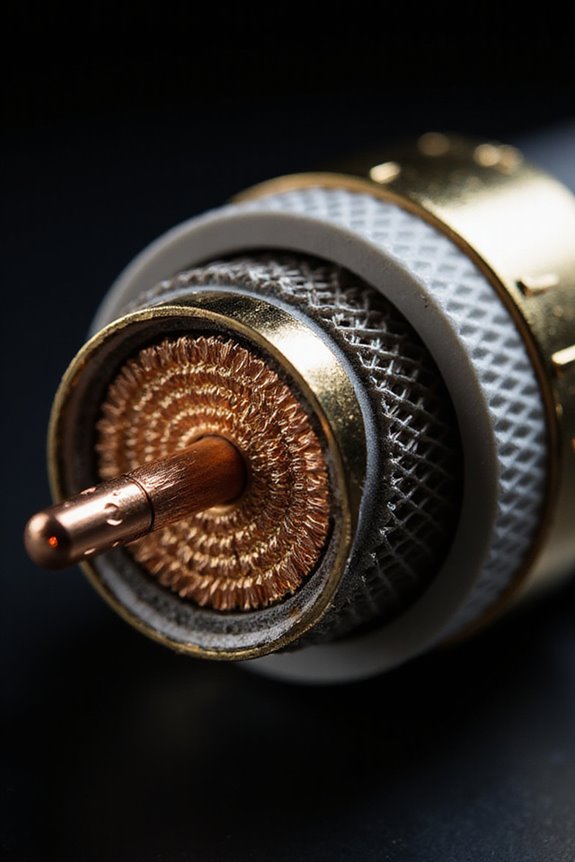
Understanding the structure and components of coaxial audio cables is essential if you want to maximize their performance in your audio system. These cables have several key elements:
- Conductor Materials: Typically made from solid copper, copper-plated steel, or sometimes silver-plated copper for better high-frequency response. The choice of conductor affects signal quality and cable attenuation.
- Dielectric Types: Surrounding the inner conductor, materials like solid polyethylene or foam polyethylene provide insulation and spacing. Specialized low-loss cables might use air dielectric configurations to reduce signal loss.
- Shielding: Composed of braided copper or foil, shielding protects against electromagnetic interference, which preserves signal clarity.
- Outer Jacket: This outer layer shields against environmental wear, made from materials such as PVC or flame-retardant compounds for safety across various installations. Additionally, using high-quality home theater systems can enhance audio performance, ensuring that coaxial cables deliver the best sound experience.
Electrical and Physical Characteristics

Coaxial audio cables possess distinct electrical and physical characteristics that directly influence their performance in audio systems. One essential aspect is electrical resistance, measured in ohms per meter. Higher resistance leads to greater signal loss along the cable length, greatly affected by the inner conductor’s material and diameter.
Additionally, capacitance, measured in picofarads per foot, impacts signal integrity and cable impedance. It varies based on the dielectric material used, with lower capacitance allowing for higher signal frequencies. Furthermore, surround sound systems often utilize coaxial cables for reliable audio transmission, enhancing overall sound quality in home theater setups.
Standard Impedance Values
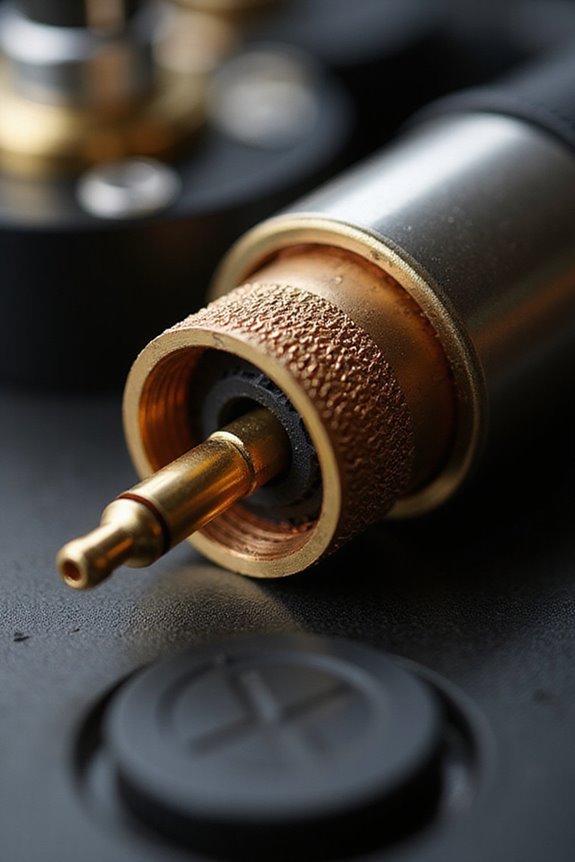
While various standard impedance values exist for coaxial cables, choosing the right one can greatly impact your audio or video system’s performance. Understanding these values is essential for achieving best impedance matching, which enhances cable performance.
- 50 ohms: Best for RF applications, balancing signal loss and power handling.
- 75 ohms: Ideal for video and audio, minimizes attenuation.
- 30 ohms: High power handling but leads to more signal loss, less common.
- 77 ohms: Offers minimal signal loss in ideal scenarios, yet infrequently used.
- 60 ohms: Supports high voltage but compromises power handling.
Additionally, proper cable management systems in your setup can also reduce visual clutter and improve overall performance.
Common Applications

When you’re setting up audio or video systems, knowing the common applications of coaxial audio cables can make a significant difference in performance. These cables are essential in home audio systems, connecting CD players, Blu-ray players, and amplifiers while ensuring high-quality, uncompressed PCM audio with the S/PDIF format.
In addition to home theaters, coaxial audio applications extend to television and video transmission, providing stable signals for HDTV broadcasts. Their shielding capabilities enhance both audio and video integrity, preventing interference. The coaxial audio benefits also include compatibility with networking technologies, facilitating high-speed internet connections. Furthermore, coaxial cables can support 5.1 surround sound systems, enriching your overall audio experience. All these uses demonstrate how versatile and reliable coaxial cables are in both consumer and professional settings.
Comparison to Other Digital Audio Connections
In audio and video setups, choosing the right digital audio connection matters, especially as we compare coaxial audio cables to other options like optical and HDMI. Coaxial cables support higher bandwidth than optical, allowing audio transmission up to 24-bit/192kHz, which can enhance sound quality for serious listeners.
Here’s how they stack up:
- Coaxial: Effective for PCM stereo and compressed formats, but lacks support for advanced surround formats like Dolby Atmos.
- Optical: Immune to electrical interference, supporting up to 96kHz, but also limited in advanced formats.
- HDMI: Best choice for high-definition audio and video, covering the widest range of formats.
Choosing the right connection type depends on your specific needs and setup. Let’s explore together!
Types of Coaxial Cables
Understanding the different types of coaxial cables can help you choose the best option for your specific audio or video needs. Here’s a breakdown of some coaxial cable types to evaluate for effective signal transmission:
- RG Coaxial Cables: These include RG-6 (widely used for cable TV) and RG-59 (flexible for CCTV).
- LMR® Cables: Known for low-loss performance, ideal for wireless communication.
- Specialty Cables: Includes Twinaxial (for high-speed data) and Triaxial (for reduced interference).
- Flexible Options: Mini coax cables, like 1.13mm, are perfect for compact applications.
Choosing the right size and impedance—50 Ohm for data, 75 Ohm for video—ensures optimal performance tailored to your specific needs.
Advantages of Coaxial Audio Cables
Coaxial audio cables offer several advantages that make them a popular choice for both casual listeners and audio professionals. Here’s why they stand out:
- Low Signal Loss: They maintain signal integrity over longer distances, ensuring consistent audio quality without degradation.
- Strong EMI/RFI Shielding: The outer conductor reduces interference, providing clearer sound even in electrically noisy environments.
- Durability: Coaxial cables are built to withstand wear and tear, making them reliable for various setups, whether at home or in professional spaces.
- Cost Efficiency: With lower production costs and stable market prices, coaxial cables provide great value for high-quality audio.
These coaxial benefits contribute to a reliable audio experience, making them a solid choice for anyone looking to enhance their sound system.
Selection Considerations for Coaxial Cables
When selecting coaxial cables, it’s vital to understand various factors to secure ideal audio performance. Here’s what you should consider:
- Cable Type and Size: Opt for specialized coaxial audio cables. Larger diameters reduce signal loss but sacrifice flexibility. Think RG-6 or RG-59 for common needs.
- Impedance Match: Choose between 50 Ω for radio systems or 75 Ω for home audio setups. Matching impedance avoids signal reflection.
- Shielding Importance: Don’t underestimate shielding layers. More layers, like quad-shield, defend against electromagnetic interference (EMI) and enhance audio clarity.
- Connector Compatibility: Verify your connectors match cable types—F-type for TV or RCA for audio—to maintain signal fidelity.
Frequently Asked Questions
Can Coaxial Cables Be Used for Internet Connectivity?
Absolutely, coaxial cables can be used for internet connectivity! We’ve found that coaxial internet is reliable and works with many setups. Just make sure you’re aware of cable compatibility for best performance. We’re all in this together!
How Do I Identify a Coaxial Cable’s Impedance?
To identify a coaxial cable’s impedance, we should perform impedance testing using tools like a VNA or LCR meter, while keeping an eye out for any cable markings that might indicate its specifications.
Are There Specific Brands Known for High-Quality Coaxial Cables?
When we chose AudioQuest for our home theater setup, we noticed the cable durability and impressive sound quality immediately. They’re a standout brand for high-quality coaxial cables, especially for those who value audio connectors and performance.
What Is the Maximum Distance for Coaxial Audio Transmission?
The maximum distance for coaxial audio transmission typically ranges from 10 meters for digital signals to 300 feet for analog. We should prioritize quality to guarantee our audio experiences remain crisp and vibrant.
Can I Use Coaxial Cables for Video Transmission?
Absolutely, we can use coaxial cables for video transmission! They’re great for maintaining signal quality, though we should be mindful of coaxial limitations—opt for the right type to avoid any unwelcome surprises in our viewing experience.