As an Amazon Associate, we earn from qualifying purchases. Some links on this site are affiliate links at no extra cost to you. Our recommendations are based on thorough research and editorial judgment.

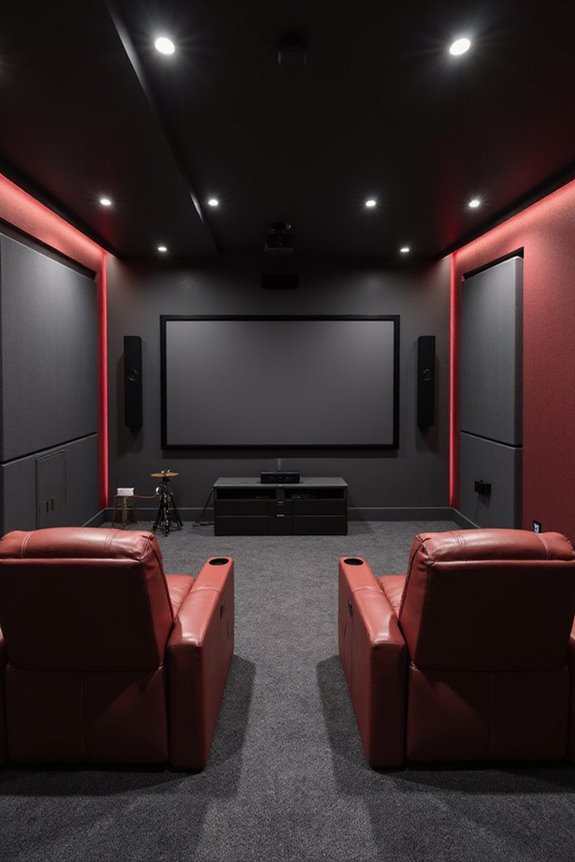
Best Wall Colors For Home Theater

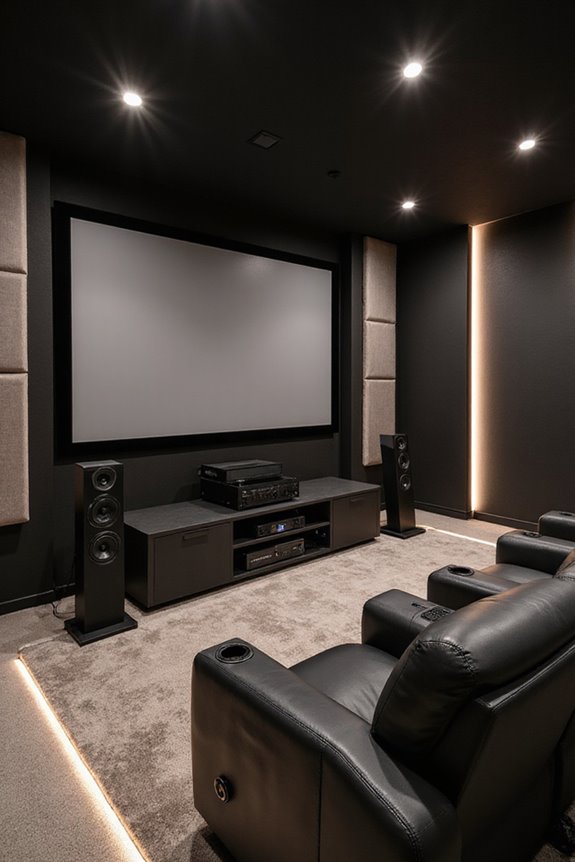
When choosing wall colors for your home theater, consider dark colors that absorb light and improve image clarity. Ideal choices are deep black, dark gray, navy blue, and burgundy. These hues create an immersive environment and enhance visual depth. Matte finishes are preferable, as they reduce glare and improve acoustics. Additionally, neutral or earthy tones can offer a cozy atmosphere, striking a balance between comfort and functionality. Continue exploring for detailed insights on creating the perfect viewing experience.
Key Takeaways
- Deep black creates maximum contrast and vibrancy, enhancing the viewing experience in a home theater.
- Dark gray or charcoal walls absorb light, softening the look while improving image clarity.
- Navy blue fosters an immersive atmosphere, minimizing glare and deepening color perception.
- Forest green adds warmth and intimacy, complementing traditional décor without compromising image quality.
- Matte finishes are essential; they reduce reflections and enhance color accuracy, creating a cinema-like environment.
Importance of Color in Home Theater Design
When designing your home theater, the importance of color can’t be overlooked. The right color selection techniques can transform your space, enhancing both aesthetics and functionality. Colors evoke emotional responses. For instance, blue hues promote focus and serenity, making them ideal for minimizing distractions. In contrast, warm colors, like reds and yellows, can spark energy, but use them sparingly to avoid overwhelming the senses.
Here are a few points to reflect on:
- Neutral and muted tones create a balanced environment for relaxation.
- Dark, non-reflective finishes reduce glare, improving image clarity.
- Testing paint in actual lighting guarantees the desired emotional impact and visual perception. Additionally, high-quality installation products can further enhance your home theater experience by ensuring optimal audio performance.
Keep these factors in mind for a home theater that invites comfort and engagement.
Ideal Dark Colors for Optimal Viewing
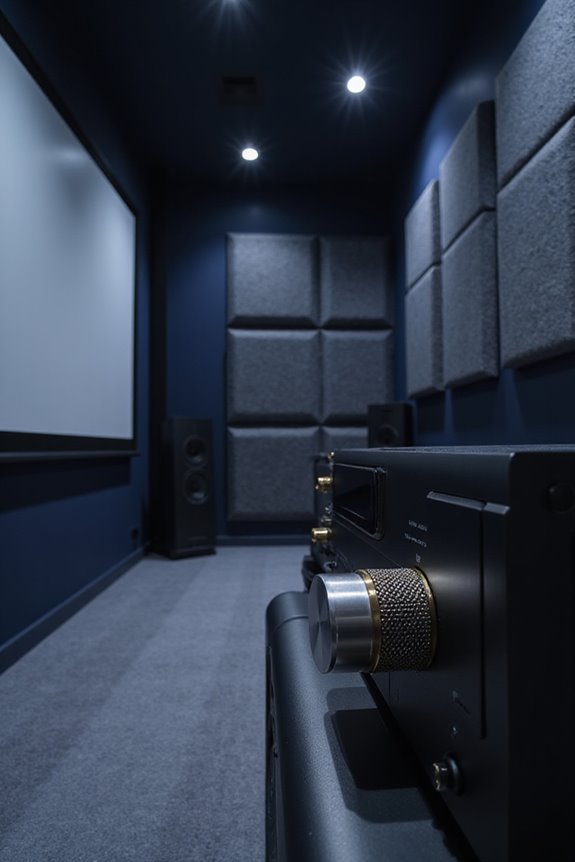
Which dark colors are best for promoting ideal viewing in your home theater? Our color selection plays an essential role in ambience creation. Here are top choices:
- Deep Black: Absorbs ambient light, enhancing contrast and vibrancy. However, it may show dust easily.
- Dark Gray/Charcoal: Softens the look while still absorbing light effectively, perfect for mixed-use areas.
- Navy Blue: Creates an immersive feeling, reducing glare and boosting color depth.
- Forest Green: Offers intimacy and warmth, complementing traditional décor while maintaining great performance.
- Burgundy/Maroon: Adds a luxurious touch without sacrificing light absorption, often enhancing sound quality.
Choosing the right color is vital for an enjoyable viewing experience—consider your space’s lighting and usage! Additionally, selecting the right surround sound system can further elevate your home theater experience.
The Role of Matte Finishes
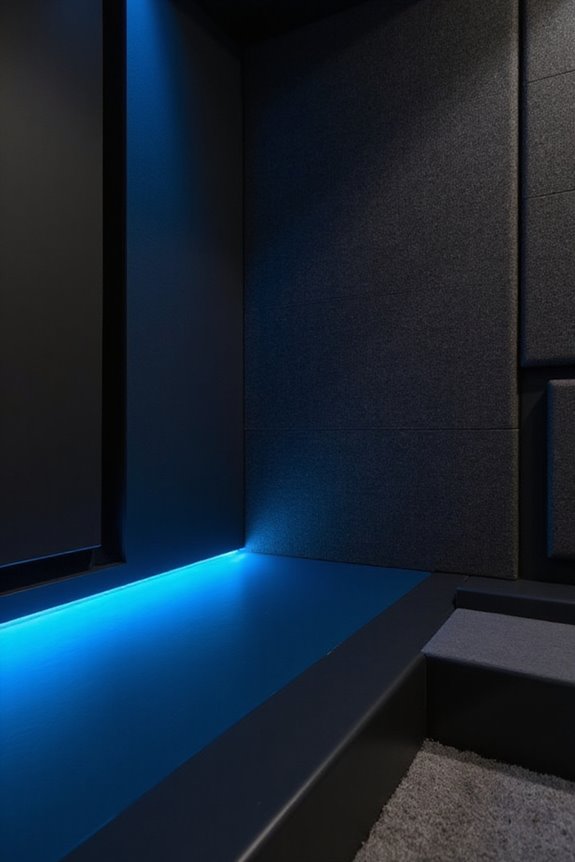
Here’s what matte finishes do for you:
- Light Absorption: They absorb light rather than reflecting it, maintaining true color perception and enhancing contrast levels.
- Color Accuracy: Matte surfaces help projected colors appear sharp and vibrant, essential for high-resolution content.
- Acoustic Benefits: Matte finishes can improve room acoustics by reducing sound reflections, enhancing audio clarity. Additionally, using high-density materials can further bolster sound absorption in your home theater.
Incorporating matte finishes guarantees a cinema-like atmosphere while allowing for creative wall treatments. They complement darker hues, keeping your focus where it belongs—on the screen.
Versatile Neutral Tones for Multifunctional Spaces
Choosing versatile neutral tones can greatly enhance the functionality of your home theater while also accommodating other activities throughout the day. Neutral shades like gray, navy blue, and warm browns not only minimize ambient light interference but also provide a sleek ambiance, perfect for various uses. Additionally, incorporating short throw projectors can maximize your viewing experience in small spaces without compromising on image quality.
Key Color Combinations:
- Gray Tones: Reduce light reflection, improve screen contrast, and pair well with any decor style.
- Navy Blue: Offers a rich, inviting atmosphere while controlling glare, ideal for a cozy viewing experience.
- Warm Browns: Create a rustic vibe, promoting comfort in multifunctional spaces.
Earthy Colors for a Cozy Atmosphere
When we think about creating a cozy atmosphere in our home theater, earthy colors play an essential role. Earthy tones like warm browns and deep greens evoke comfort and relaxation. Here are some effective choices:
- Earthy Browns: These shades produce a warm ambiance, enhancing brightness without overwhelming contrast. Matte finishes help reduce glare for immersive viewing.
- Deep Earthy Greens: Dark emeralds create a grounding environment, balancing richness with organic significance. They pair beautifully with natural textures to deepen coziness.
- Warm Reds and Copper Accents: Deep reds offer luxurious warmth, drawing the eye inward. Copper elements enhance sophistication without distracting from the screen.
- Muted Grays: Warm grays with earthy undertones provide versatility, supporting a tranquil environment while reducing light reflection.
Additionally, incorporating advanced audio formats like Dolby Atmos in your home theater setup can elevate your movie-watching experience even further. These earthy shades will help transform your space into a welcoming retreat.
Colors to Avoid for Enhanced Cinematic Experience
Creating a welcoming home theater goes beyond selecting cozy earthy tones; it also involves understanding what colors to avoid for an ideal cinematic experience. To optimize your viewing, steer clear of:
- Glossy and Reflective Finishes: These increase glare and can wash out your projected image. Instead, opt for matte or flat finishes that absorb light.
- Light and Bright Colors: Shades like white, cream, or pastel tones reflect excessive light, diminishing image contrast and adding eye strain.
- Intense Color Intensity: Bright reds or greens can disrupt color balance and create distractions, detracting from immersion.
- Uncoordinated Colors: Guarantee wall textures and tones complement each other. Mismatched or clashing colors can draw focus away, interrupting the viewing experience.
Effects of Color Psychology on Viewer Experience
Understanding the effects of color psychology can greatly enhance your home theater experience, as different colors can evoke various emotional responses. For example, red might ramp up feelings of agitation, perfect for horror genres, while blue can create a calming atmosphere—ideal for sci-fi settings.
- Color Associations:
- Red – Agitation and arousal
- Blue – Calmness and tranquility
- Green – Natural and soothing
- Yellow – Warm and relaxed
Accent Walls to Enhance Aesthetics
Accent walls serve as a key design element in your home theater, elevating both aesthetics and functionality. Choosing the right accent wall materials can transform your space dramatically. Textured options like wood slats add warmth, while brick or stone veneers provide rugged authenticity.
For effective accent wall placement, consider the wall behind your screen to focus attention and minimize glare. Side walls can enhance balance and avoid distractions. By painting the rear wall darker, we create an inviting environment for movie nights.
Integrating lighting, like LED strips, accentuates the materials and adds to the overall ambiance. When done thoughtfully, these choices enrich the sensory experience in your theater, making it a welcoming hub for entertainment.
Combining Dark Colors With Lighter Accents
While creating the perfect atmosphere for your home theater, combining dark colors with lighter accents can yield a stunning balance. Utilizing dark accent techniques, like matte black or dark gray walls, enhances image contrast and immersion. To avoid a claustrophobic feel, we can introduce light color contrasts. Choosing lighter shades for ceilings or trims softens the intensity without sacrificing the moody ambiance we desire.
Here are some practical tips:
- Paint your ceiling in a medium gray for balance.
- Use lighter acoustic panels to break up dark walls.
- Incorporate mid-tone gradients between dark surfaces and light accents.
This approach guarantees a sophisticated space, enhancing our movie-watching experience while promoting comfort and visual ease.
Textures and Patterns in Home Theater Design
Incorporating textures and patterns into your home theater can substantially enhance both the aesthetics and acoustics of the space. Textured patterns play an essential role in acoustic integration, helping to balance sound and create an immersive experience. Consider these options:
- 3D geometric panels: Scatter sound waves effectively while adding visual depth.
- Acoustic panels with fabric coverings: Absorb sound and reduce echoes, improving audio clarity.
- Wood slats: Serve dual purposes by diffusing sound and adding a natural element.
Combine absorptive and diffusive materials strategically, targeting first reflection points for maximum sound performance. Opt for subtle patterns or murals to create visual interest without causing disruptive reflections. Ultimately, the right textures and patterns transform your home theater into a welcoming auditory and visual haven.
Testing Paint Options Under Real Lighting Conditions
Choosing the right paint for your home theater can make a significant difference in both aesthetics and functionality. To accurately test your paint options, we need to contemplate real lighting conditions. Here’s how:
- Lighting Matters: Paint colors can shift under different lights. Test samples in both natural sunlight and your home theater’s artificial light.
- Application Technique: Apply at least two coats on a sizable area (1 ft x 1 ft) to reflect true color and durability.
- Finish Choices: Matte finishes help reduce glare, while deeper tones absorb light, impacting color perception.
- Alternative Methods: Use large white poster boards to visualize colors before making permanent choices.
Regular testing not only prevents color fading but also guarantees harmony between your walls and the overall decor.
Balancing Comfort and Functionality
Finding the right balance between comfort and functionality in your home theater is essential for an enjoyable viewing experience. To achieve this, consider dark hues like charcoal gray or navy blue for their ability to minimize light reflection and enhance image clarity. These colors also foster an intimate atmosphere, encouraging long viewing sessions.
Combine these color choices with soft materials, such as plush seating, to improve acoustics and comfort. Utilize color contrast effectively by pairing dark walls with lighter trim; this approach promotes design harmony while ensuring the room doesn’t feel too enclosed. Ultimately, fostering a cozy ambiance while maintaining audio-visual quality will create an inviting space that’s perfect for you and your guests.
Creating a Luxurious Feel With Color
When it comes to crafting a luxurious feel in your home theater, selecting the right colors is essential. The psychology of color can transform your space greatly. Here are some options that create an upscale ambiance:
- Deep Burgundy: Evokes vintage theater luxury, providing warmth for immersive experiences.
- Rich Navy Blue: Combines sophistication with relaxation, enhancing visual comfort.
- Charcoal Grays: Offer modern appeal with excellent light absorption.
- Earthy Tones: Dark browns and greens add richness and warmth for cozy settings.
Incorporating luxury finishes like textured wall coverings or matte paint helps avoid glare. Consider velvet treatments for tactile luxury, which enrich your space while enhancing sound quality. Together, these choices enrich your viewing experience, making you feel truly at home.
Maximizing Contrast With Wall Colors
Maximizing contrast in your home theater isn’t just about the projector or screen; it heavily depends on the colors used on your walls. Dark colors like deep gray, navy blue, and burgundy absorb ambient light, reducing reflections that can wash out your images. This creates an enhanced color depth and ultimately improves your viewing experience.
Using matte finishes further minimizes glare while stabilizing room brightness. You might also consider neutral tones for surrounding walls, which can maintain balance and prevent unwanted color shifts. If you have varying light conditions, managing with blackout curtains will allow darker shades to shine.
Customizing Your Home Theater Experience With Color
Customizing your home theater experience with color requires thoughtful consideration of how different hues influence the atmosphere and viewer comfort. We can harness color theories to elicit emotional responses, enhancing our movie-watching experience.
- Cool Hues: Blues and greens promote relaxation, making them ideal for long viewing sessions.
- Warm Tones: Reds and oranges energize the space but should be used sparingly to avoid distraction.
- Neutrals: Soft tones offer balance, allowing diverse decor styles to shine.
Darker shades, like navy and charcoal, absorb light and create an immersive setting. Remember, using matte finishes reduces glare, helping you stay focused on the screen. Let’s transform our space together, crafting a home theater that feels just right for every film night!
Frequently Asked Questions
Can I Mix Different Paint Finishes in One Room?
Yes, we can absolutely mix different paint finishes in one room! It creates lovely texture impacts, enhancing the space’s visual interest. Let’s explore those paint finish combinations for a unique and inviting atmosphere together!
How Do Colors Affect the Acoustics of a Home Theater?
Colors greatly impact a home theater’s acoustics by enhancing sound absorption and shaping our emotional response. Darker hues create a cozy atmosphere, fostering connection while minimizing distractions—let’s create a space that truly resonates with us.
What Are the Best Lighting Options to Complement Wall Colors?
To complement our wall colors, we should focus on ambient lighting that sets the mood and accent lighting that enhances our favorite features. Together, let’s create a cozy atmosphere that’s perfect for our movie nights.
Can I Use Wallpaper Instead of Paint for My Home Theater?
Absolutely, we can use wallpaper instead of paint for our home theater! Wallpaper patterns and textures can really enhance the atmosphere, creating a cozy, immersive space that invites everyone to enjoy movie nights together.
How Often Should I Repaint My Home Theater for Optimal Experience?
We should consider revitalizing our home theater every 5 to 7 years, keeping an eye on color trends. This helps us create an inviting atmosphere while maintaining that cozy, immersive experience we all cherish together.