As an Amazon Associate, we earn from qualifying purchases. Some links on this site are affiliate links at no extra cost to you. Our recommendations are based on thorough research and editorial judgment.

Do I Need Room Correction Microphone?

Yes, a room correction microphone is essential for enhancing your audio experience. It captures how sound interacts with your specific space, allowing for accurate adjustments. This results in clearer audio and better balance. With a calibrated microphone, you can effectively identify problematic frequencies and improve your system’s performance. It’s an important tool in achieving peak sound quality. If you’re curious about how to implement this or the best options available, there’s more to explore.
Key Takeaways
- A room correction microphone is essential for accurate measurement of audio interactions in your space, ensuring effective calibration.
- Calibrated microphones provide precise data, preventing flawed corrections that can occur with uncalibrated options.
- Utilizing a correction microphone maximizes the benefits of room correction software, leading to clearer sound and balanced frequency response.
- For optimal results, ensure proper placement of the microphone during measurements to avoid variability in calibration.
- Investing in a room correction microphone enhances the overall audio experience, especially in complex or untreated environments.
Understanding Room Correction and Its Benefits
In the world of audio, your room’s acoustics play a significant role in sound quality. It’s fascinating to realize how our environments shape the sounds we hear. Surfaces in your room create reflections, giving it a unique acoustic signature that affects bass, clarity, and stereo imaging.
Consider these benefits of understanding room correction:
- Reduces echoes and reverberations that muddle sound clarity.
- Balances bass response, preventing it from sounding boomy or weak.
- Enhances detail in music and dialogue, revealing subtleties typically lost in untreated spaces.
- Guarantees ideal audio experiences, regardless of room shape or size.
- Regular calibration checks using sound level meters can significantly improve your home theater experience.
How Room Correction Works
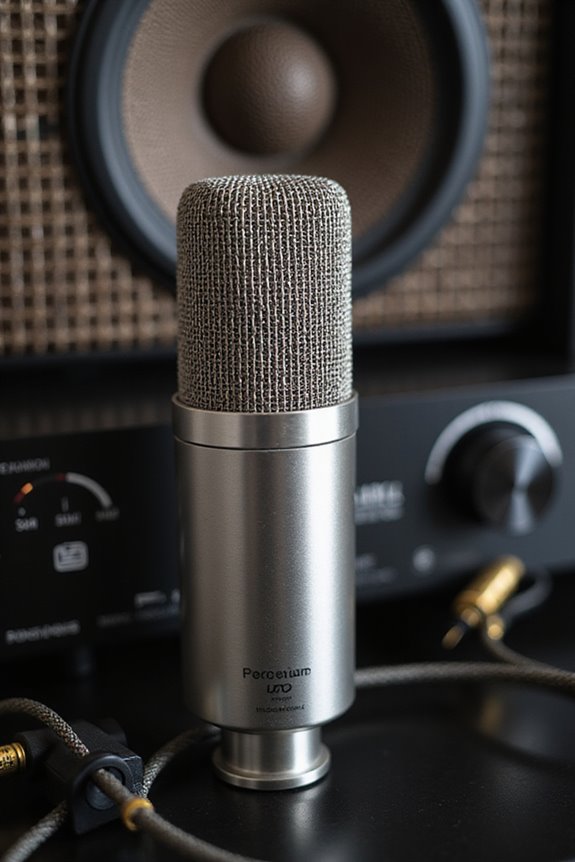
When we start on the journey of room correction, understanding how it works is crucial. Room measurement involves using precision microphones to capture how audio test tones interact with your space, revealing frequency response, reflections, and resonances unique to your environment.
- Sound Analysis: Software processes this data, mapping deviations that affect sound clarity and balance, like peaks and dips.
- Filter Creation: Custom EQ filters boost or attenuate specific frequencies, while phase correction guarantees sound waves arrive coherently at different listening positions.
- Digital Signal Processing (DSP): These filters are applied in real-time during playback, allowing you to enjoy altered audio without changing your room’s layout.
Together, these elements create a tailored acoustic profile, enhancing your listening experience effortlessly. Additionally, surround sound systems often utilize such technologies to optimize audio performance in various room sizes.
Types of Room Correction Solutions
Choosing the right room correction solution can greatly enhance your listening experience, as various options cater to different needs and budgets. Here’s a quick solutions comparison of popular types:
- Dirac Live: Tailored for both stereo and multichannel setups, this offers impulse response correction and optional bass management, requiring a compatible microphone.
- Trinnov Audio NOVA: A high-end option with rapid room measurement and customizable profiles, ideal for dedicated home theaters.
- IK Multimedia ARC: Affordable software focusing on small rooms, using user-provided or supplied microphones for extensive coverage.
- Audyssey MultEQ: Often bundled with AV receivers, this consumer-level tool simplifies room tuning with auto-calibration. Additionally, effective audio performance is essential for a satisfying experience in any setup.
Limitations of Room Correction
Room correction technologies can offer impressive solutions for improving audio quality, but they also come with limitations that users should be aware of.
- Acoustic Challenges: Large rooms often introduce complex issues, making accurate calibration difficult. Microphone placement can create significant measurement variability.
- Digital Correction Limitations: Many devices mask frequency response without addressing underlying problems. True solutions often involve physical treatments like bass traps.
- Measurement Accuracy: Using uncalibrated microphones leads to flawed corrections. Investing in calibrated mics guarantees reliable measurement and better results.
- Spatial Variability: Corrections may only suit one listening position, neglecting the wide differences in sound at various spots.
- Low-Frequency Issues: Acoustic problems in bass can be particularly tricky, often requiring physical control before digital adjustments are effective.
- Calibration Technologies: Advanced receivers utilize automatic calibration technologies to help optimize sound performance, but they still face the inherent challenges of room acoustics.
Who Benefits Most From a Room Correction Microphone?

Who benefits most from a room correction microphone, you might ask? We can confidently say that audio professionals, home theater enthusiasts, and content creators all gain considerably.
- Audio Professionals: They rely on measurement accuracy for mixing and mastering, ensuring their work translates well across different listening environments.
- Home Theater Enthusiasts: Achieving immersive sound requires careful audio calibration to counteract reflective surfaces in their spaces.
- Content Creators: For them, tackling frequency dips and peaks is essential. Room correction microphones help refine their monitoring accuracy without extensive acoustic treatments. Additionally, the use of dedicated subwoofers can further enhance the audio experience in a calibrated environment.
In every case, these microphones enhance clarity, balance, and consistency, elevating audio experiences. Whether you’re tweaking a studio setup or refining a home theater, investing in a correction microphone can yield substantial rewards.
When to Consider Investing in a Calibration Microphone
Are you uncertain about when to invest in a calibration microphone? If you’re aiming for ideal sound in challenging acoustics, this investment rationale becomes clearer. Here are a few scenarios to contemplate:
- Large Windows and Hard Surfaces: These often cause echo, distorting your audio experience.
- Tight Spaces: Small rooms might produce uneven bass, making calibration vital for balanced sound.
- Multi-Listener Environments: If you’re entertaining, consistent audio across multiple seats enhances enjoyment.
- Professional Use: For studios, accurate monitoring is essential to avoid mixing errors.
A calibration microphone provides precise measurements, targeting specific room distortions to improve audio fidelity. Investing in one can notably enhance your listening experience, aligning it more closely with artists’ intentions.
Practical Implementation Tips for Room Correction
To effectively implement room correction, it is essential to approach the process with careful planning and precision. Start by using a calibrated USB microphone, guaranteeing proper microphone positioning at your main listening spot. Hold the microphone steady, making small movements, and keep it consistent in orientation for reliable measurements.
Utilize room correction software like REW or Dirac Live, adjusting sample rates and playback volume to optimize results. It’s beneficial to take multiple measurements at different heights and angles, enhancing measurement consistency.
Lastly, remember to update your correction settings regularly, especially after moving furniture or altering the room in any significant way. This guarantees your audio setup continues to provide that immersive experience you love.
The Importance of Speaker Placement
When we think about enhancing our audio experience, speaker placement plays a crucial role in achieving sound quality that truly improves our enjoyment. Proper speaker alignment is essential for creating a realistic 3D soundstage, where each audio element feels distinct.
To help you achieve this:
- Avoid corners and back walls to manage reflections, which can blur sound clarity.
- Position tweeters at ear level for better high-frequency detail.
- Arrange speakers in an equilateral triangle with your listening position for ideal stereo imaging.
Correct placement not only boosts clarity and immersion but also allows the emotional depth of your audio to shine through. This foundational step is key before considering any room correction methods.
Complementing Room Correction With Acoustic Treatments
While it’s tempting to rely solely on digital room correction for improving sound quality, integrating acoustic treatments offers a foundational enhancement that technology alone can’t achieve. Here’s why combining both is essential:
- Acoustic treatments reduce echoes, reverberation, and standing waves, directly addressing issues digital correction can’t fix.
- These treatments target problematic frequencies, especially in the bass range, to create a more controlled sonic environment.
- By applying treatments first, we set the stage for digital correction to fine-tune sound without extreme EQ adjustments.
- This integration leads to better bass tightness, clarity, and overall imaging compared to using either approach alone.
Frequently Asked Questions
Can I Use a Regular Microphone for Room Correction?
We can’t rely on regular microphones for room correction due to their limitations. Instead, let’s explore alternative calibration methods, ensuring our room measurements are accurate and truly enhance our listening experience together.
How Much Does a Good Room Correction Microphone Cost?
So, we don’t need a treasure hunt; a good room correction microphone can range from budget options like $60 Dayton Audio to top brands like Earthworks for over $1,200. Let’s find the right fit together!
Will Room Correction Fix All My Audio Issues?
No, room correction won’t fix all our audio issues. While it aids in audio calibration, it’s essential to combine it with proper acoustic treatment for the best sound experience in our shared listening space.
Does Room Correction Work With Any Speaker System?
Yes, room correction works with various speaker types! Imagine setting up a classic bookshelf speaker system—its unique acoustic properties benefit from calibration, enhancing our listening experience and creating a more immersive atmosphere together. Let’s enjoy it!
How Often Should I Recalibrate for Room Correction?
We should recalibrate our room correction every 6 to 12 months, or whenever we change our room setup. Keeping track of these adjustments guarantees we maintain the best sound quality as conditions shift.