As an Amazon Associate, we earn from qualifying purchases. Some links on this site are affiliate links at no extra cost to you. Our recommendations are based on thorough research and editorial judgment.


How To Build A Home Theater?

To build a home theater, start by selecting the right room. Aim for dimensions of 15 ft by 20 ft, or adjust based on your screen size. Next, optimize sound quality with acoustic panels and proper speaker placement. Choose between a TV or projector based on your environment. Consider essential components like a powerful receiver with 5+ channels and guarantee proper cable management for safety. Maintain ventilation for comfort. Keep exploring to uncover more essential tips for your setup.
Key Takeaways
- Choose the right room dimensions, ideally around 15 ft wide by 20 ft long, for optimal viewing and comfort.
- Select between a projector for large screens or a TV for brightness and ease of setup based on your room’s lighting conditions.
- Position acoustic panels, bass traps, and speakers strategically to optimize sound quality and reduce echoes in the space.
- Invest in a receiver with at least 5 channels, ensuring sufficient connectivity and sound processing features for a quality audio experience.
- Implement effective cable management, ensure proper ventilation, and consider professional installation to enhance your home theater setup.
Choosing the Right Room for Your Home Theater
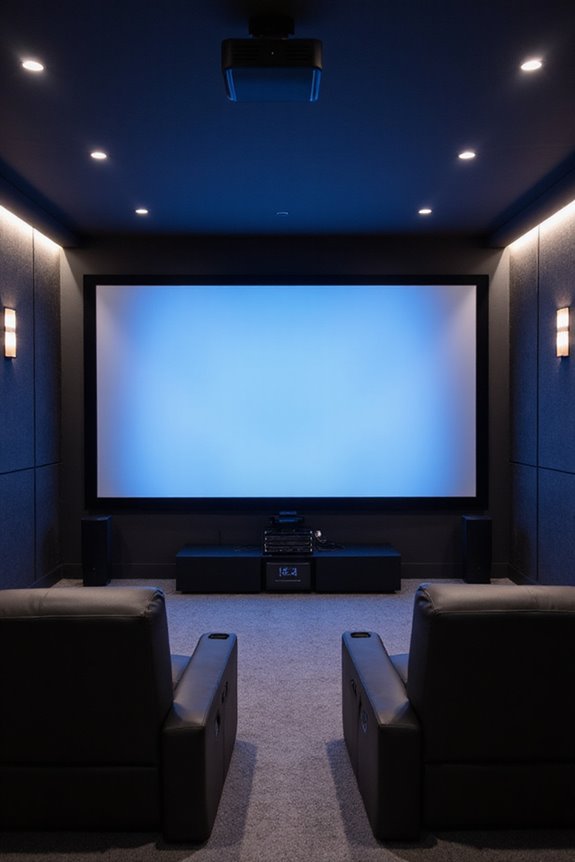
When choosing the right room for your home theater, size and shape matter considerably. Start by considering room dimensions; a space of 15 ft wide by 20 ft long is ideal for best viewing.
- Small Rooms (10 ft x 12 ft): Great for screens up to 80 inches.
- Medium Rooms (12 ft x 16 ft): Best for screens between 100-120 inches.
- Large Rooms (16 ft x 20 ft or larger): Perfect for massive screens and multiple seating rows.
Rectangular rooms enhance sound distribution, making seating arrangements easier. Aim for at least 20 inches between rows for comfortable movement, while a 14-inch gap between reclining seats guarantees no overlap. Additionally, incorporating sound isolation panels will significantly improve the audio quality in your home theater. Careful planning will elevate your cinematic experience.
Optimizing Acoustic Sound Quality
Creating the ideal home theater experience doesn’t stop with choosing the right room; optimizing acoustic sound quality is essential in ensuring an immersive viewing experience.
To optimize sound, we need to focus on acoustic treatment placement and bass management techniques. Here are some key strategies:
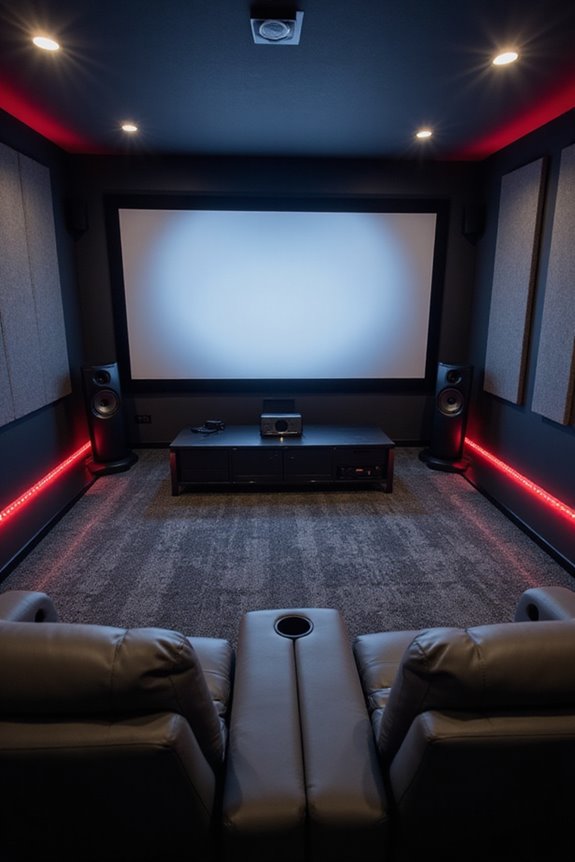
- Acoustic panels should be positioned at first reflection points on side walls, reducing echoes.
- Bass traps in the corners capture low-frequency waves, tightening the bass response.
- Using multiple subwoofers improves bass uniformity across the seating area, ensuring even low-frequency coverage.
- Diffusers on the rear wall scatter sound waves, enhancing spatial quality. Additionally, incorporating high-density acoustic panels can significantly improve sound absorption, leading to a more refined audio experience.
Selecting Between TV and Projector
How can you choose the right display for your home theater? Let’s weigh the projector advantages against the TV benefits. Projectors can provide massive screen sizes, creating an immersive cinematic experience. However, they thrive in darker viewing environments, where they showcase excellent visual quality.
In contrast, TVs excel with consistent brightness and sharp images, even in well-lit rooms. They’re perfect for setups where simplicity is key—just plug in and go. Yet, they’re limited by size, typically capped at 85 inches.
Consider installation challenges—projectors need more space and potentially specialized screens. TVs, with their all-in-one design, offer reliable performance with fewer setup hurdles. Ultimately, it depends on your budget and desired viewing context! Additionally, many modern projectors, like the WIMIUS G1 Home Theater Projector, come equipped with smart features that enhance usability and content access.
Determining Ideal Screen Size and Placement

Determining the ideal screen size and placement can greatly enhance your home theater experience. We should consider that screen dimensions play a key role in comfort. A good rule of thumb is to have the screen width between 1/2 to 1/3 of your seating distance. For example, if your seating is 8 feet away, aim for a screen size of 60 to 90 inches diagonal.
Placement is equally essential. Center the screen at eye level for the best viewing angles, reducing neck strain. Confirm the distance from the seating accommodates the screen size—generally, the larger the screen, the further back you’ll need to sit. By following these guidelines, we can create an immersive atmosphere for enjoying our favorite movies and shows together. Additionally, proper speaker placement is crucial to enhance audio delivery and immersion, ensuring that sound complements the visual experience.
Identifying Essential Source Components
Selecting the right source components is fundamental for maximizing your home theater experience. We have several media source options to weigh, like Blu-ray players for superior picture and sound quality, streaming devices for access to Netflix or Disney+, and gaming consoles that also play 4K media.
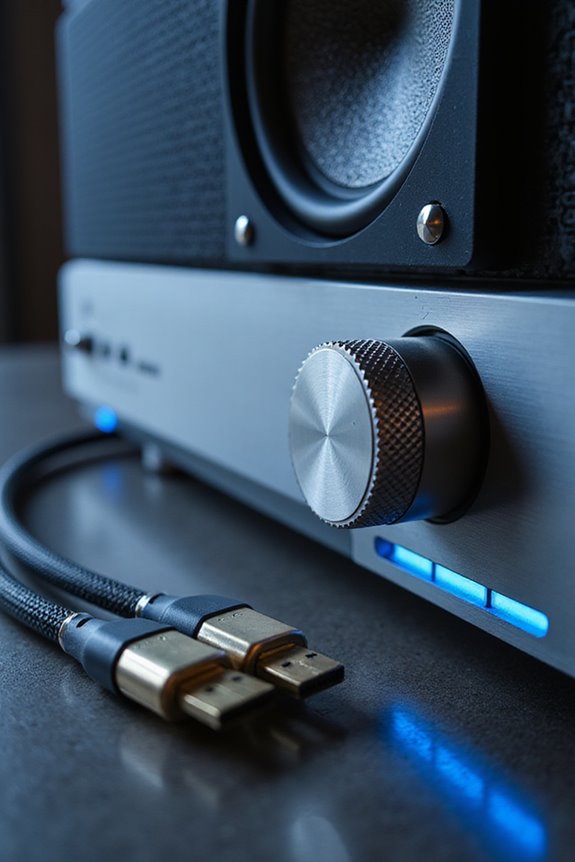
To guarantee seamless integration, let’s focus on essential connectivity solutions. Using HDMI cables helps transmit high-definition audio and video effectively. For digital audio, optical cables can be used where HDMI isn’t available. Plus, reliable internet connections are vital for optimal streaming performance. Additionally, choosing high bandwidth capabilities in HDMI cables can significantly enhance your viewing experience by supporting 4K and 8K resolutions.
Ultimately, your choice of media sources—be it physical or streaming—will enhance your enjoyment and engagement with the content. So, let’s make informed decisions that’ll elevate our home theater experience together.
Selecting the Right Receiver/Amplifier
What factors should we consider when choosing the right receiver or amplifier for our home theater? First, let’s focus on receiver power. A model with 100+ watts per channel guarantees distortion-free sound, especially during high-volume scenes. Then, channel support is essential; we might want a minimum of 5 channels for basic setups, while 7 or more is ideal for immersive formats like Dolby Atmos.
Connectivity options matter too. Look for HDMI inputs with ARC, alongside digital inputs like optical and USB. Sound processing features, including room calibration capabilities, enhance our audio experience. Finally, consider extra features—streaming integration, wireless surround support, and user-friendly interfaces simplify our entertainment journey, leaving room for future upgrade paths as needed.
Speaker System Configuration Options
With the right receiver or amplifier in place, configuring your speaker system is the next step toward achieving an immersive home theater experience. Here are some key setup considerations:
- Speaker Placement: Position front speakers equidistant from each other and the listener for ideal performance.
- Channel Configuration: Consider a 5.1 or 7.1 setup for enhanced sound directionality.
- Spatial Arrangement: Verify tweeters are at ear level for the best soundstage height.
- Angled Speakers: Slightly angle speakers towards the listener to improve sound imaging and focus.
- Speaker Separation: Increasing distance between speakers can greatly enhance your audio experience.
Taking these factors into account will help create a soundstage you can truly enjoy, delivering the immersive experience you’re after.
Subwoofer Selection and Placement
When setting up your home theater, choosing the right subwoofer is critical for achieving that powerful, immersive sound experience. Let’s explore subwoofer types and placement to guarantee you get the best bass performance.
- Subwoofer Size: For smaller rooms, consider an 8″ driver, while larger spaces can accommodate 12″ or even 15″ drivers for deep, impactful bass.
- Room Acoustics: Placing the subwoofer near a corner maximizes bass response. However, moving it slightly from the corner can help reduce unwanted peaks.
- Features to Look For: Adjustable crossover features help blend sound with your main speakers. Models with smart calibration can optimize performance based on your room’s acoustics.
Selecting the right subwoofer and positioning it effectively lets you enjoy your home theater to the fullest.
Enhancing Sound With Surround Speakers
Surround speakers elevate your home theater experience by creating dynamic, immersive sound effects that pull you into the action. For ideal surround speaker positioning, aim to place them on the left and right sides of your seating area, slightly angled toward you. Positioning them behind at 90 to 110 degrees enhances the rear channel experience.
Here are key points to remember:
- Ideal height is 1 to 1.5 feet above ear level while seated.
- Maintain distance from front speakers for a wider soundstage.
- Use smaller satellite speakers for ambient sounds.
- Consider Dolby Atmos for an added dimension of sound.
Getting this setup right transforms movie nights into enchanting adventures, bringing everyone together for an unforgettable experience.
Accessory Considerations for Your Setup
How can we enhance our home theater experience beyond just the display and sound? Accessory types play a vital role in optimizing our setup.
- Acoustic Treatment: Installing acoustic panels absorbs echoes and improves clarity. Adding bass traps controls low-frequency sounds, while thick carpeting minimizes reflections.
- Lighting Solutions: Smart lighting lets us control brightness and color, creating the perfect mood. Automated presets can dim lights with the movie’s start, enhancing immersion. Bias lighting, like LED strips behind screens, reduces eye strain and sharpens image contrast.
- Seating Comfort: Comfortable recliners or sectional sofas make long viewing sessions more enjoyable, while wall mounts keep things tidy and improve aesthetics.
Effective Cable Management Techniques
An organized home theater setup not only enhances the aesthetics but also contributes considerably to functionality. To achieve effective cable management, focus on these techniques:
- Cable Organization: Use wire ties, preferably reusable Velcro wraps, to group cables from devices like TVs and receivers. Bundle them neatly, separating audio/video from power cables to reduce interference.
- Wire Concealment: Employ raceways or wall channels to hide cable paths, and consider routing cables behind furniture for a clean look.
- Labeling: Mark both ends of cables for easier identification. Color-code them for quick reference.
- Managing Excess Cables: Store extra lengths in boxes, coiling them to prevent tangling. Keep power and audio cables grouped to minimize electrical interference.
These techniques will create a clutter-free environment, ensuring a more enjoyable experience.
Ensuring Proper Ventilation and Comfort
When setting up your home theater, guaranteeing proper ventilation is essential for both equipment performance and your comfort. We need effective ventilation strategies to manage heat generated by our AV gear. Overheating can cause malfunctions, so let’s focus on cooling solutions that extend equipment lifespan while maintaining our enjoyment.
Here are key points to evaluate:
- Maintain Air Quality: Aim for 4-6 air changes per hour to guarantee ideal breathing conditions.
- Fresh Air Supply: Provide at least 15 cubic feet per minute of fresh air per person.
- Noise Control: Use duct silencers and design pathways to minimize sound leakage without sacrificing airflow.
Professional Installation Benefits and Tips
Considering the complexity involved in setting up a home theater, you might find that professional installation offers numerous benefits that enhance both performance and convenience. Here’s how professional integration can transform your setup:
- Tailored Experience: Experts optimize audio and video settings for your room, giving you exceptional clarity.
- Time Efficiency: With project management, installation can happen in hours, not weeks, saving you hassle.
- Cost Savings: While installations can range from $10,000 to $50,000, avoiding DIY mistakes can protect your investment.
- Safety First: Professionals guarantee your wiring meets safety codes, reducing hazards.
- Latest Technology: Installers stay current on tech trends, guaranteeing a future-proof home theater.
Taking advantage of professional installation truly maximizes your home theater’s potential and your enjoyment!
Frequently Asked Questions
What Budget Should I Consider for a Home Theater Setup?
When we consider a budget for our home theater setup, we should aim for a cost estimation around $20,000, with a budget breakdown reflecting factors like equipment quality, room size, and installation complexity.
How Do I Choose the Right Furniture for My Home Theater?
When choosing the right furniture for our home theater, we should explore various furniture styles and seating options. Let’s prioritize comfort and function while ensuring our space feels welcoming for everyone who enjoys it with us.
Can I Use Existing Speakers or Do I Need New Ones?
We can definitely use existing speakers if they match regarding performance and speaker type compatibility. Testing them with our new receiver helps guarantee we enjoy the best sound without overspending on new equipment.
What Are the Best Practices for Soundproofing My Home Theater?
To soundproof our home theater effectively, we should use acoustic panels for absorption and install solid sound barriers. Let’s also seal gaps and consider mass-enhancing materials to create that immersive experience we crave together.
How Can I Integrate Streaming Services With My Home Theater System?
Did you know over 75% of us binge-watch our favorite shows? To integrate streaming services, we must choose compatible streaming devices, ensuring excellent connectivity options for seamless enjoyment of our communal viewing experiences together.