As an Amazon Associate, we earn from qualifying purchases. Some links on this site are affiliate links at no extra cost to you. Our recommendations are based on thorough research and editorial judgment.


How To Clean Vinyl Records?

To clean vinyl records effectively, we recommend using specialized cleaning solutions like enzyme-based sprays or a DIY mix of 70% distilled water and 30% isopropyl alcohol. Handle records by the edges, applying fluid gently. Scrub in the groove direction, rinse with cold water, and dry using a lint-free microfiber cloth. Store records in anti-static sleeves to prevent dust accumulation. If you’re looking for more detailed techniques and tips, keep exploring the topic for expert insights.
Key Takeaways
- Handle records carefully by the edges to prevent transferring dirt and oils from your hands.
- Use a suitable cleaning solution, like enzyme-based sprays or a DIY mix of distilled water and isopropyl alcohol.
- Apply cleaning fluid evenly and gently scrub in the direction of the grooves to avoid damage.
- Rinse thoroughly with cold or distilled water and pat dry with a lint-free microfiber cloth.
- Store cleaned records in anti-static sleeves upright in a dust-free, stable environment.
Understanding the Importance of Cleaning Vinyl Records
When we think about enjoying our vinyl records, one essential aspect often gets overlooked: cleaning. Proper vinyl care is critical for maintaining audio clarity and preserving the quality of our beloved records. Dust, dirt, and oils can cause distortion and damage, leading to a muddier sound and playback issues.
To truly appreciate the nuances in our favorite albums, we must clean them regularly. Here are some reasons why it matters:
- Audio Fidelity: Cleaning removes contaminants and restores sound quality.
- Longevity: A clean record resists groove wear and minimizes damage.
- Equipment Protection: Clean records reduce stylus wear and preserve our turntable. Additionally, acoustic panels can enhance the overall listening experience by improving sound clarity in the room.
What to Use for Cleaning: Recommended Solutions
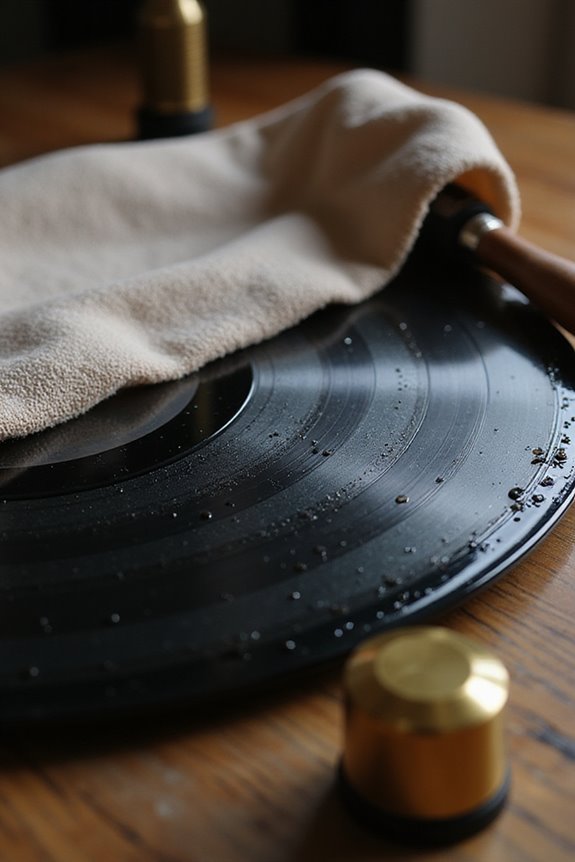
To effectively clean your vinyl records, it’s essential to use the right solutions tailored specifically for this purpose. There are various cleaning solutions available, both commercial and homemade recipes that we can explore together.
Commercial Solutions:
- Professional cleaning kits include effective cleaning fluids that remove dirt and fingerprints without damaging vinyl.
- Enzyme-based sprays like Phoenix Record Cleaner help dissolve grime when paired with microfiber cloths.
- Ultrasonic cleaners use diluted, harsh-free solutions designed for a thorough clean.
Homemade Recipes:
- A popular DIY mix uses 70% distilled water and 30% isopropyl alcohol—cleaning effectively without risking vinyl damage.
- Adding surfactants, such as Alconox, enhances cleaning by breaking down greasy residues. Additionally, keeping your records in proper storage conditions will help maintain their quality over time.
Choosing the right solution will safeguard our beloved records while keeping them sounding pristine.
Avoiding Common Household Cleaning Agents

Cleaning your vinyl records requires careful consideration of the products we use. Misunderstandings about household cleaners often lead to lasting damage. For instance, many cleaners contain harsh chemicals and ammonia, which can harm vinyl surfaces. Using isopropyl alcohol in high concentrations can degrade protective coatings, and tap water may leave unwanted mineral residues.
To avoid these vinyl myths and cleaning misconceptions, let’s stick to safer options.
- Always opt for vinyl-specific cleaning solutions designed to protect your records.
- Use distilled water instead of tap water to avoid impurities.
- Gentle, non-abrasive cloths are ideal to prevent scratches. Additionally, using a high density acoustic panel can help reduce ambient noise while you clean, ensuring a quieter environment.
Taking these precautions guarantees your records stay in excellent condition and sound their best. Avoiding common household cleaning agents is a step towards preserving our beloved collections.
Manual Cleaning Technique: Step-by-Step Guide

While we all want to keep our vinyl records sounding great, it is essential to follow a careful manual cleaning technique to preserve their integrity. Here’s a step-by-step guide to effective record care:
- Preparation: Handle records by the edges, using a lint-free microfiber cloth or a carbon fiber brush to remove surface dust.
- Cleaning Application: Use a record cleaning fluid designed for vinyl, applying it evenly and avoiding the label.
- Brushing Technique: Gently scrub with a soft brush in the direction of the grooves—5 to 10 strokes per side.
- Rinsing: Rinse thoroughly with cold or distilled water, ensuring no residue remains.
- Drying: Pat dry with a clean microfiber cloth, air-dry horizontally, and store upright in an anti-static sleeve. Additionally, maintaining your records can enhance their performance and longevity, similar to how sound quality features impact the overall audio experience.
Equipment-Assisted Cleaning Methods
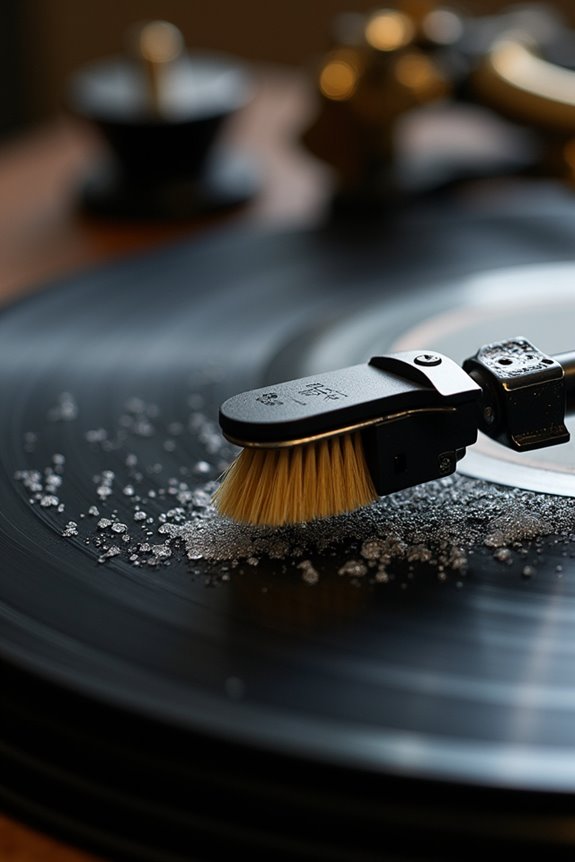
When it comes to maintaining the quality of your vinyl records, employing equipment-assisted cleaning methods can be a game changer. These record cleaning technologies help us achieve deep cleaning that manual methods often can’t accomplish.
Vacuum Record Cleaning Machines
- Use suction to remove cleaning fluid and dirt, ensuring a thorough clean.
- Models like the VPI 16.5 offer pressure control to avoid damage.
Rotating Drum Machines
- Use bidirectional brushes to agitate and lift grime.
- Often paired with a bath system for enhanced cleaning.
Heated Cleaning Units
– Employ mild heat to loosen stubborn dirt without damaging vinyl.
Additionally, using advanced cleaning technologies can significantly enhance the effectiveness of your cleaning routine.
With these maintenance tips, you’ll keep your collection pristine, elevating your listening experience!
Ultrasonic Cleaners: How They Work
For those interested in achieving an exceptional level of cleanliness for their vinyl records, ultrasonic cleaners represent a remarkable advancement in cleaning technology. These machines use ultrasonic frequencies, typically around 37 kHz or 80 kHz, to create mechanical vibrations in cleaning fluid. This process generates microscopic cavitation bubbles, which can penetrate narrow grooves without damaging the vinyl.
- Lower frequencies target heavier dirt and grease.
- Higher frequencies produce smaller bubbles for fine grooves.
- Dual-frequency options further enhance cleaning efficiency.
The bubbles implode, releasing energy that dislodges dirt and contaminants. By employing specialized cleaning solutions, we can maximize the efficacy of the cavitation process, ensuring our records sound as good as new for years to come.
Vacuum-Powered Record Cleaners
Vacuum-powered record cleaners offer an efficient solution for maintaining the condition of your vinyl collection. Utilizing vacuum technology, these machines effectively remove cleaning fluid along with dust, dirt, and grime.
How They Work:
- Begin by applying cleaning solution to the record.
- The vacuum efficiently extracts the fluid and contaminants, leaving no residue.
- Some models, like the Record Doctor X, offer automatic rotation, cleaning both sides simultaneously.
Benefits:
- They outperform brush-only methods by physically removing impurities.
- This guarantees quicker drying times and better sound quality by eliminating embedded dirt.
- Popular options, such as the VPI HW-16.5 or Nitty Gritty Mini-Pro 2, combine usability and effective cleaning efficiency, catering to collectors looking to prolong their records’ lifespan.
Tips for Using Disc Washers Effectively
Having a reliable method for cleaning our vinyl records can greatly enhance their longevity and audio quality. When using Discwashers, we should keep some key tips in mind.
Preparation
- Work on a clean, stable surface.
- Gather all Discwasher components before starting.
- Gently shake the cleaning fluid for an even mix.
Fluid Application
- Apply fluid sparingly to the pad—avoid oversaturation.
- Brush the vinyl in a consistent, circular motion to remove dirt.
Maintenance
- Rinse pads with distilled water to prolong their life.
- Let pads air dry completely before storage.
Common Mistakes to Avoid When Cleaning Records
When it comes to cleaning vinyl records, avoiding common mistakes is vital for maintaining their quality and prolonging their lifespan. Here are a few areas we should be cautious about:
- Using Inappropriate Cleaning Solutions: Never use harsh chemicals or tap water; always opt for cleaning products designed specifically for vinyl.
- Applying Excessive Pressure: Scrubbing too hard can scratch and damage grooves. Use gentle, circular motions instead.
- Improper Drying: Verify records are completely dry before playing or storing them to avoid moisture-related damage.
- Using Contaminated Cleaning Materials: Avoid oversaturated cloths that can redeposit dirt; regularly clean or replace your materials.
- Incorrect Handling: Always handle records by the edges to prevent oil and dirt transfer, reducing the chances of dirty cleaning.
Staying mindful of these points will help us keep our collections in great shape!
Benefits of Proper Cleaning for Vinyl Records
Cleaning your vinyl records properly offers numerous benefits that can greatly enhance your listening experience and prolong the life of your collection. By utilizing modern cleaning techniques, we can achieve remarkable improvements in sound quality. Here are some key benefits to take into account:
- Enhanced Audio Fidelity: Proper cleaning removes dust, oils, and residues, leading to clearer sound reproduction and richer bass.
- Prolonged Lifespan: Cleaner records reduce wear on both the vinyl and stylus, potentially extending the stylus life by up to 50%.
- Preservation of Integrity: Regular cleaning prevents mold growth and maintains the value of your collection, keeping records playable and collectible.
- Improved Playback: Clean grooves allow smooth stylus tracking, reducing skipping and enhancing your overall listening enjoyment.
Investing time in vinyl care guarantees a better experience now and in the future.
Drying Techniques to Preserve Vinyl Quality
To guarantee your vinyl records maintain their quality, employing proper drying techniques is essential. Let’s consider a few effective methods:
- Natural Air Drying: Place records vertically in a dust-free area for even airflow. This prevents moisture buildup and mold growth. Drying typically takes 1-3 hours.
- Microfiber Cloths: Use clean, lint-free microfiber cloths to gently absorb moisture. Pat, don’t wipe, to avoid scratching the vinyl.
- Controlled Environment: Keep the temperature between 65-70°F and humidity below 50% for ideal drying conditions.
- Drying Racks: Invest in specialized vinyl drying racks that allow air to circulate evenly while preventing warping.
Avoid heat-based drying methods; they can harm the vinyl. Prioritize these techniques for preserving your records’ quality.
Best Practices for Storing Cleaned Records
Storing cleaned records properly is essential for their longevity and sound quality. To keep our precious vinyl safe, we should follow some best practices.
Storage Materials:
- Use archival-quality inner sleeves that are anti-static and acid-free.
- Install protective outer sleeves made of polypropylene for additional dust protection.
Placement Considerations:
- Store records upright in a stable location, away from vibrations and temperature fluctuations.
- Avoid basements or attics; opt for shelves with a slightly soft base to protect edges.
- Position collections near your turntable for easy access while maintaining ideal environment.
Maintaining Your Cleaning Equipment
Maintaining our cleaning equipment is key to ensuring long-lasting performance and ideal results when caring for vinyl records. Here are some essential tips to keep everything in top shape:
- Regular Inspection: Check your vacuum and ultrasonic machines for dust or buildup according to the manufacturer’s guidelines.
- Cleaning Frequency: Clean your stylus before each play; use a dry carbon fiber brush before and after sessions for daily maintenance.
- Equipment Calibration: Monitor ultrasonic rotation speed at about 2 RPM and calibrate temperatures between 20–30°C to prevent record damage.
- Brush Care: Remove dust from brushes after each use and replace worn brushes as needed.
Signs Your Records Need a Clean
How can you tell when your vinyl records need a good cleaning? Recognizing the signs early can preserve their quality. Look for visible dirt, like dust and fingerprints, which can accumulate and affect playback. If you notice excessive pops, clicks, or audio distortion while listening, it’s likely time for a clean.
Here are some specific indicators:
- Cloudiness or dullness on the surface
- Scratches affecting playback
- Tacky or sticky residue
- Difficulty sliding records in and out of sleeves
Additionally, if you detect static cling attracting dust, that’s a clear cue. For us, regular checks guarantee our vinyl remains in excellent condition, letting us enjoy our favorite albums without distraction.
Frequently Asked Questions
How Often Should I Clean My Vinyl Records?
We should clean our vinyl records regularly, ideally before and after each play for light maintenance. Staying attentive to cleaning frequency helps us enjoy superior sound quality and prolongs the life of our cherished collections.
Can I Clean Records With Baby Wipes or Similar Products?
Look, we wouldn’t dream of cleaning our cherished records with baby wipes! Instead, let’s embrace safer cleaning alternatives that treat our vinyl right, ensuring they play beautifully for years to come.
Is It Safe to Use Vinegar for Cleaning Records?
While we can use vinegar for cleaning records, we should always prioritize vinegar dilution and limit cleaning frequency. It’s best for light jobs, but let’s be cautious to avoid potential long-term damage together.
Do I Need Special Training to Use an Ultrasonic Cleaner?
We don’t need special training to use ultrasonic cleaners—just a passion for preserving our vinyl! Embracing these cleaning techniques gives us all the benefits of deep cleaning without fear of damaging our beloved records.
Can Weather Conditions Affect the Cleaning Process of Vinyl Records?
Absolutely, weather conditions influence our vinyl cleaning process. High humidity levels can trap moisture, while temperature fluctuations affect drying times. We should always consider our environment to guarantee our records stay in top condition.