As an Amazon Associate, we earn from qualifying purchases. Some links on this site are affiliate links at no extra cost to you. Our recommendations are based on thorough research and editorial judgment.

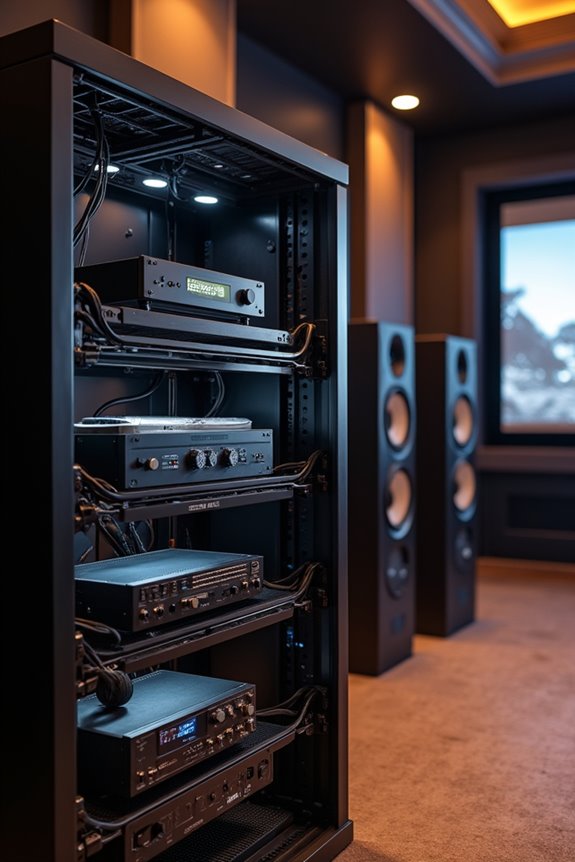
How To Fix Ground Hum Noise?

To fix ground hum noise, we start by identifying its causes, often linked to ground loops and unwanted currents in cables. Disconnect devices one at a time, checking for hum changes. Using shielded cables can help reduce interference, and separating audio from power cables is essential. Implementing ground loop isolators or audio transformers can effectively eliminate hum. Regular maintenance and common ground practices are key. If you’re curious about more detailed solutions and best practices, there’s plenty more to explore.
Key Takeaways
- Identify the source of ground hum by disconnecting devices one at a time and using audio analysis tools for frequency detection.
- Use shielded cables and ensure tight twisting of hot and neutral wires to minimize interference and cancel magnetic fields.
- Implement ground loop isolators or passive audio isolation devices to electrically separate audio signals and reduce hum levels.
- Maintain a common reference ground among devices and limit multiple grounding paths to decrease ground impedance.
- Regularly inspect equipment and cable connections for wear and ensure proper cable routing to prevent interference.
Understanding the Causes of Ground Hum Noise
When we talk about ground hum noise, it’s essential to understand its underlying causes, especially since it can really affect audio quality in our setups. Ground loops—which happen when multiple grounding paths exist—are a primary culprit. These unwanted currents flow through our cables, leading to common symptoms like low-frequency hum, often around 50/60 Hz, and associated harmonics.
Several factors can worsen this issue:
- Devices on different circuits increase noise risk.
- Improper cable shielding makes us more susceptible.
- Environmental factors play a role too, like the proximity to power lines.
To combat this, focusing on noise reduction strategies is key. Keeping cables away from power sources and using balanced cables can greatly improve our audio experience. Implementing acoustic treatment in your space can further help minimize the impact of ground hum noise.
Identifying Ground Hum Noise in Your Setup

Identifying ground hum noise in your audio setup is essential for achieving ideal sound quality. We can begin using noise identification techniques to isolate the issue. Typically, this hum manifests as a low-frequency sound, around 50 Hz or 60 Hz, that remains steady regardless of volume adjustments.
Here’s a simple process to help you:
- Disconnect one device or cable at a time: Monitor changes in hum levels after each disconnection.
- Capture the hum with audio analysis tools: Utilize sound feature analysis to pinpoint the dominant frequencies, looking for peaks at 50/60 Hz.
- Check grounding points: Verify there are no multiple connections at different potentials.
Additionally, understanding the impact of advanced audio technologies can help in reducing unwanted noise and enhancing overall sound quality. This systematic approach will aid us efficiently identify and troubleshoot ground hum in our setups.
Effective Cable and Connection Solutions

To effectively eliminate ground hum noise, you should consider the quality and configuration of your cables and connections. Using shielded cables can greatly minimize interference, while maintaining tight twisting of hot and neutral wires enhances magnetic field cancellation.
Here are some effective practices to follow:
- Cable Shielding: Opt for high-quality copper conductors with durable shielding.
- Connection Integrity: Confirm solid connections for shield and chassis grounds.
- Separation: Keep audio and power cables physically apart to prevent cross-interference.
- Routing: Avoid running cables parallel to power lines, and cross them at 90-degree angles when possible, to minimize noise induction.
Additionally, using a separate subwoofer can improve overall audio quality by reducing strain on your main speakers, which may also help mitigate ground hum issues.
With these strategies, we can provide a cleaner audio experience free from pesky ground hum noise.
Equipment and Device Remedies for Hum Elimination

Effective equipment and device remedies can greatly aid in eliminating ground hum noise from your audio system. Here are some essential hum elimination techniques worth considering:
- Passive Audio Isolation Devices: These include transformers that isolate audio grounds, reducing hum without requiring external power. Examples are the Art DTI and Radial StageBug SB-6, perfect for professional use.
- Active Noise Filtering Units: These devices electronically suppress ground loop noise. The A-M Systems Hum Bug filter preserves signal quality while providing adjustable controls.
- Ground Loop Isolator Adapters: Compact and easy to use, these adapters fit between your audio sources and outputs, helping to eliminate buzz in home setups.
- Signal Conditioning Equipment: Converting unbalanced signals to balanced helps minimize noise, especially for long cable runs. Additionally, dedicated subwoofers are crucial for delivering deeper bass, which can help improve overall sound clarity and reduce unwanted hum.
With these audio isolation devices, your sound quality can greatly improve!
Proper Electrical Grounding Practices to Follow
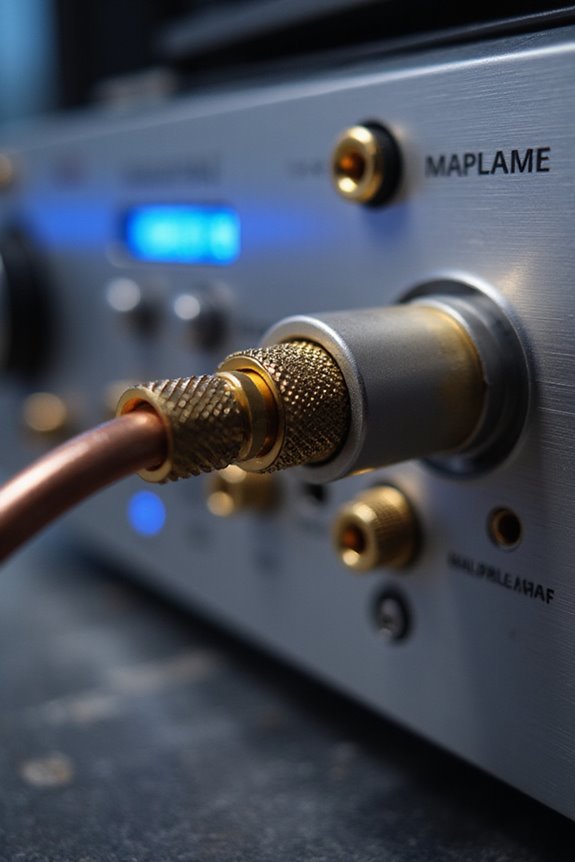
When it comes to reducing ground hum noise in your audio system, proper electrical grounding practices are essential. We need to focus on proper electrode selection, using ground rods or metal underground water pipes as effective grounding electrodes.
- Make sure grounding conductors are securely connected to the grounding bar in your electrical panel.
- Use copper wiring for its high conductivity and corrosion resistance, ensuring the gauge meets local electrical codes.
- Inspect grounding connections regularly to catch any damage or corrosion that could disrupt safety.
- Avoid using hot water pipes, as they don’t provide a reliable grounding path.
Together, by following these best practices and maintaining good grounding conductor configurations, we can create a safer and quieter audio environment. Additionally, consider the importance of surround sound systems in achieving optimal audio performance, as improper grounding can negatively affect sound quality.
Additional Preventive Measures Against Ground Hum
Addressing ground hum effectively requires a combination of practical measures that can help you minimize interference and maintain audio clarity. First, using ground loop isolators and filtering devices like Morley’s HumNo or Pyle isolation boxes can greatly reduce hum. Adding additional tools like toroid-based filters guarantees safety while filtering voltage fluctuations.
Next, focus on wiring practices: opt for large gauge, stranded grounding wire and avoid solid wire, as it increases ground impedance.
Lastly, minimizing multiple ground paths between devices is essential. Make sure everything shares a common reference ground point and avoid connecting devices from different circuits.
Implementing these preventive measures will help us achieve clearer, noise-free audio, enhancing our overall listening experience.
The Importance of Regular Maintenance
While it might seem easy to overlook, regular maintenance is essential for keeping your audio systems running smoothly and preventing ground hum issues. By implementing preventive strategies, we can identify and fix problems before they escalate. This proactive approach not only guarantees proper functioning but also minimizes the risk of ground loops.
To help, we should follow a maintenance checklist that includes:
- Inspecting cable connections and grounding to avoid noise.
- Regularly checking equipment for wear and potential failures.
- Keeping an eye on cable lengths to reduce interference.
With consistent maintenance, we can enjoy high-quality sound and extend our equipment’s lifespan while also fostering a safe working environment. Remember, neglected systems lead to increased electrical noise and costly repairs.
Educating Your Team on Best Practices
Effective sound management isn’t just about maintaining equipment; it also involves educating your team on best practices. By fostering a culture of continuous learning, we can enhance our team’s technical knowledge and safety awareness.
Key Elements of Team Education:
- Set clear and measurable learning objectives aligned with training needs.
- Create a supportive training environment that encourages open communication.
- Regularly monitor progress and provide constructive feedback.
- Implement mentorship programs by pairing experienced members with newer team members.
Frequently Asked Questions
Can Ground Hum Damage My Audio Equipment in the Long Run?
Yes, ground hum can damage our audio equipment over time due to differing ground potentials. By ensuring audio isolation through proper grounding techniques, we can protect our valuable gear and maintain its performance for the long haul.
What Are the Signs That Ground Hum Is Affecting Sound Quality?
We can definitely notice ground hum signs when our sound experiences distortion and unwanted background noise. It might seem minor, but it compromises our listening pleasure and any noise cancellation efforts we make.
Is Ground Hum Noise More Common in Certain Environments?
Yes, ground hum noise is more common in older buildings and industrial areas due to ground loops and electrical interference. Together, we can tackle these issues by understanding our environments and taking steps to minimize their effects.
How Does Humidity Affect Ground Hum Noise in Audio Systems?
When it rains, it pours, and humidity effects can really wreak havoc on audio systems. Excess moisture often leads to audio interference, causing unwanted hum that can compromise our sound experience. Let’s keep our environment stable!
Are There Specific Brands Known for Low Ground Hum in Equipment?
Absolutely, we can rely on equipment brands like Jensen Transformers, THAT Corporation, and Behringer for effective noise reduction. Their innovative solutions help us tackle ground hum, making our audio experiences more enjoyable together.