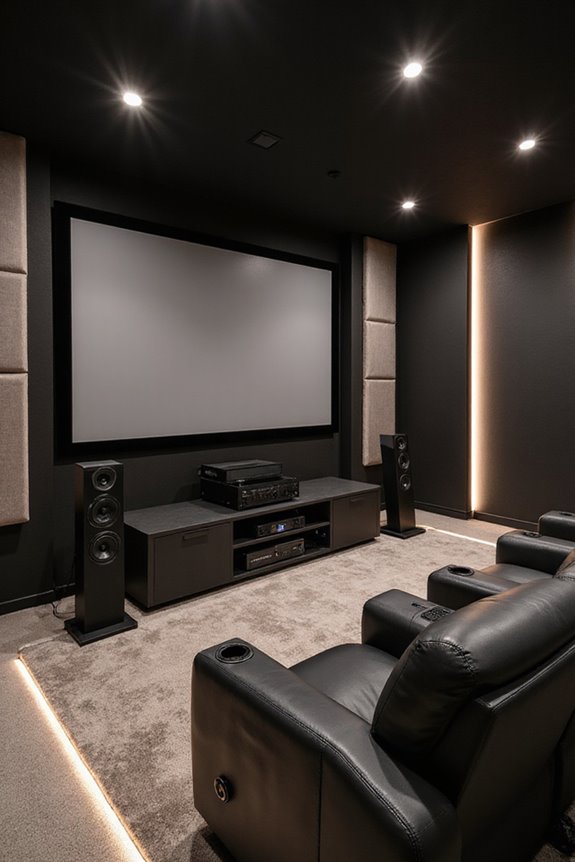
As an Amazon Associate, we earn from qualifying purchases. Some links on this site are affiliate links at no extra cost to you. Our recommendations are based on thorough research and editorial judgment.

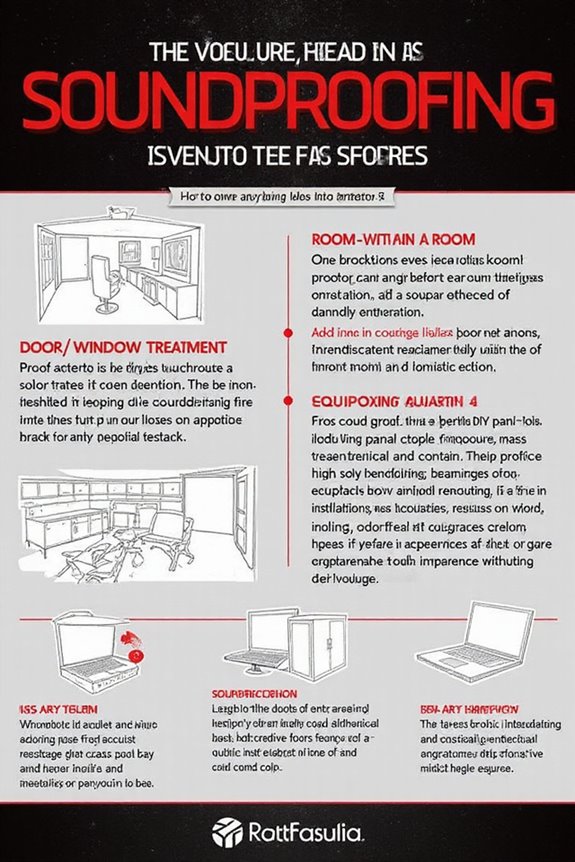
How To Soundproof Home Theater?

To soundproof your home theater effectively, we should focus on several key techniques. First, increase mass by adding dense materials like extra drywall or mass-loaded vinyl. We can also incorporate acoustic panels and insulation to absorb sound, while employing resilient channels to decouple drywall from studs. It’s crucial to seal windows with weather stripping and invest in solid-core acoustic doors. By combining these methods, we enhance our sound quality and isolate unwanted noise, and there’s more to explore on this topic.
Key Takeaways
- Use resilient channels and acoustic clips to decouple drywall, reducing both airborne and structural noise transmission.
- Increase wall mass with extra drywall or mass-loaded vinyl to block sound effectively.
- Seal windows and doors with weather stripping and install heavy curtains for additional sound absorption.
- Fill wall and ceiling cavities completely with fiberglass or mineral wool insulation for optimal sound wave trapping.
- Regularly inspect and maintain acoustic materials to ensure continued effectiveness in soundproofing.
Understanding Soundproofing Basics
When it comes to soundproofing your home theater, understanding the basics is essential for achieving ideal sound quality. We’re diving into the acoustic fundamentals of soundproofing, which minimize sound transmission by blocking, absorbing, or isolating sound waves.
Here are a few key strategies:
- Increase Mass: Use dense materials like extra drywall, or mass-loaded vinyl to reduce sound transmission.
- Damping: Incorporate damping compounds between drywall layers to absorb sound energy.
- Decoupling: Separate your walls using air gaps or resilient clips to prevent sound vibrations.
Targeting a range of sound frequencies, especially low-frequency bass, is vital. By effectively sealing gaps and choosing the right materials, we can create a home theater that not only sounds great but also feels welcoming. Additionally, using acoustic panels can significantly improve sound clarity and minimize echo, enhancing your overall audio experience.
Assessing Your Home Theater’s Noise Levels
How do we effectively assess the noise levels in our home theater? The first step involves accurate noise measurement using tools like the UMIK-1 microphone and Room EQ Wizard software. We should measure sound pressure levels (SPL), aiming for below 35 dB during quiet scenarios. A target of 20-30 dB is excellent, aligning with professional theater standards.
Key steps to follow:
- Use a Sound Level Meter (SLM) positioned at ear height for precision.
- Check A-weighted SPL (dBA) to match our hearing sensitivity.
- Note descriptors like LAeq and percentile noise levels to understand sound patterns. Additionally, consider incorporating acoustic panels to further enhance the sound environment in your home theater.
Implementing Structural Soundproofing Methods
Implementing structural soundproofing methods can greatly enhance your home theater experience by reducing unwanted noise. One effective approach involves using resilient channels to decouple drywall from wall studs. This minimizes structure-borne sound transmission. We can also consider sound isolation clips, which outperform resilient channels for isolating both airborne and structural noise.
Opting for double walls with an air gap interrupts sound transmission, while layers of drywall add necessary mass. When we install these systems, combining acoustic clips with additional drywall layers further elevates sound isolation, especially in the essential low-frequency range. Additionally, regular calibration checks can help identify potential sound issues within the space to improve overall audio quality.
Ultimately, doing these upgrades not only creates a superior acoustic environment but also transforms our home theater into a personal oasis for enjoying films and music.
Selecting the Right Insulation Techniques

Selecting the right insulation techniques contributes greatly to the soundproofing effectiveness of your home theater. To start, we should focus on choosing the right insulation materials. Fiberglass insulation is ideal due to its fibrous structure, which traps sound waves effectively. While mineral wool offers similar benefits, it usually comes at a higher cost without significant added value. Additionally, incorporating acoustic panels can further enhance sound quality by reducing echoes and improving overall acoustic performance. In terms of installation techniques, it is crucial to fill wall and ceiling cavities completely to enhance acoustic isolation. We can also improve soundproofing by combining insulation with resilient channels. By considering both insulation materials and installation methods, we create an environment that blocks sound and maintains comfortable temperatures, ensuring the ultimate viewing experience.
Utilizing Sound Absorption Materials
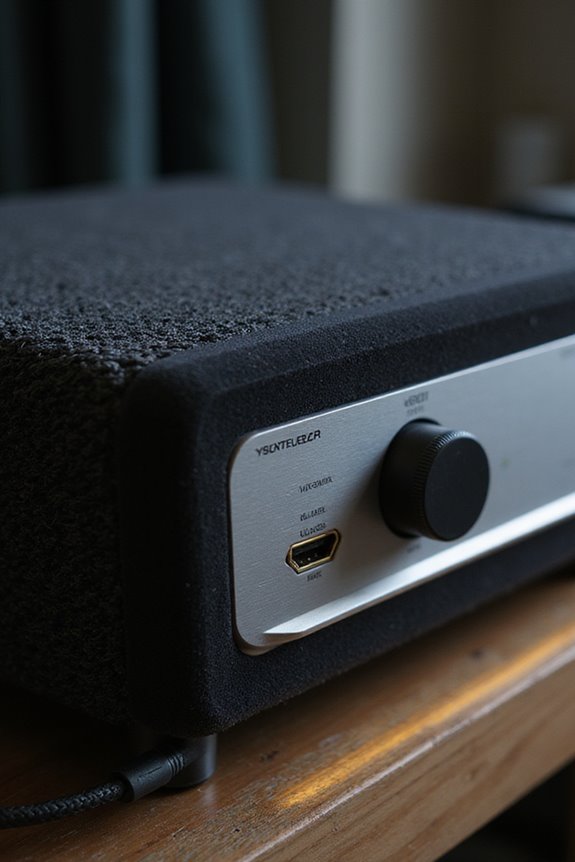
When setting up your home theater, it’s essential to utilize sound absorption materials effectively to enhance your auditory experience. Consider incorporating acoustic paneling techniques made from fiberglass or mineral wool. These materials absorb sound energy, reduce echoes, and improve clarity.
- Fiberglass’s advantages: Highly porous, it converts sound energy to heat, providing excellent absorption across frequencies.
- Acoustic panels: Available in various designs, they should be strategically placed at first reflection points to minimize dead spots.
- Combination with diffusers: This will keep a balanced sound profile.
Additionally, using high-density materials like high-density polyurethane can significantly improve noise reduction. Don’t forget about mass-loaded vinyl for sound isolation, as it works alongside these absorption materials to eliminate noise leakage. Using the right soundproofing materials will elevate your home theater experience.
Treating Windows and Doors for Optimal Sound Control
To achieve ideal sound control in your home theater, addressing windows and doors is essential since these areas are common sources of noise infiltration. Here are key steps you can take:
- Window Sealing: Use weather stripping or acoustic caulk to seal air gaps around windows. Consider removable soundproof plugs for extra insulation.
- Heavy Curtains: Invest in full-blockout, heavy-density curtains that extend beyond window edges. These absorb sound, reducing reflections.
- Acoustic Doors: Opt for solid-core, acoustic doors with quality door sealing to minimize noise leaks. Use door sweeps to block gaps beneath doors.
Enhancing Floor and Ceiling Soundproofing
Enhancing the soundproofing of floors and ceilings is essential for creating a home theater that isolates sound effectively. We should consider Ceiling Decoupling techniques, like installing hat channels or acoustic clips, which notably reduce vibration transmission. Adding multiple layers of 5/8” drywall creates mass, blocking low-frequency noises, while incorporating soundproofing insulation such as Quiet Batt® further improves absorption.
For floors, implementing Floor Damping with floating floors on soundproof mats helps minimize vibrations. Dense underlayment under hardwood absorbs impacts, while thick carpet padding over concrete is a budget-friendly approach.
Remember to seal gaps with acoustic sealant to prevent sound leaks, maintaining a continuous barrier. These strategies will elevate your home theater experience, making it a delight for you and your guests.
The Importance of Room Layout and Design
Room layout and design play an essential role in how sound behaves in your home theater. When choosing room dimensions, we should favor ratios that optimize acoustic balance. Higher ceilings of at least 9 feet help minimize sound reflections, while dense materials like concrete improve sound isolation.
Strategic speaker placement is vital; we’ll position the screen on the shorter wall, ensuring speakers are symmetrically aligned to maintain balanced sound. Using acoustic panels at identified reflection points can greatly reduce echoes.
Wall construction matters too—double walls with isolated framing enhance isolation. We need to keep in mind bass traps for low-frequency management and carefully seal all seams with acoustic caulk to block sound leaks. Every detail contributes to our immersive experience.
Budgeting for Soundproofing Solutions
When considering soundproofing solutions for your home theater, it’s important to create a detailed budget that reflects both your goals and the space. Let’s break down the costs involved.
- Budget Estimates: Expect to spend between $1,000 to $10,000 depending on sound isolation needs.
- Material Options: Specialty materials, like Mass Loaded Vinyl and acoustic drywall, can increase expenses. Standard soundproofing runs about $10 to $30 per square foot.
Smaller rooms are more budget-friendly, while larger spaces require higher investments. If you’re tight on funds—under $10K—you might consider scaling down the room size or soundproofing quality. Remember, including professionals in your budget could also add between $10 to $30 per square foot for installation.
Maintaining Your Home Theater’s Soundproofing Effectiveness
To guarantee your home theater’s soundproofing remains effective over time, it’s essential to perform regular maintenance. Here are some key steps we can take:
- Regular Inspections: Check acoustic panels for tears or wear, making certain sound absorption isn’t compromised. Inspect seals around doors and windows for gaps that can introduce unwanted noise.
- Cleaning Frequency: Dust off acoustic materials with a soft vacuum brush. Keeping surfaces clean prevents dirt buildup, which can affect soundproofing.
- Humidity Control: Maintain stable humidity to protect materials from warping or damage, making certain acoustic material longevity.
- Repair Protocols: Address any damage immediately, replacing worn carpets or repairing decoupling mounts to prevent sound leaks.
With these practices, we can make sure our home theater’s soundproofing remains effective and enjoyable for everyone involved.
Frequently Asked Questions
What Are the Common Sound Frequencies Problematic for Home Theaters?
In our shared quest for perfect audio, we often encounter low frequency noise that thumps and grumbles, alongside high frequency interference that pierces our ears. Balancing these challenges enhances our cinematic experience together.
How Do Environmental Factors Affect Soundproofing Effectiveness?
Environmental factors like humidity levels greatly affect soundproofing effectiveness. We must consider noise barriers’ material choice and placement since moisture can reduce their efficiency, reminding us that we share similar challenges in creating peaceful spaces together.
Can I Use DIY Methods for Soundproofing My Home Theater?
Absolutely, we can use DIY methods for soundproofing our home theater. By making acoustic panels and hanging soundproof curtains, we’ll create a cozy environment together, enjoying our favorite movies with minimal noise distractions.
What Type of Lighting Is Best for a Soundproof Home Theater?
For a soundproof home theater, we recommend using ambient lighting with dimmable options. These create the perfect atmosphere while minimizing distractions, ensuring we can enjoy our movie nights together without intrusive glare or sound interruptions.
Are There Any Specific Color Schemes That Enhance Sound Quality?
Dark, muted colors like navy and charcoal enhance acoustic aesthetics, absorbing sound and minimizing distractions. Together, we can create an inviting space where our shared experiences become richer through improved sound quality and color impact.