As an Amazon Associate, we earn from qualifying purchases. Some links on this site are affiliate links at no extra cost to you. Our recommendations are based on thorough research and editorial judgment.

What Is Auto Calibration Microphone?

Auto calibration microphones are advanced devices that enhance audio quality by automatically adjusting setups based on acoustic measurements. They work by capturing reflected sound signals, using advanced algorithms to analyze room acoustics and optimize speaker performance. Key features include precision calibration in under 790 ms, real-time monitoring, and noise suppression. These tools are ideal for various applications, from home theaters to automotive testing. If you’re curious about their benefits, limitations, and future trends, there’s much more to explore.
Key Takeaways
- Auto calibration microphones are specialized tools that optimize audio setups by automatically adjusting speaker settings for enhanced sound quality.
- They utilize test tones and acoustic signals to assess speaker levels, distances, and frequency characteristics.
- These microphones correct room acoustics to ensure accurate audio reproduction and minimize distortion.
- Applications include automotive testing, wind tunnel assessments, and enhancing in-cabin sound quality.
- Advanced features include AI integration, real-time monitoring, and the capability to operate efficiently in varying environments.
Definition and Purpose of Auto Calibration Microphones
Auto calibration microphones play an essential role in modern audio systems. These specialized measurement microphones automatically adjust audio setups for ideal sound quality. They capture acoustic signals, like test tones or noise from speakers, during calibration.
The microphones work seamlessly with calibration algorithms to evaluate:
- Speaker levels
- Distances
- Sizes
- Frequency characteristics
By correcting room acoustic anomalies, they provide real-time data, ensuring accurate speaker-to-listener distances and balanced audio. This technology helps identify faulty connections and adjust for irregular frequency responses caused by room reflections. Models that incorporate auto calibration features ensure a more user-friendly setup experience for both novice and experienced users.
Let’s embrace the benefits of auto calibration: quicker setups, more precise measurements, and improved overall sound clarity. With these microphones, achieving an exceptional listening experience becomes effortless, even for those new to audio systems.
How Auto Calibration Microphones Work
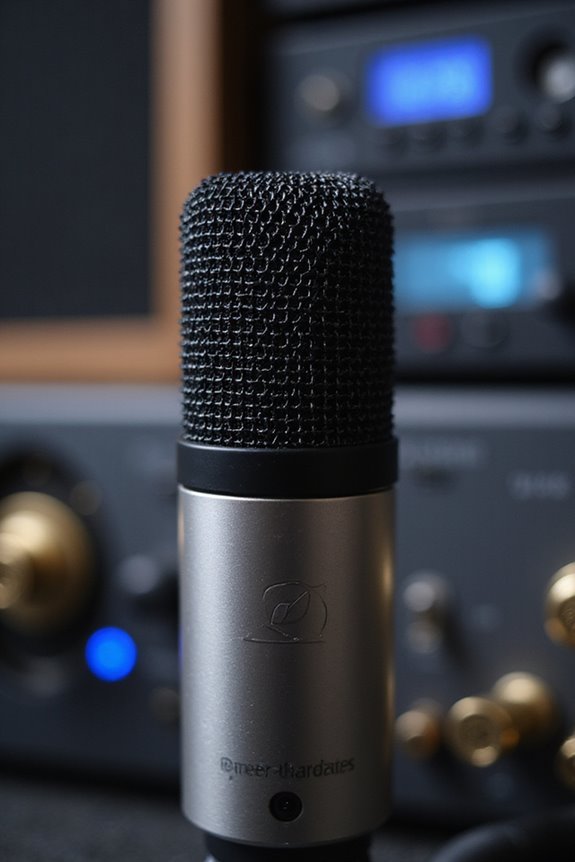
When you think about how these specialized microphones function, it’s important to understand their intricate processes that guarantee excellent audio quality. Auto calibration microphones start with signal emission, sending out low-level signals, like soft pink noise, that sweep through frequencies. These signals capture room acoustics by bouncing off surfaces, adapting to changes in layout and ambient noise.
The advanced DSP algorithms analyze reflected signals to fine-tune frequency responses, adjusting gain, delay, and equalization settings. This ensures the audio remains clear and balanced across all speakers, regardless of listener position. Additionally, regular calibration checks enhance immersive home theater experiences by ensuring optimal sound quality.
Operating continuously in the background, these systems monitor and adjust in real-time, maintaining superior sound quality without interrupting your experience. Together, we appreciate the precision and adaptability of these incredible tools.
Applications of Auto Calibration Microphones

Applications of auto calibration microphones are widespread across various industries, particularly in automotive testing and sound system development.
In automotive testing, these microphones measure noise, vibration, and harshness (NVH) in vehicles, including internal combustion engines and electric models. They help validate acoustic designs and support onboard active noise control systems.
In wind tunnel testing, ultra-thin microphones accurately assess aerodynamic noise and airflow turbulence without disturbing airflow. They can be installed in confined spaces for precise surface pressure measurements.
For sound system development, auto calibration microphones assist in tuning in-cabin sound quality, providing reference measurements for audio systems. By integrating these microphones, you enhance the overall vehicle acoustics, ensuring compliance with automotive standards and improving overall performance. Additionally, utilizing high-quality installation products can further optimize the sound experience in automotive environments.
Technical Features and Innovations

In the domain of audio technology, innovative features of auto calibration microphones stand out, enhancing their functionality and reliability. These microphones integrate precision timing mechanisms, completing calibration sequences in less than 790 ms with essential signal measurements at standard frequencies like 1 kHz and 3 kHz.
Key technical features include:
- Noise Suppression: Advanced algorithms provide crosstalk attenuation exceeding 40 dB, guaranteeing clear audio capture.
- Gain Adjustment: Resolution as fine as 2.3 dB supports accurate signal processing.
- Compliance Standards: Adhering to IEC and ANSI protocols guarantees consistent performance under specified conditions.
With omnidirectional capsules and a signal-to-noise ratio of 16-17 dB(A), you’re assured sensitive and precise audio measurements. Embracing these features can markedly elevate your audio projects. Additionally, many modern receivers utilize calibration technologies to ensure tailored sound performance for unique room acoustics.
Benefits of Auto Calibration Microphones

Auto calibration microphones offer a range of benefits that greatly enhance your audio experience. With their user-friendly interface, setting up audio systems becomes quick and efficient. They automatically select frequencies, reducing the risk of manual tuning errors and enabling smooth operation, especially in dynamic environments.
We all appreciate improved sound quality, and these microphones deliver by correcting frequency response irregularities. They adapt to room acoustics, ensuring sound is as the artist intended. Furthermore, they minimize noise and interference, which means you can focus on your performance without technical interruptions. By automating setup processes, they also make advanced audio systems accessible, even for those with limited technical expertise. With these benefits, we can all enjoy an elevated listening experience together. Additionally, the integration of automatic calibration technologies ensures optimal sound performance tailored to your specific environment.
Limitations and Considerations
While auto calibration microphones offer convenience and improved sound quality, there are several limitations and considerations you should be aware of.
Calibration Accuracy
- Misplacement can lead to inaccurate distance and level settings.
- Room acoustics can result in worse sound than without calibration.
- Smaller diaphragm microphones may reduce precision due to higher noise floors.
Microphone Compatibility
- Many auto calibration microphones are brand-specific, limiting interchangeability.
- Using a different brand can introduce compatibility issues, affecting accuracy.
- Calibration profiles vary, and average curves might not match your microphone’s response.
As we navigate these limitations, proper microphone placement and compatible systems become essential for achieving the best results. Always guarantee the microphone you choose aligns with the calibration system you plan to use.
Comparing Manual Calibration vs. Auto Calibration
Understanding the differences between manual and auto calibration can enhance your audio setup experience.
Manual Calibration
- Involves detailed setup, requiring specific microphone parameters.
- Works in controlled conditions, ensuring accurate results through rigorous standards.
- It’s time-consuming and demands specialized knowledge.
Auto Calibration
- Operates quietly in the background, providing real-time adjustments without user effort.
- Adapts continuously to changing environments, minimizing the need for manual intervention.
- It’s user-friendly, making it ideal for those who want a hassle-free experience.
Both calibration methods aim to improve your audio quality. However, while manual calibration offers high accuracy for static conditions, auto calibration enhances user experience by adjusting dynamically to different environments. Together, they serve varied needs in audio setups.
Future Trends in Auto Calibration Microphone Technology
As technology evolves, we find ourselves on the brink of major advancements in auto calibration microphone technology. The integration of advancements in AI enables real-time noise analysis and dynamic cancellation, enhancing sound quality without manual effort. Miniaturized MEMS microphones adjust to various conditions, providing peak clarity.
With materials innovation, ultralight designs and durable construction reduce calibration drift, ensuring stability even in challenging environments. Intelligent microphones now feature embedded microcontrollers for seamless self-verification and feedback, allowing you to monitor calibration status in real-time.
Moreover, wireless technologies now support automatic frequency hopping, enhancing signal integrity. As we embrace these trends, auto calibration microphones will become more efficient, user-friendly, and a crucial part of our audio experiences in diverse applications.
Frequently Asked Questions
How Much Do Auto Calibration Microphones Typically Cost?
Auto calibration microphones typically range from about $25 to $200, depending on features and brand. We should consider our budget when making a choice, as pricing variations can profoundly influence our options and experience.
Can Auto Calibration Microphones Be Used With Any Sound System?
Yes, auto calibration microphones can be used with various integrated systems, but we should keep compatibility concerns in mind. Certain systems might have limitations, so checking compatibility beforehand will guarantee the best performance for our needs.
Are There Specific Brands Known for High-Quality Auto Calibration Microphones?
Many professionals favor Shure microphones and various Audio-Technica options for their reliable performance. Studies show that precision in sound captures can improve listener experience by up to 30%, solidifying their reputation in auto calibration.
How Often Should Auto Calibration Microphones Be Recalibrated?
We don’t have to worry about strict calibration intervals for auto calibration microphones. They continuously adjust frequencies, so recalibration happens in real-time, adapting as needed, ensuring we always enjoy ideal sound quality together.
What Are Common Issues Faced When Using Auto Calibration Microphones?
Steering through the audio landscape, we often encounter auto calibration challenges, from microphone placement issues to signal interference. Together, we’ll work through these hurdles, ensuring our sound journeys resonate harmoniously and truly belong to us.