As an Amazon Associate, we earn from qualifying purchases. Some links on this site are affiliate links at no extra cost to you. Our recommendations are based on thorough research and editorial judgment.


What Is Bias Lighting TV?

Bias lighting for your TV involves placing soft, ambient light behind the screen. This subtle glow helps reduce eye strain by lessening brightness contrast, improving contrast and color accuracy. Ideal color temperature is around 6500K to mimic daylight, which enhances your viewing experience. There are static options, like LED strips, and dynamic systems that sync with what you watch. Exploring how bias lighting impacts your environment can further improve your movie nights and gaming sessions.
Key Takeaways
- Bias lighting refers to soft, ambient light placed behind TVs or monitors to enhance the viewing experience without creating glare.
- It is typically set to a color temperature of 6500K, mimicking daylight for optimal visual comfort.
- The illumination reduces eye strain by balancing brightness between the screen and surrounding environment.
- Bias lighting can be static (single color) or dynamic (changing color based on on-screen content) based on user preference.
- Its benefits include improved color accuracy, mood enhancement, and increased viewing comfort during extended sessions.
Definition of Bias Lighting
Bias lighting is an effective way to enhance your viewing experience by adding a subtle light source behind your TV or monitor. This weak light source creates a halo effect by shining onto the wall or surface behind the display, promoting comfortable viewing.
Here’s what you need to know:
- Light Sources: Common options include LED strips and specialized lamps, favored for their efficiency and longevity.
- Placement: Position the light strategically to avoid glare, ideally at around 6500K to match studio daylight conditions.
- Functionality: Bias lighting can be static or dynamic, adjusting colors based on your content, supporting both aesthetic and visual comfort. Additionally, this lighting technique can improve movie theater snacks by enhancing the overall ambiance and making your home viewing experience more enjoyable.
Purpose of Bias Lighting in TV Viewing
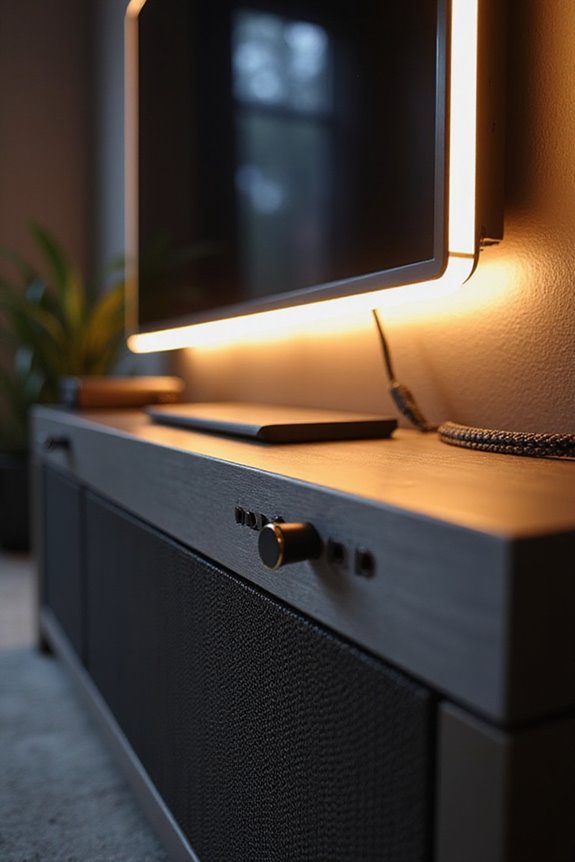
When you’re watching TV, the right lighting can make all the difference in your comfort and experience. Bias lighting serves several essential purposes that benefit every viewer.
- Reduce Eye Strain: It lessens the stark brightness contrast between your screen and dark surroundings, minimizing eye fatigue and dryness.
- Improve Visual Perception: By creating a consistent light field, bias lighting enhances perceived contrast and boosts color accuracy, making images look more dynamic.
- Enhance Comfort: This subtle illumination draws focus to the screen, creating an immersive environment without overwhelming glare. Additionally, incorporating energy-efficient lighting solutions can further enhance the viewing experience while reducing power consumption.
Historical Development of Bias Lighting
Over the years, lighting technology has progressed alongside television advancements, shaping how we view our favorite shows and movies. In the early days, bias lighting was about reducing eye strain. Early adoption included decorative “TV lamps” placed atop sets, casting a soft glow to lessen fatigue from stark contrasts.
As technology advanced, so did bias lighting. By the early 2000s, Philips introduced color-adaptive systems, making lighting dynamic and responsive to the on-screen action. These developments paved the way for LED-based kits, which provided efficient, adjustable lighting options that could be easily attached to flat-panel TVs. This journey reflects a significant evolution, highlighting how both television and lighting technologies can enhance our viewing experience together, particularly with the integration of home theater systems for immersive audio-visual enjoyment.
Technology Behind Modern Bias Lighting
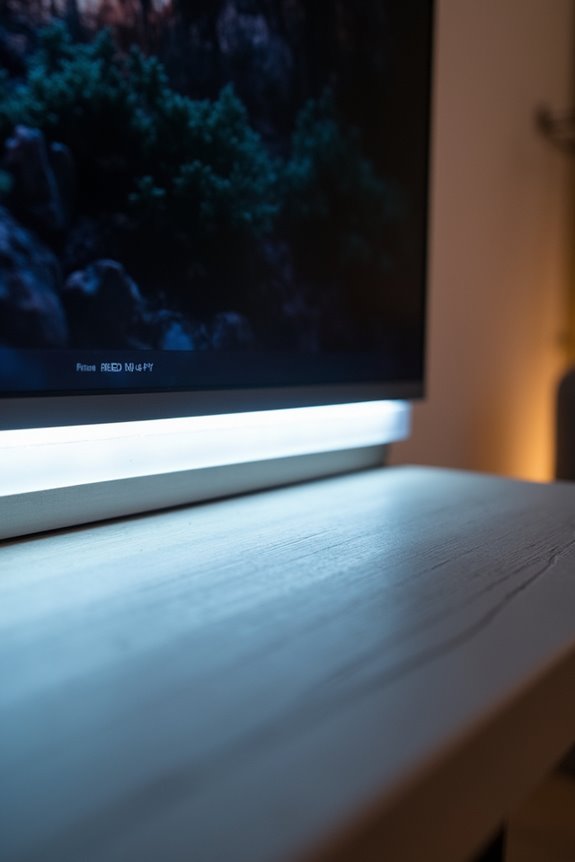
As the world of home entertainment evolves, technology plays an essential role in enhancing our viewing experiences, especially with modern bias lighting. With LED advancements, we now have more efficient systems that accurately reproduce colors while improving the overall picture quality.
Key features include:
- High-CRI LED Chips: These provide color reproduction of ≥90, guaranteeing on-screen hues are true to life.
- PWM Dimming: This allows for smooth brightness adjustments and over 16 million colors.
- HDMI Sync Technology: Guarantees zero-lag color matching, even in high-definition displays.
These innovations not only reduce eye strain but also create a more immersive atmosphere. By integrating bias lighting into our smart homes, we enhance our viewing experience, making it not just a necessity but a shared enjoyment. Additionally, modern audio systems, such as wireless subwoofers, complement this immersive experience by delivering deep and dynamic sound.
Dynamic vs. Static Bias Lighting
While we may often consider the role of bias lighting in enhancing our viewing experience, it’s important to recognize the distinct differences between static and dynamic bias lighting options.
Static vs. Dynamic Bias Lighting
- Static Bias Lighting offers a steady, uniform glow, typically using single-color LED strips like neutral white. It’s easy to set up, reduces eye strain, and maintains consistent color accuracy.
- Dynamic Bias Lighting changes colors and intensity to match on-screen content, enhancing immersion but potentially distracting if not calibrated well. It often requires more complex installation and is pricier. Additionally, immersive environments can greatly benefit from the use of dynamic bias lighting to create a more engaging experience.
In our advantages comparison, static lighting excels in eye comfort and simplicity, while dynamic lighting shines with its engaging effects. Your choice depends on whether you prioritize consistency or immersive experience.
Benefits of Using Bias Lighting
Using bias lighting not only enhances your viewing experience but also provides a variety of significant benefits that contribute to better comfort and satisfaction. Here are some key advantages:
- Mood Enhancement: The soft glow creates a cozy atmosphere, making viewing more enjoyable while highlighting the richness of colors and contrast.
- Energy Savings: Bias lighting allows for lower screen brightness, reducing energy consumption and extending the lifespan of your TV.
- Visual Performance: It improves perceived contrast, making colors more vibrant and details more visible without straining your eyes.
- Comfort: The balanced lighting minimizes glare and reflections, helping you avoid eye fatigue during extended viewing sessions.
Incorporating bias lighting into your setup enhances mood and saves energy, elevating your overall entertainment experience.
Effect on Eye Strain and Comfort
Eye strain is a common issue for many of us during extended TV viewing sessions, especially in low-light environments. When we watch bright screens in these conditions, our pupils rapidly dilate and constrict, forcing our eyes to work harder. Bias lighting can help us greatly reduce this strain.
Here’s how it improves visual comfort:
- Provides consistent ambient light, lowering contrast between the screen and surroundings.
- Stabilizes pupil size, which decreases visual discomfort.
- Reduces muscle fatigue by mitigating abrupt light changes.
- Helps prevent headaches associated with eye muscle strain.
For the best viewing experience, using bias lighting behind your TV creates a balanced environment, making those long binge-watching nights much more enjoyable and comfortable for our eyes.
Enhancing Image Perception With Bias Lighting
When we consider how bias lighting enhances our image perception, it’s clear that this simple addition can considerably improve our viewing experience. By creating ambient light around your TV, bias lighting enhances contrast, making dark areas appear deeper without changing colors.
Key Benefits:
- Improved Detail: Better gradation in shadows allows you to see nuances often lost in darkness.
- Reduced Glare: The soft glow minimizes reflections, preventing distractions from bright spots.
- Increased Depth: Ambient light creates a halo effect, setting apart the screen from the background, enhancing immersion.
With these features, you’ll experience a more vibrant image enhancement that captivates your attention and enriches your engagement with every cinematic moment.
Ideal Color Temperature for Bias Lighting
To fully appreciate the benefits of bias lighting, understanding the ideal color temperature is significant. The recommended color temperature for bias lighting is 6500K, which closely matches the daylight standard used in most TVs. This cool white light enhances color precision while preventing glare.
Key points to ponder include:
- A color temperature higher than 6500K may appear excessively blue, while lower than 6000K can become too warm, affecting image perception negatively.
- Consistency with your screen’s temperature is essential, as mismatched temperatures can distort colors and reduce the effectiveness of ambient lighting.
Importance of Calibration in Bias Lighting
Calibrating bias lighting is essential for achieving an accurate viewing experience. When we properly adjust our bias lighting, we guarantee that color calibration aligns with the industry’s 6500K standard. This prevents unwanted color shifts caused by the surrounding light and keeps the director’s intent in focus.
Moreover, adjusting the light intensity helps balance the brightness between the screen and your environment, reducing eyestrain. It’s important to note that if our bias lighting is off, we might end up increasing screen brightness unnecessarily, compromising image quality.
To sum it up, proper calibration:
- Enhances color accuracy.
- Minimizes visual fatigue.
- Supports consistent viewing conditions.
Common Types of Bias Lighting Solutions
Understanding the common types of bias lighting solutions can greatly enhance your viewing experience. Here are some popular options:
LED Strip Options
These are adhesive strips placed on the back of your TV. They usually emit 6500K white light, avoiding color distortion, and come in customizable lengths. They’re easy to install with peel-and-stick backing.
Smart Lighting Solutions
WiFi-enabled LED strips offer great flexibility. You can control brightness and colors via an app or voice commands. Some models even sync with music for a dynamic experience.
Light Bar Fixtures
These provide stable, uniform lighting, often requiring mounting hardware. They’re low-maintenance and ideal for permanent setups.
We’ve got many choices, so consider what fits best for your setup!
Installation Guide for Bias Lighting
Installing bias lighting is a straightforward process that enhances your viewing experience by adding depth and reducing eye strain. Here are some installation tips to get started.
Preparation: Secure LED strip lights with adhesive backing. Check power source compatibility—AC adapter or USB. Clean the TV’s back surface for better adhesion.
Placement: Position the strips 2-3 inches from the edge and about one-third down the back for even visual effects. Fold corners gently and avoid vents or cable ports.
Installation Steps: Peel off the backing and adhere the strip. Cut at marked points if necessary. Attach any controllers securely.
After installation, power on the lighting and adjust to 10-15% brightness for ideal comfort. Regularly inspect connections to verify everything remains secure.
Impact on Viewing Environments
When you incorporate bias lighting into your viewing environment, you instantly transform the overall experience. Let’s consider the impact assessment of bias lighting. It reduces eye strain by creating balanced ambient illumination, so you can enjoy longer sessions without discomfort. This environmental adaptation enhances contrast, making colors and details pop, leading to a more immersive experience.
Additionally, glare and reflection are minimized. Bias lighting maintains clarity on the screen, preventing distractions from surrounding light sources. The warm hues typically used also support healthy sleep patterns by reducing blue light exposure.
With these benefits, bias lighting not only enhances your viewing experience but also creates a visually integrated setup that elevates the atmosphere of your space.
User Experience Considerations
What makes user experience essential when incorporating bias lighting into your viewing space? It’s all about improving how we engage with our screens. Bias lighting not only reduces eye strain, but it also enriches the visual experience, adapting to our unique viewing preferences.
Here are some specific advantages:
- It creates a balanced luminance, making dark scenes look deeper and colors more vivid.
- We can watch for longer periods without discomfort, thanks to reduced glare and reflections.
- The gentle glow even supports better sleep patterns by softening harsh light exposure.
Ultimately, enhancing user experience through bias lighting allows us to truly enjoy our favorite movies, games, or work, making it a valuable addition to any viewing environment.
Recommendations for Optimal Bias Lighting
Incorporating ideal bias lighting into your viewing environment can dramatically enhance your overall experience. Here are some key recommendations for best installation:
- Color Temperature: Aim for around 6500K (D65) for color accuracy, ensuring the light mimics daylight without color distortion.
- CRI Rating: Choose lights with a high Color Rendering Index (CRI) of 95+ to maintain true color representation.
- Length & Placement: For TVs up to 75 inches, use about 16.4 feet of LED strip, positioning it on four sides for even illumination.
- Brightness: Set the brightness to match about 5 nits for comfortable viewing without glare.
Smart controls and automated features can add convenience, adjusting automatically based on the time or conditions.
Frequently Asked Questions
Can Bias Lighting Affect the Lifespan of My TV?
Yes, bias lighting positively impacts TV lifespan. By reducing strain on backlight components and promoting comfortable viewing, we can enjoy our screens longer while minimizing energy consumption. It’s a simple change that enhances our experience together.
Is Bias Lighting Suitable for All Types of TVS?
Absolutely, bias lighting’s suitable for all TV types, including LED. It enhances viewing distance comfort, reducing eye strain, making our movie nights more enjoyable together. Let’s elevate our experience, no matter what screen we use!
How Do I Control Bias Lighting Brightness?
To control bias lighting brightness, we can use dimmers or remote controllers for quick ambiance adjustments. Let’s start at 10% of the TV’s peak brightness, adjusting until we find our perfect balance for comfort.
Can Bias Lighting Be Used in Bright Rooms?
Yes, we can use bias lighting in bright rooms. While its benefits are subtle, it helps create ideal lighting conditions, enhancing our viewing experience and maintaining comfort, even with existing ambient light.
Does Bias Lighting Require Special Electrical Outlets?
No, bias lighting doesn’t require special electrical outlets. It typically meets standard power requirements and can connect to existing outlets. We just need to guarantee proper placement for safety and aesthetic appeal in our setup.


