As an Amazon Associate, we earn from qualifying purchases. Some links on this site are affiliate links at no extra cost to you. Our recommendations are based on thorough research and editorial judgment.


How To Ground AV System?

To ground your AV system effectively, we must focus on a few key aspects. First, verify all equipment is connected to a single grounding point to minimize hums and buzzes. Use high-quality copper wiring and check for compliance with the National Electric Code (NEC). Ground rods should be driven at least 8 feet deep, spaced appropriately. Implement a star grounding technique to reduce loops, and always conduct regular visual inspections of connections. Let’s explore more ways to optimize your setup.
Key Takeaways
- Install ground rods vertically at least 8 feet deep, spaced 6 feet apart, ensuring they don’t interfere with underground utilities.
- Use high-quality copper wire and connect all equipment grounds to a single common point to minimize ground loops.
- Regularly test the grounding resistance, aiming for 25 ohms or less, to ensure optimal performance for your AV system.
- Employ isolation devices to manage low-frequency hums and electromagnetic interference that may disrupt audio quality.
- Maintain grounding connections by performing visual inspections, cleaning terminals, and tightening connections as needed to prevent degradation.
Importance of Grounding AV Systems
When it comes to setting up our AV systems, grounding is essential for both safety and performance. Proper grounding not only protects us from electrical hazards but also enhances our audio and video experiences. Here are some key grounding benefits:
- Safety: Grounding provides a safe pathway for stray currents, reducing risks of electrocution and fire.
- Noise Reduction: Effective grounding techniques minimize hums and buzzes, stabilizing our audio clarity.
- Performance Stability: A well-grounded system guarantees consistent voltage delivery, allowing our equipment to function at peak efficiency. Additionally, proper grounding can enhance the overall sound quality, especially in systems that support Dolby Atmos for immersive audio experiences.
Understanding System and Equipment Grounding
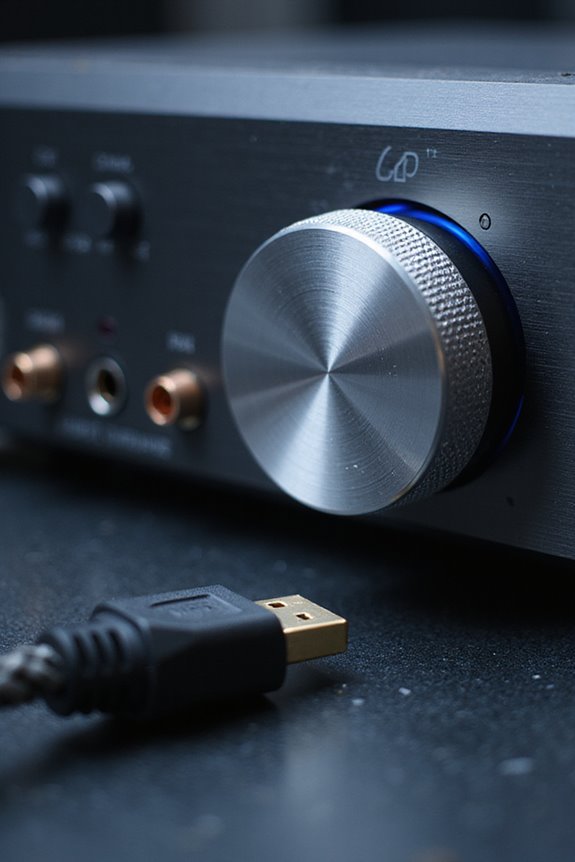
Understanding the intricacies of system and equipment grounding is vital for optimizing our AV setups. By employing effective grounding methodologies, we can minimize noise, improve signal clarity, and create a more immersive experience.
Here are key aspects to take into account in our equipment configurations:
- Single-level grounding connects all signal shields and safety grounds to a common point, reducing ground impedance.
- Class 1 vs. Class 2 devices require different grounding approaches; isolating signal shields from safety grounds is fundamental for noise reduction.
- Ground loops must be managed with ground isolators to prevent hum and interference.
Additionally, ensuring that your system supports multi-channel audio systems can enhance the overall audio quality and immersion. Experimenting with different grounding points and using low-resistance paths can lead to significant improvements in audio quality and overall system performance.
National Electric Code (NEC) Compliance
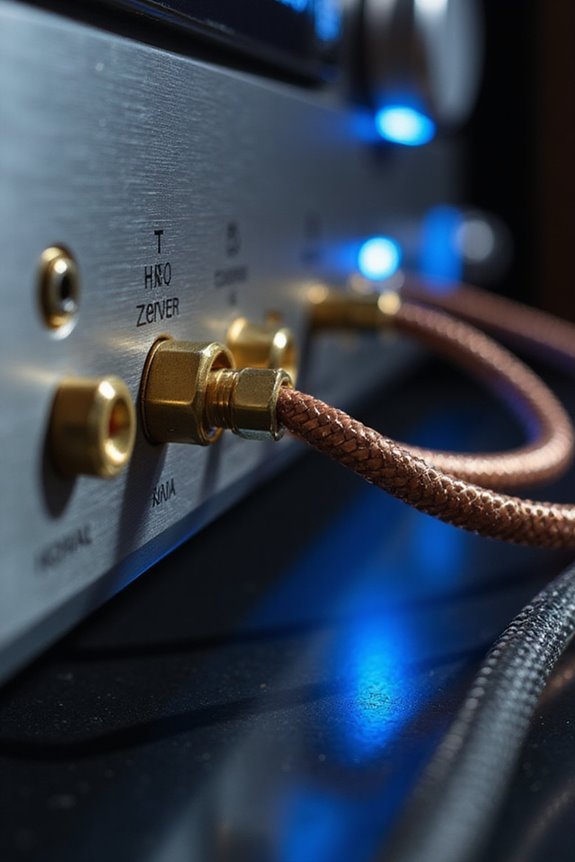
Guaranteeing compliance with the National Electric Code (NEC) is essential for any AV system operating above 50 volts. Adhering to the NEC compliance requirements not only safeguards your equipment but also protects those who use it. You’ll need to conduct grounding electrode evaluations, especially if your system includes transformers or major AV equipment.
Key points to remember include:
- Systems must have a grounding electrode conductor sized appropriately for the service entrance conductors—like using at least an 8 AWG copper GEC for a 2 AWG service.
- Grounding prevents hazardous voltages from lightning and surges.
- If you have a separate transformer, you must follow specific grounding and bonding rules to guarantee safety and compliance. Projector brightness plays a role in ensuring safe operation under various conditions. Let’s keep our systems safe together!
Grounding Electrode Placement and Resistance
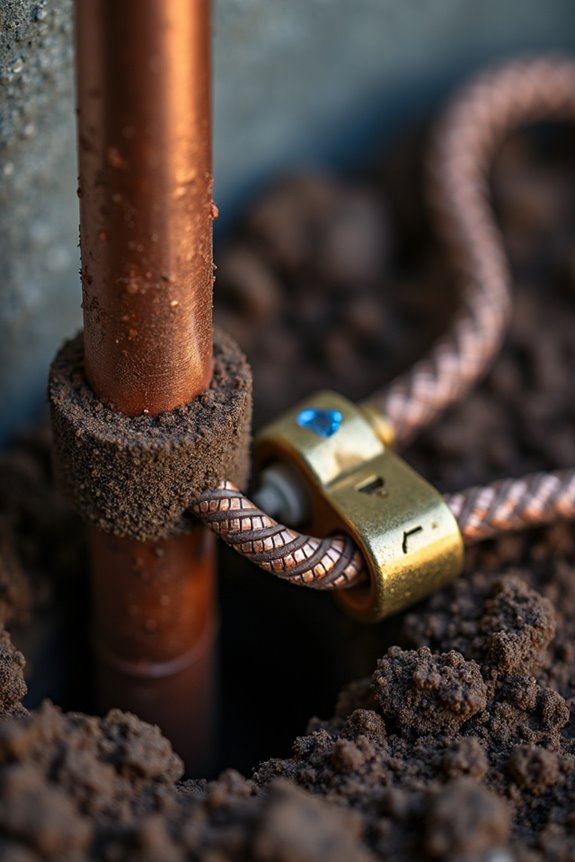
Grounding electrode placement and resistance are essential components for achieving an effective AV system grounding. During ground rod installation, guarantee rods are driven vertically at least 8 feet deep for proper soil contact. Select locations free from underground utilities to prevent damage and space rods at least 6 feet apart to avoid interference.
Soil resistivity is critical; higher resistivity may require additional rods or enhancements. The National Electrical Code recommends grounding resistance of 25 ohms or less, while sensitive AV equipment benefits from 5 ohms or lower. Regular testing with appropriate meters will help you monitor resistance and detect any degradation over time. By bonding all grounding points together, we can maintain a consistent potential and minimize noise interference. Additionally, proper speaker placement can significantly enhance the overall audio experience in your AV system.
Exploring the Star Grounding Technique
When we explore the star grounding technique, it’s clear that this approach is crucial for maintaining signal integrity in AV systems. By creating a single, isolated ground point where all equipment grounds converge, we considerably minimize noise and hum. This method guarantees that all devices share the same electrical potential, enhancing audio clarity. Additionally, utilizing advanced calibration technology like automatic calibration technologies can further optimize sound performance in your AV setup.
Grounding Benefits
- Reduces ground loop hum, a common issue in AV setups.
- Maintains a clean and stable ground, improving signal quality.
- Lowers electromagnetic interference by providing a centralized grounding point.
To implement star grounding, we should:
- Install isolated outlets dedicated to AV equipment.
- Connect each device to a central ground bus.
- Verify a good connection to the main electrical panel for safety.
Addressing Ground Loops in AV Systems
Addressing ground loops in AV systems is essential for enhancing your audio and video experience. When multiple grounding paths exist, they can create unwanted currents, leading to noise interference. To perform effective ground loop diagnosis, we should first check for multiple connections across different power outlets. Listen for low-frequency hums or buzzes in your audio, as they indicate looping ground currents.
Here are key points to reflect on:
- Measure voltage differences using a multimeter.
- Inspect signal cables for shielding issues.
- Temporarily disconnect suspect cables to pinpoint noise origins.
Safe Ground Loop Prevention Methods
To guarantee ideal performance of your AV system, it’s crucial to implement safe methods for preventing ground loops. One effective approach is using isolation devices. Isolation transformers separate grounds while allowing signal transfer, breaking undesirable ground loops. Additionally, ground loop isolators can block unwanted current paths, preventing hum and noise without compromising signal quality.
Another method is establishing a single-point grounding system. By connecting all your equipment to one common ground, we reduce potential differences that cause interference.
We should also avoid daisy-chaining grounds, as multiple paths create loops. Regularly check grounding connections for integrity and corrosion, ensuring everything works smoothly. These strategies play a critical role in maintaining clarity in your AV experience.
Effective Shielding and Balanced Grounding Practices
Incorporating effective shielding and balanced grounding practices into our AV system can considerably enhance sound quality and minimize noise. To achieve this, we should use various shielding techniques and prioritize balanced grounding throughout our setup.
- Implement star grounding by connecting all system grounds at a single point. This minimizes ground loops and interference.
- Utilize dedicated AC outlets for each device. This tactic ties each component back to a common earth, reducing ground impedance.
- Isolate inputs and outputs using galvanic isolation, like transformers, to prevent noise transmission.
Identifying and Troubleshooting Noise Sources
When it comes to identifying and troubleshooting noise sources in your AV system, understanding the common culprits is essential. To start, we can use various noise identification techniques like sound intensity mapping and microphone arrays to pinpoint high-noise areas.
Consider these troubleshooting techniques:
- Check for mechanical vibrations or loose components that might be generating structural noise.
- Look for electromagnetic interference from power supplies and lighting.
- Investigate ground loops between devices, responsible for hum and buzz.
- Keep an eye on faulty cables that can increase noise levels.
Utilizing Ground Isolators for Noise Reduction
Ground isolators can be a game-changer for anyone dealing with audio noise issues in their AV systems. These devices serve as effective noise filters, reducing hum caused by ground loops, which can heavily impact audio fidelity.
How They Work:
- Ground loop isolators use electromagnetic transformers to break direct ground connections, allowing audio signals to pass without unwanted noise.
- By interrupting current loops, they greatly diminish typical disturbances like engine whine or AC hum.
Considerations:
- While they can improve sound quality, some users might notice minor harmonic distortion and a slight change in frequency response.
- Selecting a high-quality isolator and placing it correctly within your audio chain are essential for achieving ideal results.
Embracing ground isolators not only enhances your listening experience but also supports your efforts in achieving clear, noise-free audio.
Installation Best Practices for AV Grounding
Verifying your AV system is properly grounded is essential for ideal performance and safety. We should focus on selecting reliable grounding points, like driven ground rods and dedicated building grounding systems. Avoid using gas pipes or coaxial cables to prevent safety hazards.
Utilizing high-quality copper grounding wires enhances conductivity. Insulated wires are important for longer runs, while shielded cables reduce noise interference.
Implementing a star grounding scheme keeps our signal grounds at a single point, minimizing ground loops.
Also, confirm power cords have grounding prongs connected to grounded outlets. These practices, backed by high-quality grounding products, maximize grounding benefits, enhancing system reliability and reducing interference. By following these steps, we can all enjoy a safer, more effective AV experience.
Regular Maintenance of Grounding Connections
Regular maintenance of grounding connections is essential for keeping your AV system safe and efficient. To do this, we should implement consistent grounding schedules that include visual inspections, corrosion prevention, and secure connections.
- Inspect grounding conductors and connectors monthly or quarterly for wear or corrosion.
- Regularly clean terminals to reduce resistance and apply anti-corrosion compounds where needed.
- Tighten all connections to the manufacturer’s specifications and document torque values.
- Monitor soil conditions to guarantee peak grounding effectiveness.
Common Grounding Mistakes to Avoid
When setting up your AV system, avoiding common grounding mistakes is crucial for both performance and safety. Let’s clear up some grounding myths and common misconceptions that often trip us up.
- Incorrect Grounding Points: Never use gas pipes or coaxial cables; instead, metal rods or properly grounded electrical outlets work best.
- Cable Shielding: Avoid poor-quality cables. Verify you use high-quality, shielded cables to prevent audio/video interference.
- Impedance Issues: Keep impedance under 8 ohms for general protection and ideally below 0.5 ohms for sensitive equipment.
- Installation Errors: Always connect the grounding prong to a grounded outlet. Neglecting to do so can lead to serious issues.
Frequently Asked Questions
What Tools Do I Need for Grounding My AV System?
To ground our AV system effectively, we’ll need insulated wire cutters, a multimeter for safety, connectors for secure attachments, and tools like screwdrivers to guarantee proper grounding techniques, minimizing noise and enhancing our listening experience together.
Can I Use Copper Wire for Grounding Connections?
Absolutely, we can use copper wire for grounding connections. Its excellent conductivity and durability make it ideal for our grounding techniques, ensuring safety and reliability for our AV systems while fostering a strong, connected community.
How Often Should I Test My Grounding System?
We can’t stress grounding importance enough, yet we often forget ground testing intervals. Let’s commit to testing our systems annually, or more frequently if conditions dictate; after all, safety shouldn’t be a once-a-year thought!
Is Grounding Necessary for Wireless AV Systems?
Yes, grounding is essential for wireless AV systems. It minimizes wireless interference and enhances signal stability, ensuring we enjoy clearer audio and video. Let’s prioritize safe, grounded setups to boost our overall AV experience together.
What Materials Are Best for Grounding Rods?
When it comes to grounding rods, we’d argue copper reigns supreme! With fantastic grounding techniques and benefits, it offers unmatched conductivity and longevity. Stainless and galvanized steel can also work, but why settle for less?