As an Amazon Associate, we earn from qualifying purchases. Some links on this site are affiliate links at no extra cost to you. Our recommendations are based on thorough research and editorial judgment.

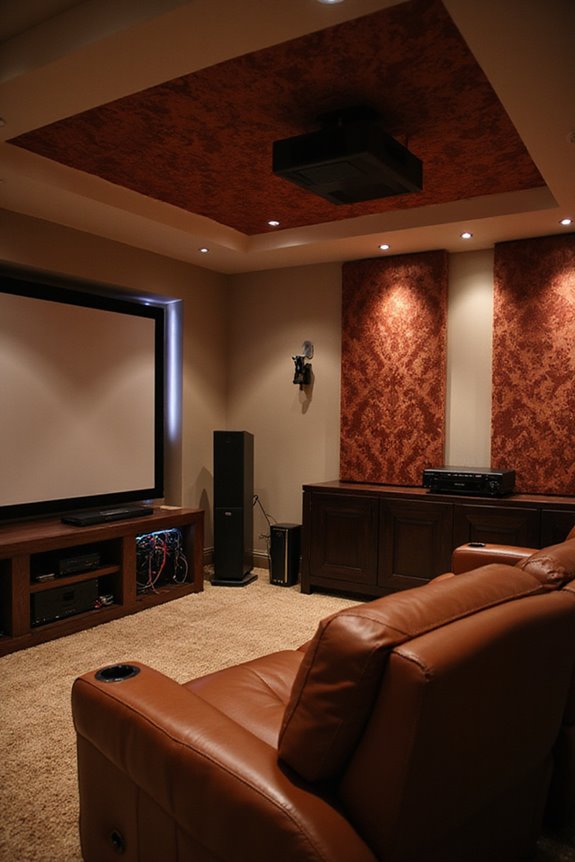
What Is Speaker Wire Polarity?

Speaker wire polarity refers to the correct connection of wires that guarantees our audio systems function properly. We connect the positive terminal to positive (+), typically red, and the negative terminal to negative (–), usually black. This maintains coherent sound waves, enhancing audio clarity and preventing phase issues that distort sound. Applying proper wiring practices is key to achieving the best performance from speakers. If you want to discover more about identification and wiring techniques, there’s more to explore!
Key Takeaways
- Speaker wire polarity indicates positive (+) and negative (–) terminal connections to ensure proper audio system functionality.
- Correct polarity ensures synchronous movement of speaker cones, enhancing sound clarity and performance.
- Reversed polarity can lead to phase issues, causing bass reduction and poor sound quality.
- Identifying polarity involves recognizing color codes, visual markings, or using tools like a battery or multimeter.
- Proper wiring practices include using color coding, powering down equipment, and securing connections to avoid errors.
Definition of Speaker Wire Polarity
Speaker wire polarity is a critical concept in audio systems that guarantees your sound equipment functions properly. Polarity involves matching the positive (+) terminal of your amplifier to the positive terminal on your speakers, and the negative (–) terminal to the negative one.
To verify you’re making the correct connections, speaker wires come in various wire types, often marked by stripes, different colors, or dots that indicate polarity. Here are some common features to note:
- Positive wires may be red, striped, or labeled with a “+”.
- Negative wires can be black, plain, or differently colored.
Understanding these connection methods helps prevent issues like out-of-phase sound reproduction, allowing your audio experience to be immersive and enjoyable. Additionally, using universal remotes can enhance your overall entertainment setup by simplifying the control of multiple devices, ensuring a seamless audio experience.
Importance of Correct Polarity
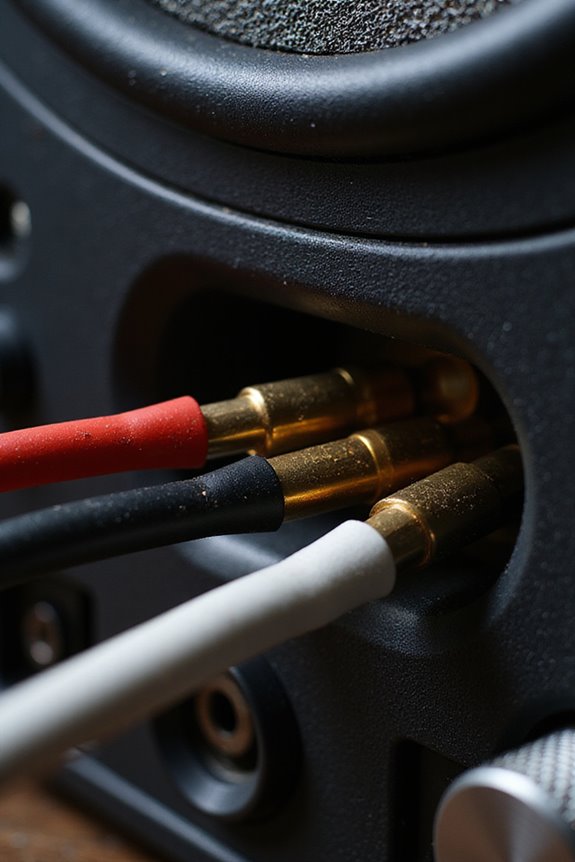
Correct polarity is essential for maintaining peak audio performance across your sound system. When we guarantee correct polarity, we help all speaker cones move synchronously, leading to coherent sound waves. This synchronized movement enhances speaker performance and delivers clearer, fuller audio presence that we all enjoy.
Moreover, consistent polarity across our setup prevents phase issues, which can distort sound clarity and diminish the stereo image. It’s key for accurate instrument placement and spatial awareness, especially in larger arrays for home theaters. Ensuring proper audio quality performance is crucial for an immersive listening experience.
Using color-coded wiring and standard conventions simplifies installation, reducing errors. By prioritizing correct polarity, we maintain sound coherence, guaranteeing our listening experience remains rich and enjoyable, without unwanted muddiness or distortion. Let’s aim for that clarity together!
Effects of Reversed Polarity
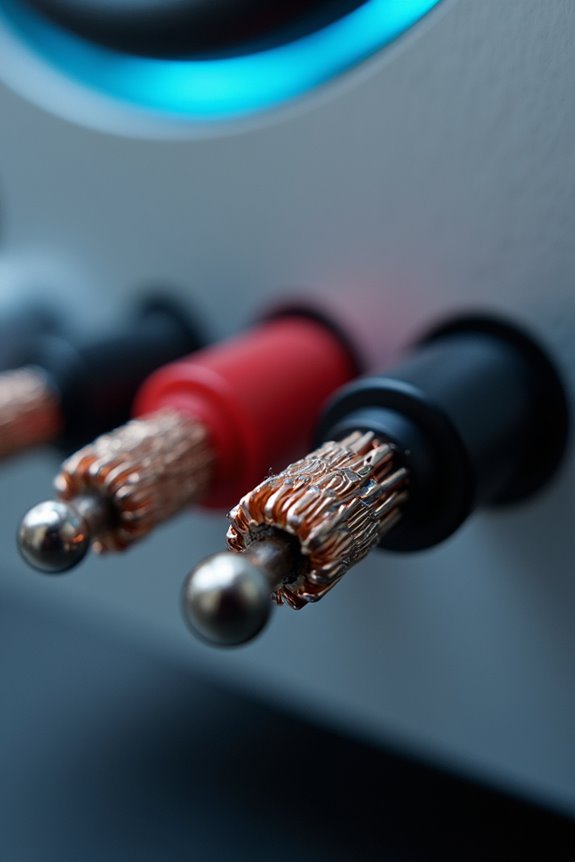
When polarity is reversed in a sound system, the effects can detrimentally impact audio quality. You might notice issues like phase interference, which occurs when sound waves from reversed and correctly wired speakers clash, leading to bass reduction. This interference reduces overall sound clarity, distorting the audio experience you expect.
In multi-speaker setups, speaker alignment is essential. If one speaker is out of phase, it can disrupt the soundstage, making it feel hollow or less precise. This degradation is especially evident with complex music and can make listening less enjoyable. To enjoy music as intended, it’s important to guarantee proper polarity across all speakers for better sound clarity, enhanced bass response, and a coherent audio experience. Ensuring proper room acoustics can further enhance the audio quality and mitigate the effects of reversed polarity.
Identification of Positive and Negative Speaker Wires
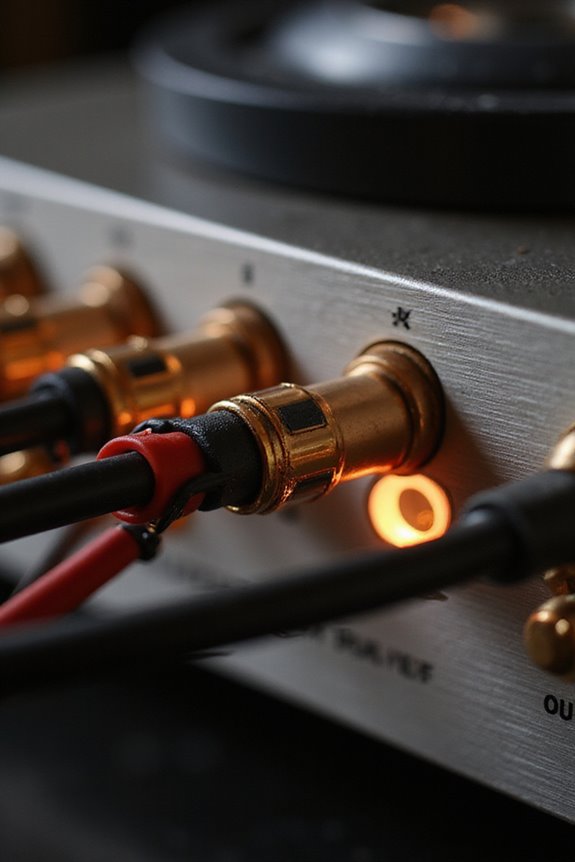
Identifying positive and negative speaker wires is essential for ensuring ideal audio quality in your sound system. Using visual identification, you can rely on color coding—often red for positive and black for negative. Look for physical features like stripes or bumps, which can also indicate polarity. If you’re unsure, testing methods like briefly connecting the wires to a 9V battery can help. If the speaker cone moves outward, that wire’s positive; if it moves inward, it’s negative. Additionally, using a multimeter set to DC voltage mode provides precise results, especially when visual cues are unclear. Properly identifying speaker wire polarity is crucial for achieving immersive audio experience in your home theater setup.
Wiring Best Practices Related to Polarity
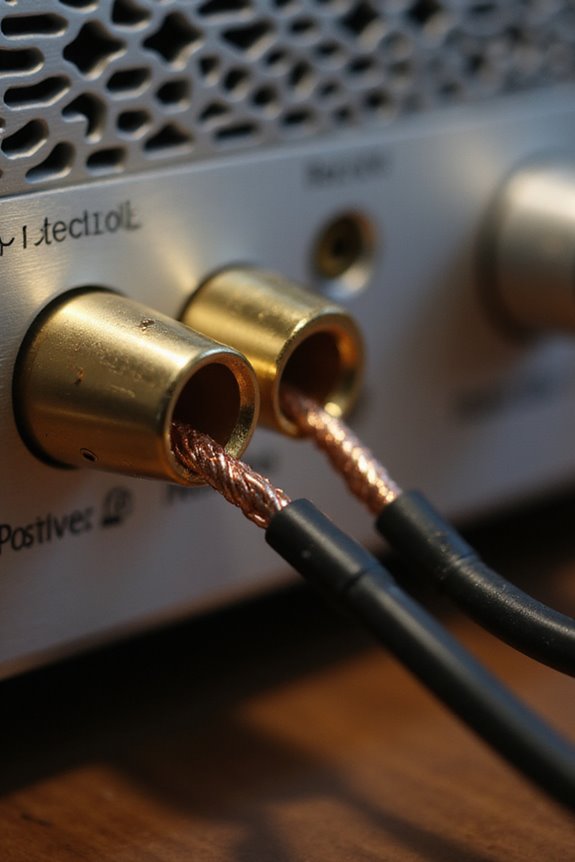
Guaranteeing proper speaker wire connections is a key step in achieving ideal audio performance. Here are some effective wiring techniques and installation tips to help you maintain polarity consistency:
- Use Color Coding: Most speaker wires feature red and black insulation. Always connect red to red (positive) and black to black (negative). This minimizes errors.
- Power Down: Always shut off your amplifier before connecting wires. This helps prevent damage.
- Secure Connections: Strip about half an inch of insulation from wire ends, and twist strands for a secure fit in terminals.
- Verify Polarity: Double-check connections at both ends before powering up your system to guarantee phase coherence and best sound quality. Additionally, using high-quality materials can enhance the longevity of your connections and overall audio experience.
Following these guidelines will help you achieve a smooth and hassle-free installation experience.
Consequences of Ignoring Speaker Wire Polarity
Ignoring speaker wire polarity can lead to several detrimental consequences that affect your overall audio experience. When we connect wires incorrectly, we risk losing bass response, resulting in sound that’s thin and weak. This is especially noticeable in systems with multiple speakers, where phase cancellation can create a hollow sound.
Here’s what can happen:
- Loss of Acoustic Performance: Sounds may overlap destructively, diminishing clarity and volume.
- Stereo Imaging Issues: You might find it hard to pinpoint instrument placement, leading to a flat soundstage.
- Listening Fatigue: Distorted, unnatural audio forces our ears to strain, making prolonged listening less enjoyable.
Correcting polarity guarantees that you enjoy a richer, more immersive listening experience, maximizing the potential of your audio setup.
Frequently Asked Questions
Can Speaker Wire Polarity Affect Wireless Systems?
Absolutely, speaker wire polarity can impact wireless systems! Did you know 30% of users experience sound issues due to polarity errors? We must guarantee proper connections to enhance signal quality and minimize wireless interference for everyone’s enjoyment.
What Materials Are Commonly Used for Speaker Wires?
When choosing speaker wires, we often rely on copper alloys for their excellent conductivity. We also consider various insulation types to enhance durability and performance, ensuring our audio experience is as clear and immersive as possible.
How Can I Test Speaker Wire Polarity at Home?
We can test speaker wire polarity at home using simple wire testing methods like a 9-volt battery or a multimeter. With the right speaker wire tools, we can easily ascertain our audio setup sounds great together!
Do Different Speaker Types Require Specific Polarity Connections?
Absolutely, different speaker types do require specific polarity connections! While passive speakers demand meticulous wiring, active speakers laugh in the face of polarity woes, handling it all internally. We’re all in this sound journey together!
Can Reversed Polarity Cause Permanent Damage to Speakers?
Reversed polarity usually won’t cause permanent speaker damage. While polarity issues might affect sound quality, we’re safe knowing that typical setups don’t risk harming our speakers. Let’s keep our connections correct for the best audio experience!