As an Amazon Associate, we earn from qualifying purchases. Some links on this site are affiliate links at no extra cost to you. Our recommendations are based on thorough research and editorial judgment.

Projector Screen Vs Painted Wall?

When choosing between a projector screen and a painted wall, you should consider several factors. Projector screens offer ultra-smooth surfaces, improving image clarity and brightness, while painted walls can adapt to unique dimensions. Screens typically provide higher light reflectivity and color accuracy, with gain values enhancing brightness. However, painted walls can be cost-effective and easier to install. If you’re curious, we’ll explore specific use cases to help you make an informed decision.
Key Takeaways
- Projector screens offer ultra-smooth surfaces, ensuring superior image clarity and minimal texture variation compared to painted walls.
- Screens have higher gain values, enhancing brightness and contrast, resulting in more vibrant colors than ordinary wall paints.
- Painted walls allow customizable dimensions and maintain a minimalist aesthetic, making them ideal for multipurpose spaces.
- Installation of projector screens often requires professionals, while painted walls are suitable for DIY projects, potentially reducing costs.
- Screens provide better performance with improved clarity and reduced reflections in ambient light, enhancing the overall viewing experience.
Surface Texture and Smoothness
When considering the surface texture and smoothness of projection displays, it’s essential to recognize the distinct advantages that dedicated projector screens hold over painted walls. Projector screens feature ultra-smooth surfaces that minimize texture variations, ensuring sharp and bright images. Unlike painted walls, which often have surface imperfections and irregularities, screens maintain consistent flatness.
Key benefits of projector screens include:
- Minimal light scattering: The smoothness improves focus accuracy and reduces unwanted diffusion.
- Durable coatings: Screens withstand wear and are easier to maintain, unlike painted walls that face maintenance challenges.
- Long-lasting smoothness: Walls can develop texture changes over time from dust and humidity, impacting image quality. Additionally, high-quality materials used in projector screens enhance projection brightness and clarity.
Choosing a dedicated screen is a smart way to enhance your viewing experience.
Light Reflectivity and Color Accuracy

Understanding light reflectivity and color accuracy is essential for achieving ideal projection quality. When selecting between projector screens and painted walls, we should consider gain values and how they affect brightness and contrast.
- Projector Screens: Typically offer high gain values, ranging from 1.1 to 1.24, providing bright images. However, in ambient light, these can result in washed-out blacks.
- Gray and Black Screens: Have lower gain values below 1.0, absorbing ambient light. They improve contrast, preserving deep blacks and vibrant colors.
Ordinary wall paints often lack the consistent reflectivity needed for accurate color reproduction. They can lead to muted colors and hue shifts, especially in brighter rooms. For the best results, let’s focus on specialized projector paints designed for peak performance. Additionally, using high-resolution support can significantly enhance the overall viewing experience by ensuring that images are displayed with clarity and detail.
Customization and Flexibility
Customization and flexibility are essential when deciding between projector screens and painted walls. With painted walls, you can create adaptable dimensions that suit any unique space. Whether your room is oddly shaped or needs a versatile projection area, projection paint allows us to tailor dimensions far beyond standard options.
Additionally, painted surfaces double as regular walls, helping maintain a minimalist design without clutter. Screens, while sometimes portable, occupy fixed wall space, limiting how we can use a room.
When it comes to multipurpose spaces, projection paint makes everyday walls functional for various applications. It seamlessly integrates into your environment, providing adaptability without compromising aesthetics. Ultimately, choosing painted walls maximizes the utility and flexibility we need in today’s multifunctional spaces. Furthermore, the use of versatile connectivity options allows for seamless integration with various devices and applications, enhancing the overall projection experience.
Installation and Cost Considerations
Choosing between a projector screen and a painted wall involves carefully considering installation and cost factors.
Installation Challenges
- Projector screens often require professional installation, mounting, and bulky hardware.
- Painted walls need surface preparation, like sanding, but can be a DIY project.
Cost Breakdown
- Projection screen paints offer a lower initial cost versus high-end screens, which can reach thousands.
- Factoring in preparation, specialized paint may raise the total expense.
- Painted walls eliminate future maintenance costs tied to screens, as there are no mechanical parts to fail.
- Additionally, utilizing acoustic panels can enhance the overall viewing experience by improving sound quality in your space.
Ultimately, you’ll want to weigh the installation effort and upfront costs carefully to find what best fits your space and budget.
Image Quality and Viewing Experience
When it comes to image quality and viewing experience, the choice between a projector screen and a painted wall can greatly impact your enjoyment. Projector screens are crafted with ultra-smooth surfaces that deliver superior image clarity, while painted walls often have textures that reduce sharpness. Here’s how they compare:
- Light Reflectivity: Screens typically have coatings that enhance brightness, outperforming standard white walls.
- Color Accuracy: Screens maintain color neutrality, preventing distortion and maximizing vibrancy.
- Viewing Angles: High-quality screens optimize sharpness across different angles, while walls often degrade image quality off-center.
In ambient light, screens minimize reflections, ensuring a brighter, more immersive experience. Overall, choosing a projector screen remarkably elevates image clarity and the overall viewing experience. Additionally, screens with high reflectivity surfaces enhance brightness, making them suitable for varying lighting conditions.
Practical Use Cases and Applications
The practical applications of projector screens versus painted walls vary greatly depending on the setting and purpose.
Event Applications
For temporary events, projector screens offer a reliable, portable solution, ensuring high image quality. Walls might work, but uneven surfaces can lead to disappointing visuals.
Home Entertainment
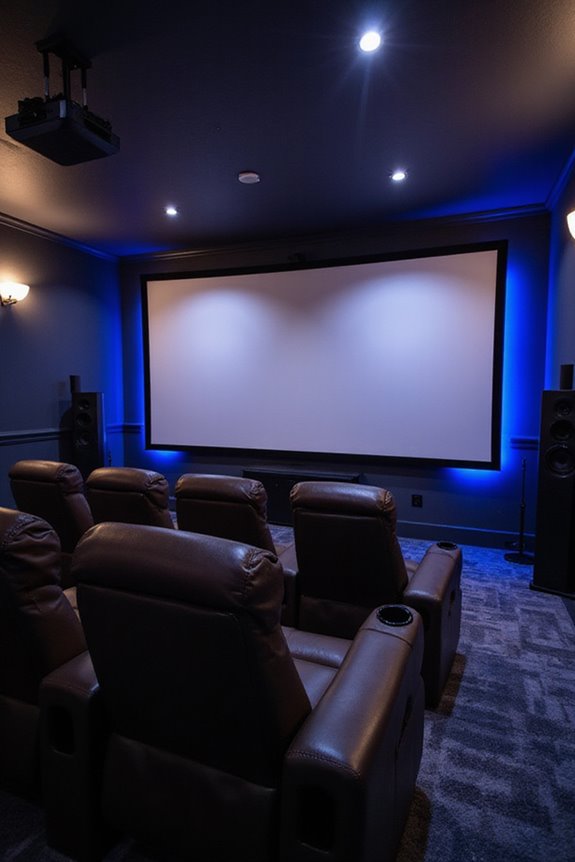
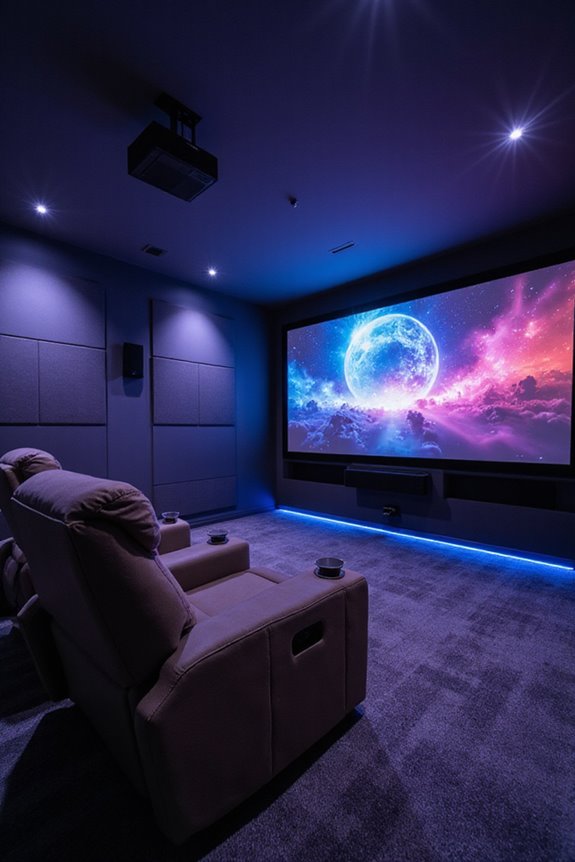
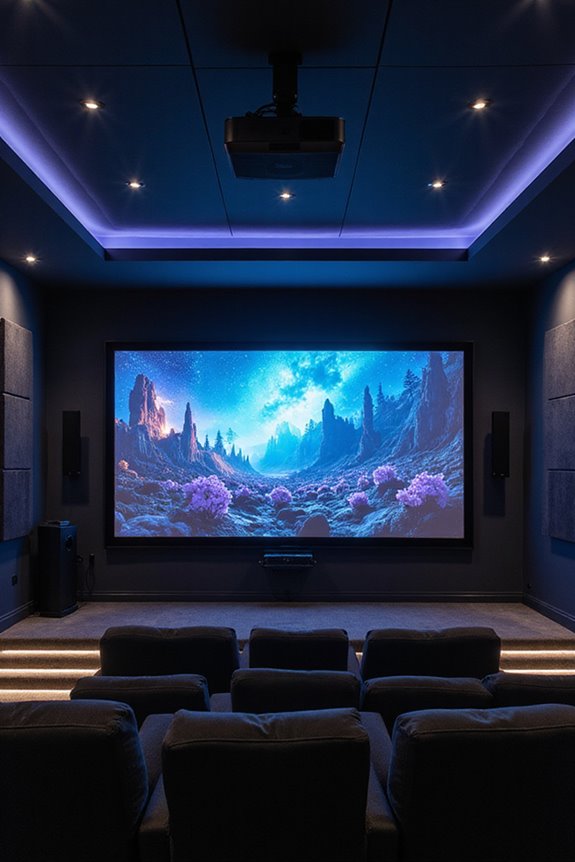
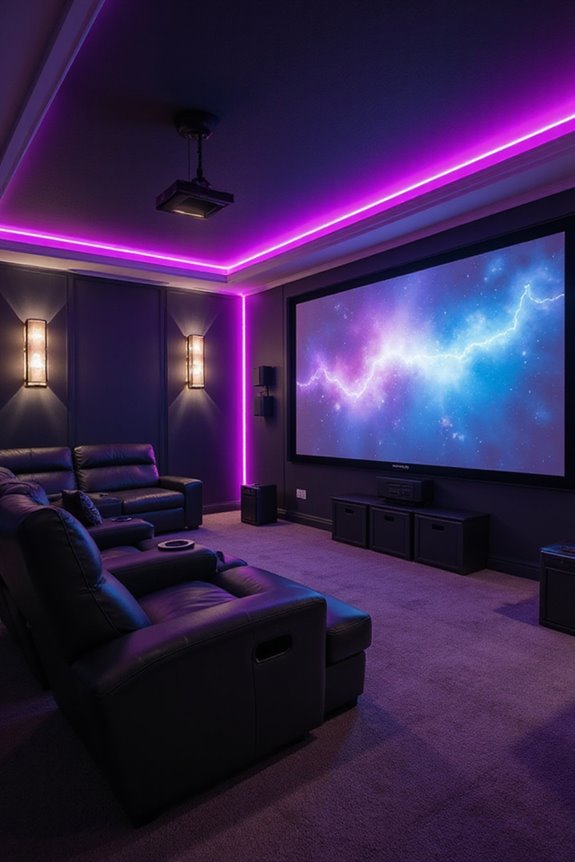
In home theaters, screens enhance the experience, allowing for better control over light and size. Painted walls are budget-friendly but often lack vibrancy.
Office Presentations
In office settings, screens reduce distractions from wall imperfections, providing clearer visuals at eye level.
Classroom Settings
For classrooms, retractable screens adjust to different layouts and withstand frequent use, making them practical for diverse educational needs. By understanding these applications, you can choose the best option for your specific needs.
Frequently Asked Questions
Can I Paint Over an Existing Projector Screen?
Yes, we can paint over an existing projector screen! By choosing the right type of paint, we’ll enhance our projection technology experience while customizing the surface for clarity, color, and personal preference.
How Does Humidity Affect Painted Wall Projection?
When it rains, it pours, and humidity effects on our painted walls can lead to uneven absorption and projection issues. By controlling humidity, we guarantee vibrant images and a smooth surface that enhances our shared viewing experience.
Are There Maintenance Differences Between Screens and Painted Walls?
Yes, we find that screen durability requires delicate handling and regular cleaning, while wall cleaning is more straightforward. Maintaining both guarantees a beautiful environment we can all appreciate and enjoy together without excessive effort.
Can Projection Paint Be Used Outdoors?
Absolutely, we can use projection paint outdoors! With a gain value around 0.9, it guarantees excellent projection quality even in bright conditions, making it a fantastic choice for our backyard movie nights and gatherings.
Is Painting a Wall Reversible if I Change My Mind?
Yes, painting a wall’s reversible! We can follow a removal process, ensuring proper wall preparation. It takes effort, but with the right tools and techniques, we can restore our space to its original state.