As an Amazon Associate, we earn from qualifying purchases. Some links on this site are affiliate links at no extra cost to you. Our recommendations are based on thorough research and editorial judgment.


How To Store Vinyl Records?

To store vinyl records properly, we should follow a few vital practices. First, keep records upright to prevent warping, and use sturdy dividers or crates. We can enhance protection with anti-static sleeves, like rice paper or Mylar. Maintain a climate-controlled area with temperatures between 65°F and 70°F and humidity levels at 45-50%. It’s essential to handle records by the edges and keep them clean. These steps guarantee the longevity of our collection—stick with us, and we’ll guide you further!
Key Takeaways
- Store records upright to prevent warping, using dividers or crates for stable support and airflow.
- Maintain a climate-controlled environment with temperatures between 65°F and 70°F and relative humidity between 45% and 50%.
- Use protective sleeves like rice paper or Mylar to prevent dust and static; avoid PVC due to potential chemical reactions.
- Handle records by their outer edges or center label; avoid touching grooves and keep hands clean to preserve vinyl integrity.
- Keep records in dark, clean spaces to prevent light exposure damage and minimize dust accumulation for optimal sound quality.
Proper Cleaning Before Storage
When it comes to storing vinyl records, proper cleaning is essential. Before we put our cherished albums away, we need to focus on using effective cleaning solutions.
- Start by mixing dish soap or a mild detergent in distilled water. Avoid isopropyl alcohol, as it can harm vinyl’s protective shine.
- Use a carbon fiber or velvet brush to gently remove surface dust. Brush in circular motions from the center to the edge to keep grime from settling into grooves.
- After brushing, employ a microfiber cloth for a final touch. Additionally, maintaining sound quality is crucial for preserving the integrity of your vinyl collection.
Orientation and Positioning
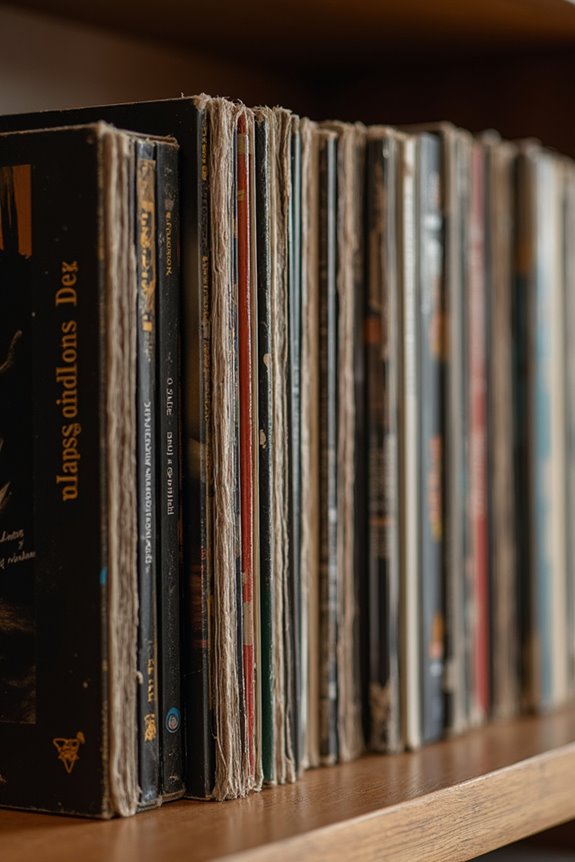
To guarantee your vinyl records remain in top condition, we must pay close attention to how we store them. Using a vertical organization is vital for preventing warping. Always store records upright to avoid pressure on the grooves.
Here are some key points:
- No Flat Stacking: Laying records flat or stacking them horizontally can cause bending and permanent warping.
- Weight Distribution: Limit horizontal stacking to five records, placing the heaviest at the bottom to minimize pressure damage.
- Record Dividers: Employ dividers or crates to maintain stable vertical positioning, preventing leaning and distortion.
- Airflow: Vertical storage allows for better airflow, reducing heat buildup that can damage vinyl. Additionally, like surround sound systems, maintaining proper storage conditions can enhance the longevity of your collection.
Following these steps will help protect your collection and keep your music experience enjoyable.
Protective Sleeves and Covers

Protecting your vinyl records with the right sleeves and covers is vital for maintaining their quality over time. To guarantee the best protection, consider the sleeve materials available:
- Rice paper and Mylar: These provide excellent anti-static qualities and dust prevention, making them ideal for valuable collections.
- Polyethylene: Flexible and durable, but may become cloudy over time.
- Paper sleeves: Inexpensive, but can generate static and risk scratching.
When it comes to outer sleeves, polypropylene offers visibility and protection, while PVC should be avoided due to potential chemical reactions. It’s imperative to achieve proper sleeve fitting for effective protection. While higher-quality sleeves may have higher storage costs, their longevity and benefits in static reduction can enhance your listening experience. Additionally, using high-density materials for storage can further safeguard your records against environmental factors.
Optimal Storage Environment
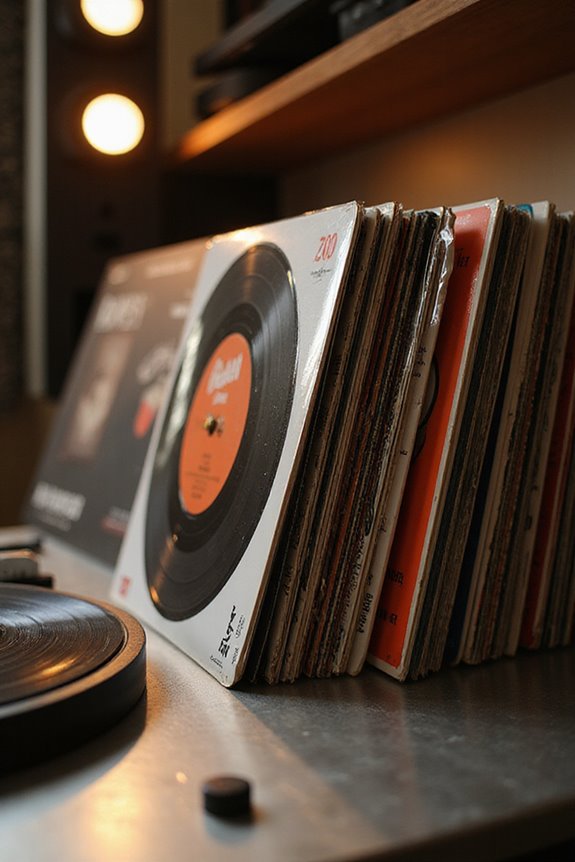
How can we guarantee our vinyl records remain in pristine condition? The ideal storage environment is key. We should maintain a climate-controlled area with a temperature between 65°F and 70°F (18°C to 21°C) to prevent warping. Avoid keeping records near heat sources and aim for environmental stability, reducing temperature fluctuations to no more than ±10°F within 24 hours.
Humidity is another essential factor. Ideally, we want relative humidity levels between 45% and 50% to prevent mold growth.
Additionally, light exposure can wreak havoc on both the vinyl and artwork, so it’s best to store records in dark spaces. Finally, let’s keep our storage areas clean and free of dust to maintain sound quality and visual appeal. Consider using a storage cabinet to further protect and organize your collection.
Storage Furniture and Containers
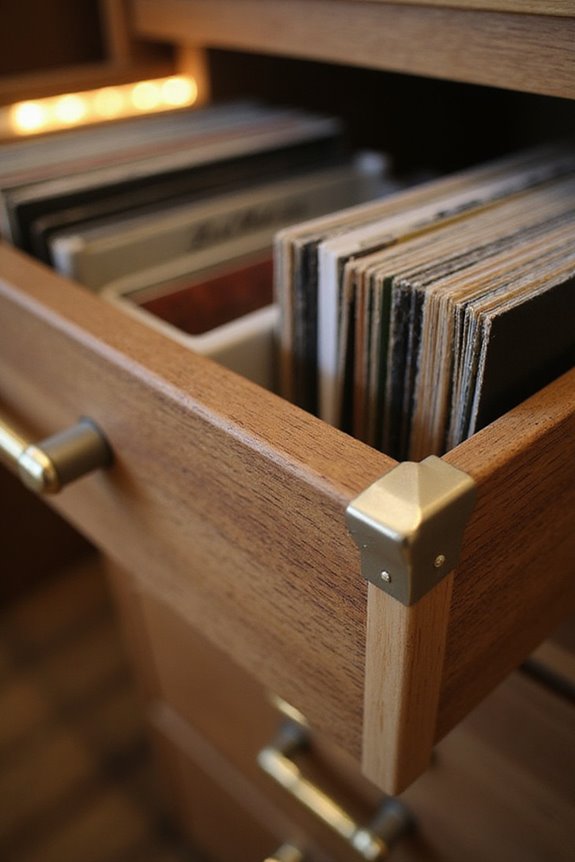
Choosing the right storage furniture and containers for our vinyl records is essential for maintaining their condition and accessibility. There are several vinyl cabinet styles available, from solid wood options to those with adjustable shelves, accommodating up to 400 records. Features like sliding doors, tapered legs, and integrated storage for players enhance both functionality and aesthetics.
Modular shelving options are also fantastic for organization. They offer adjustable configurations, meaning you can expand as your collection grows. Styles like IKEA Kallax provide a mixture of display and storage efficiency.
For smaller spaces, consider multi-purpose storage furniture, such as storage ottomans or vintage credenzas. These can serve dual functions, helping us keep our vinyl records accessible and well-protected. Additionally, similar to how projector design influences audio and visual quality, the choice of storage can also impact the preservation of vinyl records.
Long-Term vs. Short-Term Storage Practices
When it comes to vinyl record storage, understanding the differences between long-term and short-term practices is crucial. For short-term storage, you can use anti-static, acid-free inner sleeves with outer sleeves to protect your records. These methods safeguard album artwork while allowing you to easily access your favorites.
In contrast, long-term preservation requires more robust solutions. Invest in archival-quality, double-walled storage boxes that shield against dust and moisture. Always store your records upright, maintaining space between them to prevent warping. Make certain the environment remains cool and dark, as fluctuations can damage your collection over time. By following these guidelines, whether for short or long-term, you’ll protect your vinyl treasures for years to come.
Managing Humidity and Temperature
Maintaining the right humidity and temperature is key to preserving your vinyl records effectively. To protect our cherished albums, we should aim for a temperature between 65°F and 70°F, avoiding extremes above 80°F, which can warp our records permanently.
For humidity control, keep levels between 40% and 50%. Higher humidity encourages mold, while lower levels can cause brittleness.
Tips for managing humidity and temperature:
- Use digital thermohygrometers for monitoring.
- Store records in stable interior rooms, avoiding attics or basements.
- Employ climate control devices like humidifiers or dehumidifiers.
- Avoid direct sunlight, which can cause heat damage.
Handling Records Carefully
Handling vinyl records with care is essential to preserving their sound quality and physical integrity. Let’s focus on safe record handling to avoid damaging our cherished collections.
- Always grasp records by the outer edges or labeled center, steering clear of the grooves.
- A gentle grip is key; too much pressure can warp or chip them.
- Keep your hands clean, or wear gloves to protect the vinyl surface.
- When removing records from sleeves, do so slowly to prevent wear and static buildup.
For safe transportation, carry multiple records with both hands and never stack them flat. Using clean, appropriate sleeves also reduces risks of scratches and dust. By following these steps, we guarantee our records remain in pristine condition for years to come.
Regular Maintenance and Inspection
To guarantee our vinyl records remain in excellent condition, regular maintenance and inspection are essential. We should conduct inspections at least every few months to identify damage indicators such as warping, mold, or mildew growth.
- Check the sleeves and storage materials for any signs of wear that could harm our records.
- Look for cracks or delamination at the edges, which often signal poor storage conditions.
Before playing, we need to make certain the records are clean, using a carbon fiber brush to remove any dust. Let’s be mindful of how we handle them, minimizing unnecessary touches to preserve sound quality. By staying consistent with our inspection frequency, we can guarantee our cherished vinyl collection stays in top shape for years to come.
Displaying Your Collection Beautifully
After ensuring our vinyl records are in top condition through regular maintenance, we can turn our attention to showcasing them in a way that enhances both their aesthetic appeal and our living space.
Creative Display Options
- Wall Mounts: Securely hold records for easy swapping without damaging covers.
- Floating Shelves: Space-saving and effective for upright display, allowing easy rotation.
- Custom Frames: Transform album covers into decorative wall art that matches our room’s decor.
DIY Displays
We can personalize our display solutions by crafting mounts and frames from various materials, adding a unique touch. Planning our layouts with varying heights creates visual interest. Remember, leaving negative space helps maintain balance.
These thoughtful arrangements not only enhance visual impact but also reflect our passion for music.
Frequently Asked Questions
Can I Store Vinyl Records in a Garage or Attic?
Storing our cherished vinyls in a garage or attic is like placing a delicate flower in a storm. Without proper temperature control and humidity levels, those beloved records could easily wilt. Let’s protect our musical treasures instead.
How Do I Get Rid of Static on My Vinyl Records?
To get rid of static on our vinyl records, we should use vinyl anti-static brushes and sprays for effective record maintenance. Consistent cleaning and proper humidity levels will help us enjoy our records without annoying static interference.
Is It Safe to Stack Records Temporarily for Transport?
Though we might be tempted to stack records temporarily during transport methods, it isn’t safe. Proper record protection demands keeping them vertical; our vinyl deserves the best care to preserve its musical magic.
What Types of Cleaning Solutions Are Best for Vinyl?
When it comes to cleaning vinyl, we prefer alcohol-free and enzymatic solutions. For homemade solutions, mild surfactants mixed with deionized water work wonders. Together, we can guarantee our records stay in top shape.
How Often Should I Inspect My Vinyl Records for Damage?
We should inspect our vinyl records regularly for damage, ideally before or after each play. Embracing this vinyl care routine strengthens our bond with music, ensuring our cherished collections stay pristine through consistent record maintenance.