As an Amazon Associate, we earn from qualifying purchases. Some links on this site are affiliate links at no extra cost to you. Our recommendations are based on thorough research and editorial judgment.

What Is IP Control For AV Gear?

IP control for AV gear allows you to manage audio-visual devices through existing IP networks. It provides seamless integration and centralized control of various equipment, such as monitors, projectors, and sound systems. You’ll benefit from features like easy scalability, flexibility, and cost efficiency. By using protocols like TCP/IP, devices can communicate smoothly, ensuring high-quality signal transmission. This technology is essential in various environments, such as education, hospitality, and retail, making operations more efficient. Keep reading to discover more about its applications.
Key Takeaways
- IP control allows remote management of audio and video devices via an IP network, replacing older control methods like serial and infra-red.
- It offers a centralized interface for powering devices, switching inputs, and adjusting settings, enhancing operational efficiency.
- Key benefits include scalability, flexibility, cost efficiency, and seamless integration among diverse AV devices.
- Encoders and decoders convert AV signals into digital data packets and vice versa, maintaining quality while optimizing network bandwidth.
- Current trends emphasize AI automation, touchless interfaces, and robust cybersecurity measures, enhancing user experience and system reliability.
Understanding IP Control for AV Gear
In the domain of audio-visual (AV) technology, IP control stands out as a game changer. It enables remote management of AV devices via an IP network, replacing older methods like serial or infra-red controls. With this technology, you can easily power on/off devices, switch inputs, adjust volume, and change settings—all from a centralized interface.
Key benefits of IP control include:
- Scalability: Control many AV endpoints effortlessly, whether locally or across wide networks.
- Flexibility: Integrate with automation systems and mobile apps.
- Cost Efficiency: Reduce the need for physical interfaces and manual operations.
Additionally, wireless HDMI switchers can enhance your AV setup by providing easy installation and high-definition streaming capabilities. Don’t forget about network security. Ensuring proper authentication and encryption is essential when connecting devices to your network. Understanding these features can enhance your AV experience.
The Basics of IP Transmission
AV transmission over IP transforms how we handle audio and video signals, making it an essential aspect of modern AV setups. This technology allows us to use existing network infrastructure, such as LAN or WAN, to distribute audio streaming and video distribution. By utilizing network protocols like TCP/IP and UDP/IP, we guarantee efficient transmission with minimal latency.
Key benefits include:
- Data compression: Standards like H.264 help maintain video quality while reducing bandwidth needs.
- Transmission efficiency: Multicasting enables one-to-many distribution, optimizing network usage.
- Signal processing: AV encoders and decoders convert signals for smooth playback on various displays.
Embracing IP standards equips us to create flexible, scalable solutions for our AV environments, enhancing both functionality and performance. Additionally, utilizing high bandwidth capabilities ensures that we can support high-resolution content without sacrificing quality.
Key Components of IP Control Systems

When considering IP control systems, it’s essential to understand their key components, which form the backbone of effective AV management. Here’s what you need to know:
Control System Hardware
- Control System Box: Acts as the CPU with status indicators.
- User Interfaces: Touchscreens or switch panels enable interaction.
- Network Integration: Supports IP devices with network-enabled ports.
Software Interfaces
- Platforms: Provide dashboards for managing devices.
- Remote Tools: Allow you to configure and control systems through the cloud.
Network Components
- IP Device Controllers: Facilitate direct control of AV devices.
- Quality of Service (QoS): Enhances AV signal integrity.
Understanding these key components helps you navigate AV control standards and tackle network troubleshooting more efficiently. Additionally, using high-quality installation products, such as speaker wire wall plates, can significantly improve the performance of your AV system.
Encoders and Their Role

Encoders play a crucial role in converting audio and video signals into digital data packets, ready for seamless transmission across IP networks. They’re essential in enabling you to integrate traditional AV signals onto standard Ethernet infrastructures. Here’s how they enhance efficiency and functionality:
- Encoder Technologies: Utilizing advanced compression formats like H.264 and H.265, they maintain quality while optimizing bandwidth.
- Encoder Applications: From live events to high-resolution streaming, they support zero or low-latency encoding.
- Encoding Efficiency: They enable multicast distribution, sending AV data once to multiple receivers without duplication.
- Encoding Standards: Encoders easily scale with your network, accommodating numerous sources and destinations. Additionally, they can integrate with advanced audio formats to create a more immersive experience for users.
The Functionality of Decoders
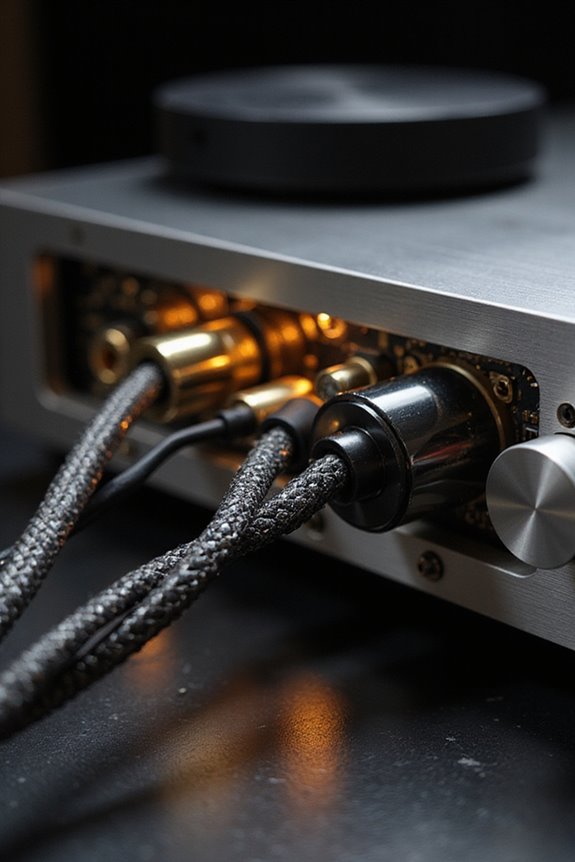
Decoders are essential components in the AV over IP ecosystem. They take encoded AV data from networks and convert it back into signals for our displays or audio systems. Here’s what you need to know about decoder functionalities and specifications:
- Real-Time Decoding: Decoders guarantee low latency for smooth operations, perfect for video conferencing.
- Multiple Formats: They support various audio and video formats, adapting to different displays.
- Standalone Operation: Many decoders, like the EIZO DX0211-IP, work independently, reducing setup complexity.
- Compatibility: High-performance models handle multiple feeds, maintaining 4K UHD support at up to 30Hz.
- Flexible Installation: They fit seamlessly into diverse environments, enhancing system reliability without extra equipment. Additionally, AV receivers often include advanced calibration features to optimize performance in various setups.
Understanding these features will help you appreciate the critical role of decoders in your AV setups.
Importance of IP Switches
To effectively manage AV systems in today’s dynamic environments, understanding the importance of IP switches is essential. These switches offer significant scalability benefits, allowing us to expand our AV systems easily by adding standard network switches without major overhauls. Unlike traditional switches, they support virtually unlimited device connections, letting you plug in new endpoints hassle-free.
Moreover, IP switches provide substantial cost savings. They eliminate the need for expensive dedicated AV switchers and utilize standard Ethernet cabling, reducing overall infrastructure costs. They streamline wiring complexity by consolidating AV and IT traffic on a single network, ensuring efficient long cable runs. This integration not only cuts costs but also boosts system performance, paving the way for a reliable AV experience.
Controllers in AV Networking
In modern AV networking, controllers play a crucial role in managing equipment effectively. They facilitate centralized control over various devices using standard Ethernet protocols. Here’s what you should know:
- Controller Types: You’ll find programmable button panels, networked AV controllers, and centralized platforms.
- Control Protocols: Many controllers support diverse protocols like TCP/IP, RS232, and IR, ensuring they work well with a wide array of AV devices.
These controllers often combine multiple ports—Ethernet, serial, relay—which means seamless integration with existing systems. Plus, features like web-based programming and automatic discovery of devices simplify installation. You can customize button functions easily, enhancing usability across settings, from classrooms to home theaters. With dynamic routing and low-latency delivery, you’ll experience smooth AV management at all times.
User Interfaces for AV Control
When you’re managing audiovisual systems, user interfaces play a pivotal role in ensuring smooth control and operation. Various user interface types cater to our needs and reflect current user interface trends. For instance:
- Web browser-based interfaces allow remote device control without dedicated software.
- Touch panel interfaces offer dynamic access and management via apps or cloud connections.
- Mobile device apps enhance convenience by enabling control from smartphones or tablets.
- Customizable interfaces empower users to tailor controls for their specific AV system needs.
These elements emphasize user experience design, making interactions intuitive. As we embrace these advancements, we create a more cohesive AV management experience that enhances our connection with technology, allowing a seamless flow in our daily operations.
Advantages of Utilizing IP Control
As we explore the advantages of utilizing IP control for AV gear, it becomes clear that this approach greatly enhances both functionality and efficiency. Here are some key benefits:
- Cost Reduction: With fewer specialized cables needed, installation and long-term ownership costs drop considerably.
- System Integration: It allows for seamless communication among diverse devices, guaranteeing device compatibility.
- Operational Efficiency: Centralized management simplifies tasks, reducing complexity for users and enhancing maintenance strategies.
- Signal Management: Dynamic routing guarantees high-quality signal transmission, perfect for live broadcasts or conferencing.
- Future Proofing Technology: IP control supports scalability, easily accommodating new devices and adapting to changing needs without extensive rewiring.
Comparing Traditional AV Control With IP Control
While both traditional AV control and IP control systems manage audio-visual equipment, their methods and efficiencies substantially differ.
Traditional Systems:
- They rely on dedicated hardware, like processors and matrix switchers.
- Communication often needs hardwired connections, leading to installation challenges.
- Control complexity arises from point-to-point wiring and limited device interoperability.
- Programming requirements can pose scalability issues as your system expands.
IP Control Benefits:
- They use standard networking protocols, enhancing device interoperability.
- Network advantages include simplified installation and centralized management.
- Less hardware reliance means easier updates and system integration.
- Communication security is typically stronger with IP systems, offering encryption and authentication.
Practical Applications in Various Settings
In various settings, AV over IP technology is revolutionizing how we manage audio-visual content. It’s transforming education technology and enabling seamless collaborative learning with live streamed lectures and centralized control of smart signage across campuses.
In government coordination, AV management simplifies communication among departments, providing real-time info dissemination while maintaining security.
In hospitality, trends show that multi-display setups enhance customer experience in restaurants and sports bars, allowing staff to control content from mobile devices.
Retail environments benefit from synchronized media across stores, creating engaging experiences that draw in shoppers.
In essence, AV over IP not only streamlines operations but also fosters an engaging atmosphere in educational, governmental, and commercial spaces alike.
Current Trends in IP Control Technology
The evolution of AV over IP technology has brought forth significant changes in how we control audio-visual equipment in various environments. Today, we see cutting-edge trends like AI automation, enabling predictive maintenance and dynamic allocation of resources. These enhancements optimize performance and detect anomalies in real-time, ensuring seamless operation.
Cybersecurity is a top priority, with robust data encryption and hybrid cloud solutions protecting our systems. We’re also embracing touchless interfaces and mobile access. This allows you to control devices conveniently from your smartphone, supporting remote management and hygiene in shared spaces.
As we adapt to user behavior and integrate sophisticated security measures, we’re creating a more efficient and secure AV experience for everyone involved.
Future Outlook for AV Over IP
As we look ahead, the future of AV over IP technology seems poised for exciting developments that will change how we interact with audiovisual systems. Industry predictions indicate that we’ll witness seamless integration with existing IT infrastructures, enhancing operation and scalability.
Key advancements will include:
- AI and Automation Integration: Expect features like automated room scheduling, camera tracking, and dynamic bandwidth optimization.
- Cloud-Based Management: Centralized hubs for remote AV control will enhance collaboration, while reducing onsite IT needs.
- Sustainability Focus: Energy-efficient designs will align with corporate goals, minimizing waste.
With future technologies driving these changes, we’re adapting to enhanced user experiences and improved system reliability. Together, we’ll embrace a more interconnected and efficient audiovisual future.
Scalability and Flexibility of IP Control
When considering the scalability and flexibility of IP control for AV gear, you’ll find significant advantages over traditional systems. Our IP-based setups support scalable deployments by enabling easy expansion through added endpoints without tedious physical rewiring. With network switches, we can manage cascading setups for large-scale systems, efficiently linking hundreds to thousands of devices.
The flexibility of IP control shines in its routing capabilities. We can route any source to any destination, eliminating previous connectivity limits. Our system layouts can be quickly reconfigured through software, allowing us to adapt seamlessly to environmental changes. With this, devices can be added, removed, or repositioned effortlessly. Overall, IP control offers the adaptability and growth potential that modern AV demands.
Integration With Existing Network Infrastructures
Integrating AV gear with existing network infrastructures offers a seamless experience that enhances functionality without compromise. By focusing on network integration, we can guarantee AV compatibility within your current corporate LANs and WANs.
Here’s how we achieve this:
- Utilizing Standard Components: AV over IP relies on Ethernet, allowing integration without proprietary hardware changes.
- Efficient Data Transport: AV signals are encoded into data packets, facilitating smooth transport across regular network hardware.
- Quality of Service (QoS): Configuring QoS on switches prioritizes AV traffic, minimizing latency and guaranteeing reliable performance.
- Collaboration is Key: Working closely with IT supports network capacity, security policies, and system reliability, guaranteeing a successful integration.
Together, we can elevate your AV capabilities while maintaining the integrity of existing systems.
Frequently Asked Questions
Can IP Control Systems Be Used With Existing AV Equipment?
Absolutely, we can integrate IP control systems with existing AV equipment, addressing compatibility challenges. By embracing legacy equipment integration, we enhance our systems without extensive rewiring, fostering a seamless setup that feels just right for all.
How Does IP Control Impact Video Resolution and Quality?
IP control greatly impacts video resolution and quality by requiring careful bandwidth considerations to avoid signal latency. Together, we can optimize settings to enhance clarity while managing network demands effectively, ensuring a smooth viewing experience.
Are There Cybersecurity Concerns With Ip-Controlled AV Systems?
Absolutely, we must prioritize cybersecurity with IP-controlled AV systems. Just like a well-guarded fortress requires strong firewall protection and data encryption, our interconnected devices need robust defenses to keep potential threats at bay and guarantee our safety.
What Training Is Required for Managing IP Control Systems?
To manage IP control systems effectively, we need training in network protocols and system architecture. Understanding these elements helps us navigate the complexities of integration and guarantees we maintain robust and secure AV environments together.
How Do I Troubleshoot IP Control System Issues Remotely?
When we face IP control issues, employing effective remote diagnostics and structured troubleshooting protocols helps us uncover root causes. Together, we can guarantee seamless connectivity, enhancing the experience for everyone involved in our AV ecosystem.