As an Amazon Associate, we earn from qualifying purchases. Some links on this site are affiliate links at no extra cost to you. Our recommendations are based on thorough research and editorial judgment.

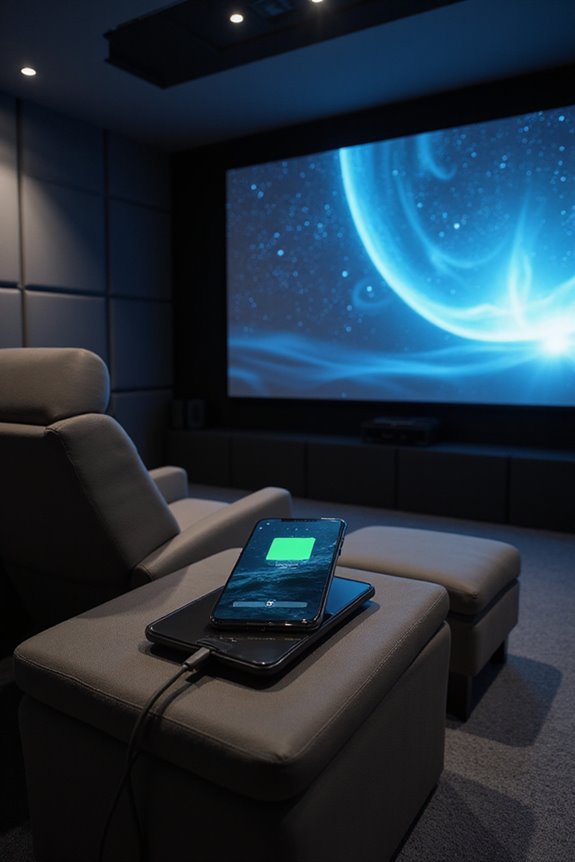
What Is A Wireless Charging Pad?

A wireless charging pad is a device that uses electromagnetic fields to wirelessly charge your electronics. It typically consists of a transmitter coil that generates an electromagnetic field. When you place a compatible device on the pad, a receiver coil captures this energy and converts it back into electrical current. These pads offer benefits like cord-free convenience and reduced wear on charging ports. If you’re interested, we can explore its operation, benefits, and limitations further.
Key Takeaways
- A wireless charging pad uses electromagnetic fields to charge devices without physical connectors.
- It typically employs inductive charging, where a transmitter coil sends energy to a receiver coil in the device.
- Qi pads are the most common type, offering broad compatibility with various devices.
- Wireless charging helps reduce cable clutter and minimizes wear on charging ports.
- Charging speeds are generally slower than wired options, with a maximum output of around 15W.
Understanding Wireless Charging Technology
Wireless charging technology has revolutionized how we power our devices, making it easier and more efficient. By using electromagnetic fields for energy transfer, we can charge our compatible gadgets simply by placing them on a charging pad.
Here are some key points to understand:
- Inductive Charging: Most common, uses magnetic induction between coils.
- Resonant Charging: Offers improved distance and efficiency.
- Radio Charging: Perfect for small devices needing low-power maintenance.
This innovative method supports various devices we love, from smartphones to electric vehicles. It not only reduces cable clutter but also enhances safety by lowering electric shock risks. Plus, as the market grows, we can expect even more advanced features and applications in our daily lives, including support for high bandwidth capabilities in future devices.
How Wireless Charging Pads Work
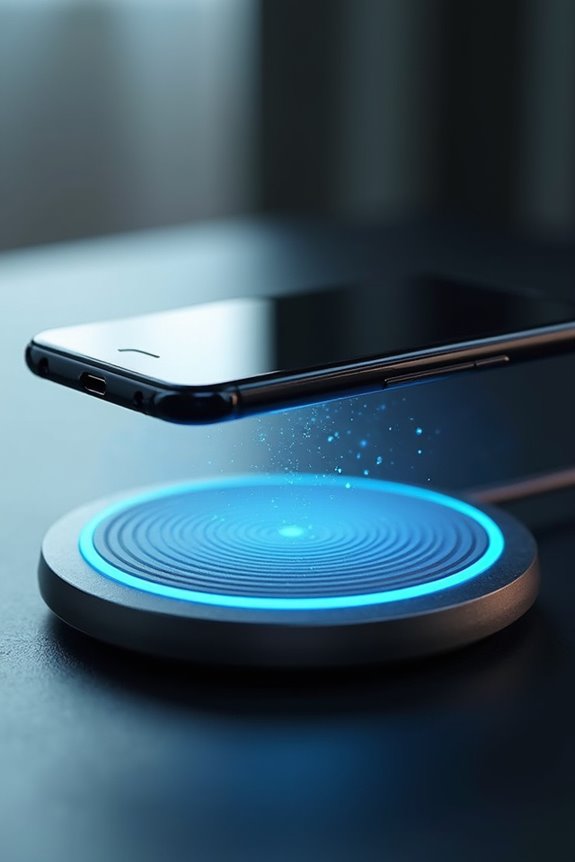
Charging pads operate on the principle of electromagnetic induction, allowing us to power our devices without the hassle of cables. Here’s how they work:
- A transmitter coil in the pad generates an alternating electromagnetic field.
- When you place your device on the pad, its receiver coil captures this field.
- The receiver coil converts the electromagnetic energy back into electrical current to charge the battery.
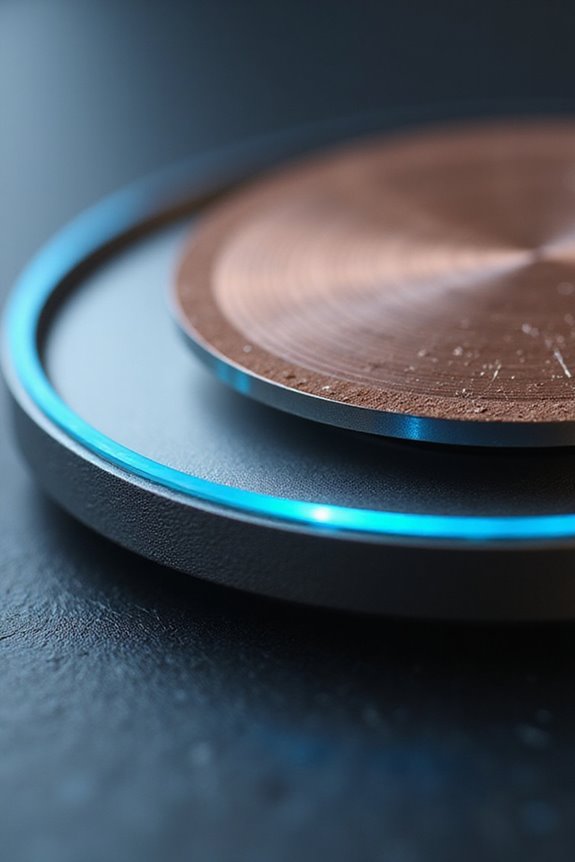
Coil design is essential for charging efficiency. High-quality coils, often made from copper or silver-plated materials, reduce resistance. Alignment matters too; multiple coils can enhance placement flexibility. Communication between the pad and device guarantees safe, dynamic power transfer, preventing overheating while maximizing speed. With this technology, we can enjoy a seamless, convenient charging experience together. Additionally, the latest home theater systems often utilize similar wireless technology for connecting devices without clutter.
Types of Wireless Charging Pads

When we think about the convenience of powering our devices without cords, several types of wireless charging pads come to mind.
1. Qi versus PMA****: Qi pads, the most popular, support multiple devices, while PMA pads have limited compatibility and rely on precise alignment.
2. Magnetic Resonance Advantages****: Magnetic resonance pads allow charging from a bit farther away and can power multiple devices simultaneously, offering greater flexibility in placement.
3. Multi-Device Compatibility****: Some pads, like 3-in-1 chargers, can charge your phone, smartwatch, and earbuds all at once, making them perfect for various tech users.
4. Fast Charging Efficiency**: Fast charging pads provide higher power outputs, ensuring quicker charging times for busy lifestyles, typically supporting up to 15W. Additionally, some models utilize built-in streaming features** to enhance device functionality while charging.
Benefits of Using a Wireless Charging Pad

Embracing wireless charging pads can profoundly enhance your daily routine, offering a blend of convenience and efficiency. These pads simplify our lives by eliminating tangled cords, allowing you to charge devices just by placing them down. This user convenience promotes a seamless user experience, letting you pick up or drop off devices effortlessly, perfect for multitasking.
Additionally, wireless charging pads protect your devices from wear and tear, reducing damage to charging ports caused by excessive plugging and unplugging. They also maintain a clean, clutter-free environment, essential for organized spaces. With universal compatibility, you can charge various devices without worrying about different connectors. This modern technology not only supports fast charging but also extends your device’s lifespan, making it a valuable addition to your daily tech. Moreover, using wireless charging pads can lead to enhanced performance as they eliminate the risk of wear on traditional connectors.
Limitations and Considerations
While wireless charging pads offer remarkable convenience and efficiency, there are limitations and considerations that users need to keep in mind.
Charging Speed
Wireless charging often maxes out at 15W, making it slower than wired options, which can exceed 45W. For example, charging a Samsung Galaxy S24 can take over two hours wirelessly.
Device Compatibility
Not every device supports wireless charging, and cases can hinder performance. You must verify compatibility to avoid frustration.
Usability Issues
Effective charging requires precise alignment; misalignment means no charging. Plus, using your device while it’s charging can be challenging.
Energy Efficiency
Wireless solutions are generally less energy-efficient, causing heat that may affect battery health. Overall, it’s crucial to weigh these factors when considering wireless charging options. Additionally, sound quality can be affected by excessive heat generated during the charging process, impacting the longevity of your device’s components.
Future Trends in Wireless Charging
As we look toward the future, the evolution of wireless charging technology promises to reshape how we think about energy transfer. One exciting development is dynamic charging, which enables electric vehicles (EVs) to charge while in motion. This reduces downtime and expands operational range, paving the way for smoother urban mobility.
Additionally, smart energy management systems will integrate with these technologies, allowing real-time monitoring and optimization of energy use.
- Increased accessibility through public networks, including transport hubs and parking lots.
- Seamless integration with renewable sources like solar power.
- Enhanced energy conversion efficiency targeted above 92%.
Frequently Asked Questions
Can I Use Any Wireless Charging Pad for My Device?
We can’t use just any wireless charging pad for our devices. It’s essential to guarantee they meet the same wireless standards and charging compatibility. Checking specifications helps us find the right pad that works seamlessly together.
Is a Wireless Charging Pad Safe for My Smartphone?
Yes, a wireless charging pad can be safe for our smartphones if we choose certified models and follow best practices. Prioritizing wireless charging safety guarantees smartphone protection, minimizing risks of overheating and battery damage.
How Long Does a Wireless Charging Pad Last?
A wireless charging pad typically lasts several years with proper maintenance. By keeping it clean and managing heat exposure, we can extend its charging lifespan and guarantee our devices stay powered efficiently for longer.
Do Wireless Charging Pads Work With Phone Cases?
Absolutely, wireless charging pads can work beautifully with phone cases, as long as they’re designed for charging compatibility. We should opt for slimmer, non-metal cases to guarantee we enjoy seamless energy transfer and charging efficiency together!
Can I Leave My Phone on the Pad Overnight?
We can leave our phones on the pad overnight, but let’s prioritize charging safety. Using certified chargers helps mitigate risks, ensuring our devices stay safe while we enjoy a good night’s rest without worries.