As an Amazon Associate, we earn from qualifying purchases. Some links on this site are affiliate links at no extra cost to you. Our recommendations are based on thorough research and editorial judgment.


How To Arrange Theater Rows?

To arrange theater rows effectively, we must consider several key factors. First, guarantee compliance with safety regulations like proper occupant load and required exit spacing. Choose a seating layout that promotes visibility, like staggered designs or tiered rows. Maintain a minimum row spacing of 36 inches for comfort. Also, position aisles every 10 to 15 rows with widths between six to eight feet for easy access. If you continue, we’ll explore further elements for ideal audience experience.
Key Takeaways
- Ensure a minimum of 36 inches spacing between rows for adequate legroom and comfort during occupancy.
- Utilize staggered seating or a sawtooth pattern to enhance sightlines and reduce obstructions for the audience.
- Elevate higher rows by 7 inches or more to improve visibility and ensure an unobstructed view of the stage.
- Plan for aisles every 10 to 15 rows with widths of six to eight feet for convenient movement and emergency egress.
- Incorporate both fixed and flexible seating layouts depending on the intended use and audience dynamics.
Understanding Regulatory Compliance and Safety Requirements
When we think about arranging theater rows, understanding regulatory compliance and safety requirements is crucial for anyone involved in venue design and operations. Knowing the occupant load is essential; it helps us determine how many attendees can safely be seated. Always verify there are at least two exits, spaced far apart, to meet egress requirements.
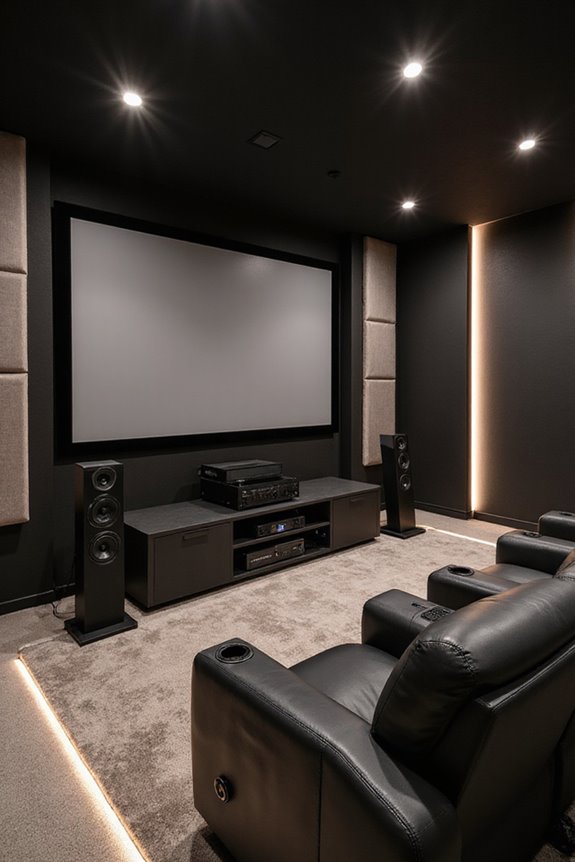
When considering row spacing, we must balance safety and capacity, guaranteeing unobstructed pathways for swift evacuation. Guardrails are necessary for elevated seating areas, while proper fall protection is a must to keep everyone safe. Effective seating arrangements require careful emergency planning, taking into account crowd dynamics. By adhering to these safety standards, we create a welcoming environment for all. Additionally, considering proper speaker placement is important to enhance audio delivery and immersion in venues designed for movie screenings.
Selecting the Ideal Seating Layout Type
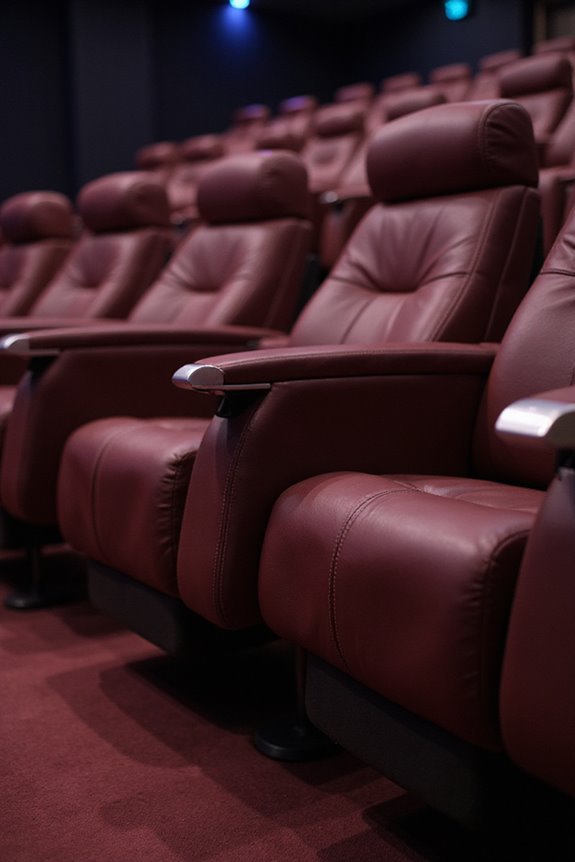
Selecting the ideal seating layout type is an essential step in creating an engaging and functional theater environment. We have various options to weigh, such as:
- Fixed Seating: Offers stability but limits flexibility.
- Flexible Layouts: Folding chairs enhance mobility and make storage easier, supporting diverse events.
Ultimately, we want to prioritize audience interaction while optimizing sightlines. The *continental layout* provides an unobstructed view, fostering a connection between performers and viewers. Alternatively, a *wide fan layout* brings the audience closer, enhancing intimacy. Additionally, considering room size considerations can greatly influence the overall effectiveness of your seating arrangement.
Assessing Row and Seat Dimensions
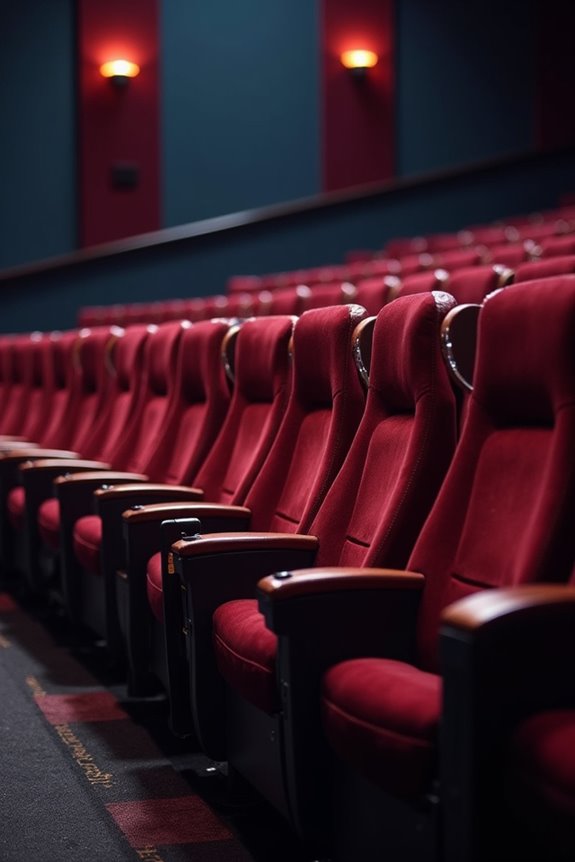
Evaluating row and seat dimensions is vital for creating a comfortable and engaging theater experience. To start, we should consider standard seat width—ranging from 20 to 26 inches. Additionally, row spacing must be at least 36 inches to guarantee sufficient legroom needs.
Back height impacts how seats feel, typically measuring 24 to 28 inches. Seat depth is also significant, with a common depth of 20 inches. We should pay attention to armrest design, averaging 5 to 6 inches in width.
Finally, the arrangement of seats affects viewing angles. Higher rows can improve sightlines when elevated by 7 inches or more. By carefully considering these dimensions, you’ll create an inviting seating area for all patrons. Furthermore, it’s essential to focus on comfort features like cushion design and lumbar support, ensuring a pleasant viewing experience for everyone.
Configuring Aisle Placement and Widths
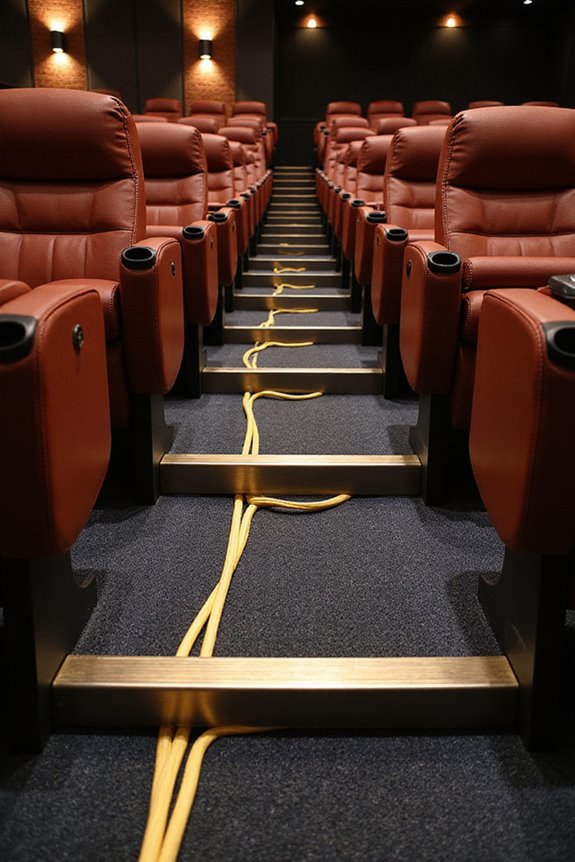
Configuring aisle placement and widths is essential for ensuring smooth movement throughout the theater. To create an effective seating arrangement, we need to focus on certain key factors:
- Aisle Location: Ideally, aisles should be placed every 10 to 15 rows.
- Aisle Widths: Standard aisle dimensions are six to eight feet wide for easy movement. Outer aisles may be around four feet, while center aisles often measure about five feet.
- Accessibility: Aisles must be easily accessible from all seating areas to facilitate access to restrooms and exits. Additionally, proper cable management is crucial to prevent tripping hazards when arranging seating layouts.
Enhancing Sightlines and Audience Comfort

When it comes to enhancing sightlines and audience comfort in a theater, thoughtful design plays a crucial role. We all deserve an exceptional experience, and proper seating arrangement is key. Here’s how we can achieve visibility improvement:
- Staggered Seating: Implementing a sawtooth stagger pattern guarantees that each row shifts slightly, allowing you to see over heads without obstruction.
- Tiered Design: Steeply elevated rows provide clear vertical sightlines, enhancing every audience member’s view. Additionally, riser height recommendations suggest that maintaining a height of around 6 inches is optimal for improving sightlines in a home theater setup.
Ensuring Accessibility and Integration of Amenities
Ensuring accessibility within theater designs means creating an environment that accommodates everyone, regardless of their mobility needs. To foster inclusion, we need to provide accessible seating distributed throughout the auditorium, ensuring options in the front, middle, and back rows. Remember to place companion seating next to wheelchair spots for social integration.
Accessible signage is essential—maps and indicators should clearly mark these areas to guide patrons effectively. We also should keep pathways to restrooms and concession stands clear and obstacle-free. Additionally, hearing assistance devices and captioning systems should be conveniently located near accessible seating. By considering these elements, we create a nurturing environment where everyone feels included and comfortable enjoying the performance.
Planning for Emergency Egress and Crowd Control
Planning for emergency egress and crowd control involves strategic measures to secure safety and efficiency. Confirming accessible emergency exits is essential. Here’s how we can achieve that:
- Regular Checks: Emergency exit doors must be functional and unobstructed.
- Clear Paths: Staff should know exit routes to help guests evacuate safely.
- Ushers’ Role: Assign ushers to manage emergency exits; one to guide and the other to hold the door open.
- Exit Proximity: Maintain exits no farther than 25 feet from the front row and within 75 feet of every seat.
- Controlled Evacuation: Calm guests, directing them to exits while watching for hazards.
Through effective crowd management, we can guarantee everyone exits safely and efficiently.
Balancing Capacity With Comfort and Usability
Balancing capacity with comfort and usability is essential for providing an enjoyable experience in theater settings. As we think about our audience, we must prioritize seating flexibility and best arrangements. Here are key considerations to enhance patron experience:
- Row Length: Aim for 14 to 20 seats per row, with a maximum of 15 when aisles are present at both ends.
- Row Spacing: Maintain at least 24 inches between rows, with 6 feet being ideal for comfort.
- Aisle Width: Wider aisles enhance accessibility, with 5 feet recommended for center aisles.
- Sightlines: Use tiered seating to improve visibility and minimize obstruction.
Frequently Asked Questions
How Do I Choose the Best Seating Arrangement for My Venue?
To choose the best seating arrangement, we should prioritize seat comfort and optimize sight lines. By considering our space and audience needs, we can create an inviting atmosphere that enhances everyone’s experience together.
What Are the Common Materials Used for Theater Seating?
Theater seating commonly combines robust wood types like oak and maple with diverse fabric options, ensuring comfort and style. Together, we can create a welcoming space that resonates with everyone who walks through our doors.
How Can I Improve Acoustics in My Seating Arrangement?
To create our perfect acoustic cocoon, we’ll prioritize soundproofing techniques and thoughtful seating placement. Let’s elevate our listening experience by ensuring each seat harmonizes with our carefully positioned speakers for immersive sound together.
What Aesthetic Styles Should I Consider for Theater Seating?
When choosing theater seating, we should consider modern minimalism for a sleek look or vintage elegance for timeless charm. Both styles offer unique atmospheres that make our shared experiences feel more special and inviting together.
How Does the Layout Affect Ticket Pricing Strategies?
The layout’s impact on ticket pricing strategies is colossal! By influencing seating demand, we can determine value tiers, ensuring everyone feels they belong, regardless of budget, while maximizing our theater’s overall revenue potential together.