As an Amazon Associate, we earn from qualifying purchases. Some links on this site are affiliate links at no extra cost to you. Our recommendations are based on thorough research and editorial judgment.

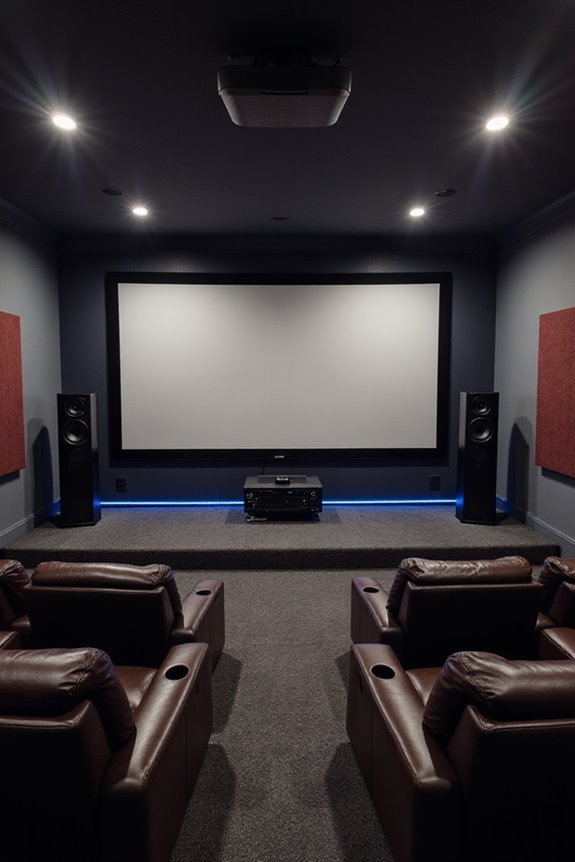
How To Time Align Speakers?

To time align your speakers, we need to make sure sound waves from each speaker reach your ears at the same time. Start by measuring the distance from each speaker to your listening position. Use digital tools, like DSP, to adjust delays for precise synchronization. Additionally, focus on transient response and imaging accuracy for better sound clarity. With the right setup, you can enhance your audio experience greatly. Continue with us to explore best practices for effective alignment.
Key Takeaways
- Measure distances from each speaker to the listening position accurately, using consistent microphone placement for reliable results.
- Utilize digital signal processing (DSP) to adjust audio signal delays for precise synchronization of sound arrival.
- Make necessary delay adjustments for each speaker, particularly in asymmetrical spaces to maintain sound coherence.
- Test transient response and imaging accuracy to ensure clear sound representation and prevent timing discrepancies.
- Regularly calibrate your audio setup to remove phase cancellations and improve clarity in your audio experience.
Understanding Time Alignment: What It Is and Why It Matters
Understanding time alignment is essential for achieving a high-quality audio experience. It involves adjusting audio signal delays so sound from multiple speakers arrives at your listening position simultaneously. This synchronization is vital for sound coherence and enhancing acoustic fidelity. Without proper alignment, you may experience timing-related distortions, causing dips in audio quality.
Key benefits of time alignment include:
- Improved clarity and precision in sound reproduction
- Enhanced stereo imaging and soundstage coherence
- Reduction of phase cancellations between drivers
Achieving this requires precise delay adjustments, typically done using digital signal processing (DSP). By ensuring all drivers work together harmoniously, we can enjoy a richer and more immersive listening experience. Additionally, proper room size guidelines can significantly impact the effectiveness of time alignment by influencing speaker placement and sound distribution. So, let’s embrace time alignment for superior audio enjoyment!
The Importance of Delay Adjustment in Audio Systems

When we set up our audio systems, the importance of delay adjustment can’t be overstated. It guarantees sound from all speakers reaches you simultaneously, creating a cohesive soundstage. Even slight timing differences of just a few milliseconds can disrupt your experience, affecting clarity and depth.
Here’s why delay calibration matters:
- Improved Clarity: Proper delay calibration removes phase cancellations and echoes caused by unsynchronized sounds.
- Better Realism: Balanced timing makes instruments and vocals appear more lifelike.
- Cohesive Coverage: In multi-speaker setups, adjusting closer speakers aligns audio arrival times.
Delay adjustment allows for perfect sound synchronization, enhancing your listening experience markedly while avoiding muddiness or echo. It’s an essential part of audio tuning that shouldn’t be overlooked, particularly in surround sound configurations where timing can significantly impact overall performance.
Key Concepts: Transient Response and Imaging Accuracy

Achieving ideal sound reproduction relies heavily on two key concepts: transient response and imaging accuracy.
- Transient Response: This is how well a loudspeaker can handle quick changes in the audio signal. When all drivers—like woofers and tweeters—are properly aligned, we enjoy better audio accuracy and clarity. Misalignment leads to phase differences, which can distort sound.
- Imaging Accuracy: This refers to how precisely sound sources are located in the stereo field. By ensuring speaker coherence through time alignment, we avoid issues like lobing and enhance the overall soundstage. Coaxial drivers naturally help with this, but even non-coaxial systems can achieve great results through DSP or mechanical adjustments. Careful alignment yields a more immersive listening experience for all of us. Additionally, utilizing automatic calibration features can simplify the setup process and optimize sound for room acoustics.
Measuring Speaker Distances for Time Alignment

To get the most out of our sound systems, measuring speaker distances is a fundamental next step after understanding transient response and imaging accuracy. Accurate speaker placement is essential for achieving ideal sound quality. Here’s how we can measure distance effectively:
- Measurement Location: Always take measurements from the center of our listening area.
- Consistency: Keep the microphone in the same spot for every distance measurement.
- Use of Tools: Employ tools like REW and MiniDSP for precision, rather than relying solely on tape measures. Utilizing sound level meters ensures that the measurements you take are both precise and reliable.
Utilizing Digital Signal Processing (DSP)

Utilizing Digital Signal Processing (DSP) in audio systems can greatly enhance speaker performance, particularly when it comes to time alignment. With DSP, we can employ digital delay lines to offset audio signals, ensuring precise audio synchronization across speakers. This technology allows us to set delays within microseconds to milliseconds, creating a coherent sound image.
Key benefits of DSP time alignment include:
- Enhanced spatial accuracy and sound staging
- Improved clarity, ensuring critical frequencies reach our ears simultaneously
- Reduction of destructive interference and phase cancellation
- Better integration with advanced audio formats for an immersive listening experience.
Tools and Software for Time Alignment
When we look at tools and software for time alignment, we find a variety of options that cater to different needs and expertise levels. Each tool offers unique features to enhance your audio production experience.
- SubAligner Features: This software streamlines the alignment of subwoofers and loudspeakers with intuitive controls, ensuring quick and effective adjustments.
- Audiotec-Fischer DSP PC-Tool: Combines automatic alignment via its “ATM” function with manual adjustments for tailored results.
- Auto-Align 2: This plugin for DAWs automates microphone alignment, reducing manual correction time.
Additionally, Room EQ Wizard aids in measuring time and phase responses, offering valuable insights. Embracing these tools can greatly improve your audio projects, making it easier to achieve that perfect sound alignment.
The Role of Measurement Microphones
Measurement microphones play an essential role in achieving accurate time alignment for audio systems. They capture the acoustic output of speakers from your listening position, providing the objective data necessary for effective alignment. Here’s why they matter:
- Precision: These microphones have a flat frequency response and high sensitivity, which means they capture detailed phase and impulse data.
- Calibration: Consistent microphone calibration is vital. Placing the microphone at the acoustic center helps us align captured data with your experience.
- Measurement Techniques: Using these specialized devices allows us to detect minute timing differences that tape measures simply can’t resolve.
Whether you opt for USB or XLR, both types enhance our ability to visualize impulse responses and phase data, aiding in our quest for ideal sound.
Crossover Frequencies and Phase Alignment
Understanding crossover frequencies and phase alignment is crucial for attaining ideal audio performance. Properly aligning speakers involves managing their crossover behavior to guarantee that drivers maintain the same phase value. Here are a few key points to reflect on:
- At the crossover frequency, low-pass filters lag while high-pass filters lead, creating potential phase discrepancies.
- First-order crossovers can introduce a 90-degree phase difference, while second-order crossovers may result in a 180-degree phase shift.
- Using Linkwitz-Riley filters (4th order) helps maintain phase coherence, minimizing issues like cancellation dips.
To achieve optimal sound, you might need phase compensation techniques like delay adjustments or polarity inversions to align drivers effectively. Proper attention to these details enhances your audio experience considerably.
Adjusting Delays for Car Audio Systems
Adjusting delays in car audio systems is a fundamental step for guaranteeing a superior listening experience. When we consider speaker placement, getting this right is essential. By accurately measuring distance, we can determine the audio delay needed for each speaker.
Steps to Adjust Delays:
- Measure the distance from each speaker to your listening position.
- Identify the speaker nearest to you as the timing reference point.
- Calculate the necessary delay for the other speakers.
- Use a DSP unit to apply these delay adjustments in milliseconds.
With proper alignment, we guarantee sound arrives simultaneously, creating a cohesive audio experience. Remember, even tiny adjustments can greatly enhance clarity and imaging. This often transforms your listening into a truly immersive experience.
Time Alignment in Home Theater Setups
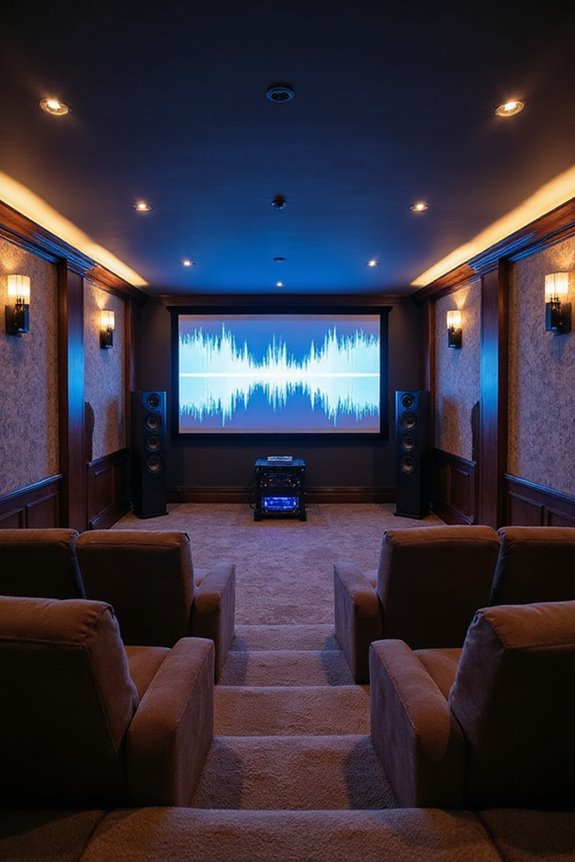
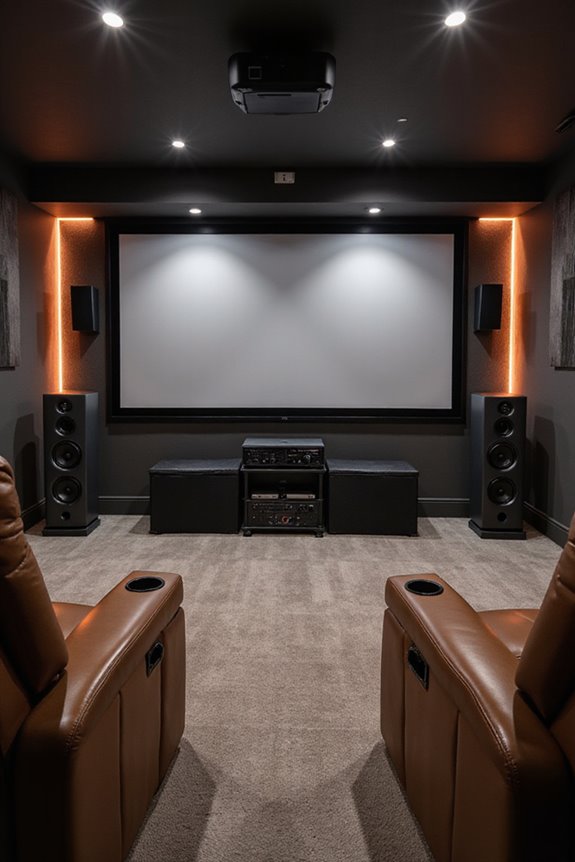
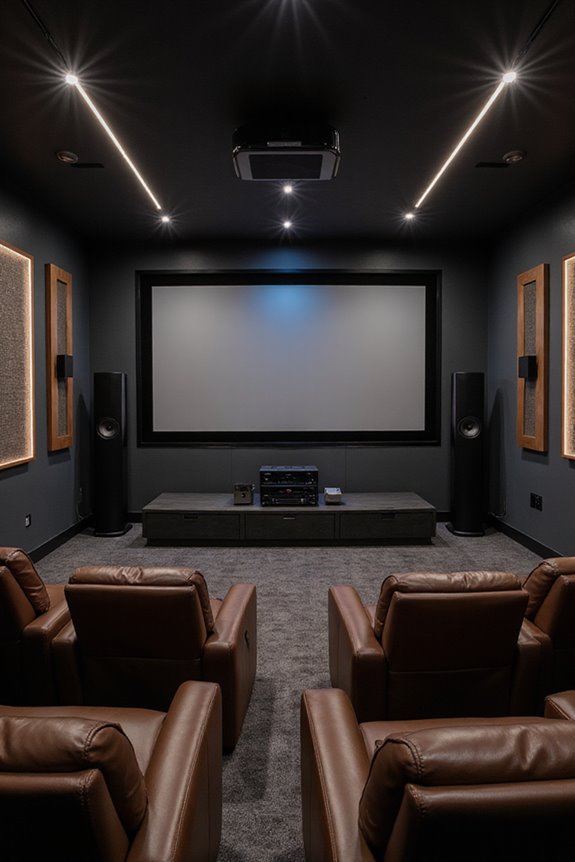
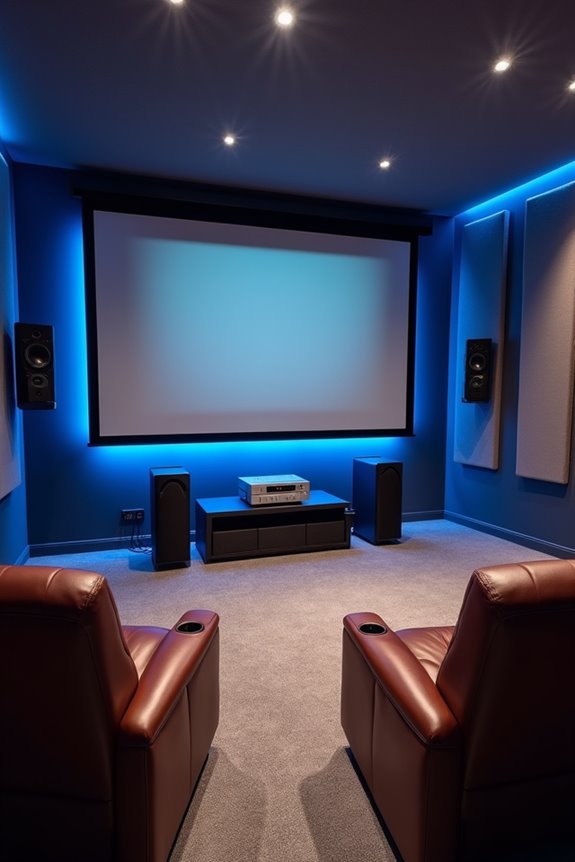
In home theater setups, time alignment plays a pivotal role in achieving ideal sound quality. By synchronizing the arrival times of sound from multiple speakers to your listening position, we enhance clarity and imaging considerably.
Why Time Alignment Matters:
- Misaligned speakers can create smearing of audio and phase cancellation issues.
- Proper speaker positioning and audio calibration are essential for an immersive experience.
How to Achieve Time Alignment:
- Measure the distance from your primary listening position to each speaker.
- Calculate delays using the formula \( ext{Delay (ms)} = rac{ext{Distance difference (m)}}{343} imes 1000 \).
- Implement these delays for coherent sound.
This process guarantees you enjoy seamless audio, enhancing every movie and show you watch together in your home theater.
Challenges of Time Alignment in Asymmetrical Spaces
When you’re setting up a home audio system, you might find that asymmetrical spaces present unique challenges for time alignment. The varying distances from speakers to your listening position lead to significant driver latency, creating unequal time delays. This can cause phase cancellations or reinforcements, making it hard to achieve a uniform sound.
Asymmetrical reflections in the room complicate this further. Here’s what you should keep in mind:
- Each speaker’s acoustic center may differ relative to you, requiring individual delay adjustments.
- Non-equidistant setups can actually enhance stereo imaging but increase alignment complexity.
- It’s essential to measure and account for any reflection paths to maintain sound coherence.
Recognizing these challenges will help you create a more enjoyable listening experience.
Enhancing Sound Clarity and Reducing Phase Cancellation
Achieving ideal sound clarity and minimizing phase cancellation are crucial in audio setup. By aligning our speakers properly, we can greatly enhance audio coherence. Here’s how:
- Reduce Sound Distortion: Synchronizing audio arrival times prevents timing discrepancies that cause distortion.
- Clarity and Definition: With precise timing, we experience clearer audio signals, allowing for distinct instrument and vocal representation.
- Minimize Phase Cancellation: Correcting how sound waves arrive prevents destructive interference, which otherwise results in lost energy.
- Driver Synchronization: Aligning drivers at crossovers and maintaining the same acoustic plane helps further reduce off-axis phase shifts.
Implementing Automatic Time Alignment Features
Properly aligning speakers can be enhanced by implementing automatic time alignment features. Using Digital Signal Processing (DSP) units, we can achieve precise adjustments through automated calibration, which optimizes speaker coherence. Measurement software captures acoustic data, allowing us to identify timing discrepancies and adjust delays effectively.
Key Components:
- Microphones at listening positions gather impulse and phase responses.
- DSP systems apply millisecond delay adjustments, compensating for sound travel time.
- Active crossovers with built-in algorithms automate delay and level settings.
This systematic approach reduces manual adjustments and streamlines setup. By leveraging these automated solutions, you’ll guarantee that every speaker delivers coherent sound, creating a more enjoyable listening experience for everyone involved.
Benefits Beyond Sound Quality: Listener Experience
Understanding the benefits of time alignment goes beyond just sound quality; it directly enhances your listening experience. By synchronizing speaker output, we achieve a balanced audio image, ensuring sound reaches us simultaneously. This precision enhances spatial perception, allowing us to perceive music as if we’re at a live concert.
- Increased Clarity: We enjoy improved detail, reducing volume fatigue.
- Emotional Connection: Perfect timing preserves subtle cues in music, deepening our emotional engagement.
- Cohesive Experience: Eliminating timing discrepancies fosters a natural sound flow, enhancing enjoyment.
These benefits contribute to an immersed listening environment, making it easier to connect with the music, whether we’re enjoying our favorite songs or engaging with films and games. Ultimately, time alignment promotes an enriched, engaging experience we all seek.
Best Practices for Achieving Effective Time Alignment
To achieve effective time alignment, it’s crucial to follow best practices that guarantee your audio system performs at its best. Here are some key time alignment techniques to take into account:
- Measurement: Place a calibrated microphone at ear height in the center between your speakers. This helps guarantee accurate delay readings.
- Reference Driver: Use tweeters for alignment, as they provide a precise high-frequency response.
- Testing: Conduct multiple measurements to avoid errors caused by mic placement.
- Delay Adjustments: Utilize DSP devices for fine delay adjustments in milliseconds.
Next, focus on speaker positioning. Align the speakers so they’ll effectively cover overlapping frequency ranges. This designs a cohesive sound experience, making it crucial for an optimized audio setup.
Frequently Asked Questions
Can Time Alignment Be Done Manually Without Special Equipment?
Absolutely, we can manually align speakers without special equipment! Surprisingly, 50% of audiophiles prefer using manual techniques. By incorporating thoughtful listening tests, we can achieve satisfying sound, creating a shared musical experience we all cherish.
What Common Mistakes Should I Avoid During Time Alignment?
To avoid common mistakes in time alignment, we should focus on accurate measurements, correctly configure crossover settings, and address phase issues thoroughly. Let’s guarantee our adjustments harmonize for the best listening experience together.
How Does Room Acoustics Affect Time Alignment Effectiveness?
Room acoustics can drastically impact time alignment effectiveness. Those pesky reflection patterns and lack of sound diffusion often mask our carefully timed audio, making it feel like we’re fighting an uphill battle for clarity together.
Is Time Alignment Necessary for Smaller Audio Setups?
Absolutely, time alignment is essential for smaller audio setups. It enhances sound stage and audio clarity, ensuring we fully immerse ourselves in our listening experience, making every detail resonate beautifully together, just as we desire.
How Often Should I Re-Evaluate Time Alignment Settings?
We should consider re-evaluation frequency every few months in dynamic spaces. Regular alignment testing guarantees peak sound quality, especially in environments where acoustics change frequently. Consistency helps us enjoy a more cohesive listening experience together.