As an Amazon Associate, we earn from qualifying purchases. Some links on this site are affiliate links at no extra cost to you. Our recommendations are based on thorough research and editorial judgment.

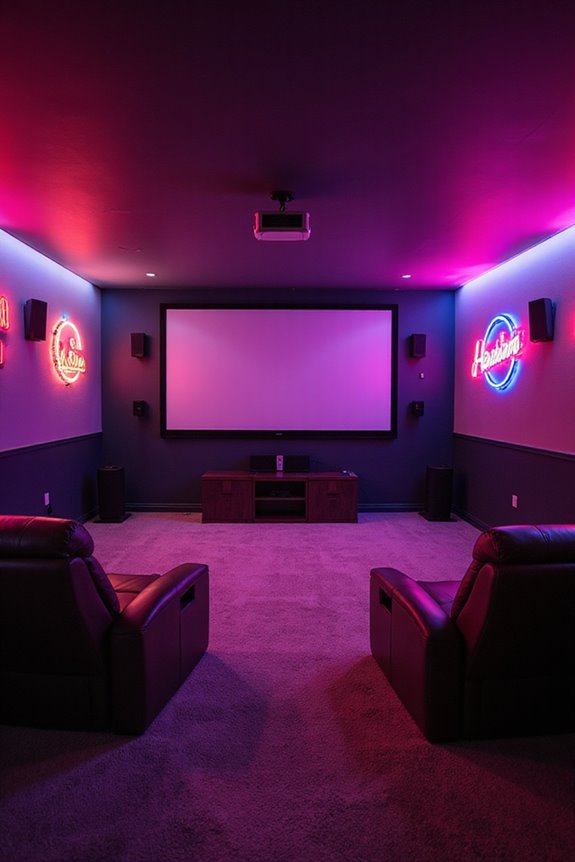
LED Neon Vs Glass Neon Signs

When comparing LED neon and glass neon signs, we see several key differences. LED neon is made from flexible plastic, is shatterproof, and consumes about 150 watts, while glass neon is fragile, handmade, and uses around 400 watts. LED signs last longer—up to 100,000 hours—compared to glass neon’s 15,000 hours. Plus, LED offers vibrant RGB options with low maintenance. If you’re curious about how these materials impact specific applications, there’s more to explore.
Key Takeaways
- LED neon is more energy-efficient, consuming 150 watts compared to 400 watts for glass neon, resulting in lower electricity bills.
- Glass neon offers rich, warm colors and a handcrafted aesthetic, while LED neon provides flexible and vibrant RGB options.
- LED neon has a lifespan of 50,000–100,000 hours, significantly outliving glass neon’s 8,000–15,000 hour lifespan.
- Installation of LED neon is quicker and easier due to its lightweight and flexible nature, unlike the specialized skills needed for glass neon.
- LED neon has lower maintenance needs and environmental impact, as it doesn’t contain toxic gases and has minimal heat output.
Material and Construction Differences
When comparing LED neon and glass neon signs, we should first look at the differences in material and construction. Glass neon uses hand-bent glass tubes filled with gases like neon or argon, while LED neon is made from flexible plastic or silicone tubing that houses LED light strips.
Key Differences
- Color Options: Glass neon has limited colors since it’s restricted to gas choices. In contrast, LED neon allows for dynamic color changes, thanks to advanced production techniques.
- Durability: Glass neon is fragile and needs careful handling. LED, being shatterproof, can withstand harsher environments.
- Production Techniques: The artisanal crafting of glass tubes is time-consuming, while LED signs can be mass-produced, enabling intricate designs and faster customization. Additionally, the material quality of LED neon contributes to its longevity and ease of maintenance.
Both have unique qualities, but LED’s versatility often outshines.
Visual Appearance and Aesthetic Qualities

Visual appearance and aesthetic qualities play an essential role when choosing between LED and glass neon signs.
- Color Vibrancy: Glass neon offers a rich, warm color spectrum with unique gas excitation, while LED neon provides versatility through RGB options, often resulting in cooler hues.
- Light Diffusion: Glass tubes diffuse light beautifully, creating a soothing glow. In contrast, LED neon has a matte or semi-gloss finish, with illumination being more directional and less uniform.
- Design Depth: The dimensionality in glass neon gives it a floating effect, enhancing visual interest, while LED neon tends to appear flatter.
Ultimately, each choice influences your space’s ambiance, whether you lean towards the handcrafted appeal of glass or the modern versatility of LED. Additionally, considering user reviews can provide insight into performance and satisfaction with each sign type.
Energy Efficiency and Environmental Impact
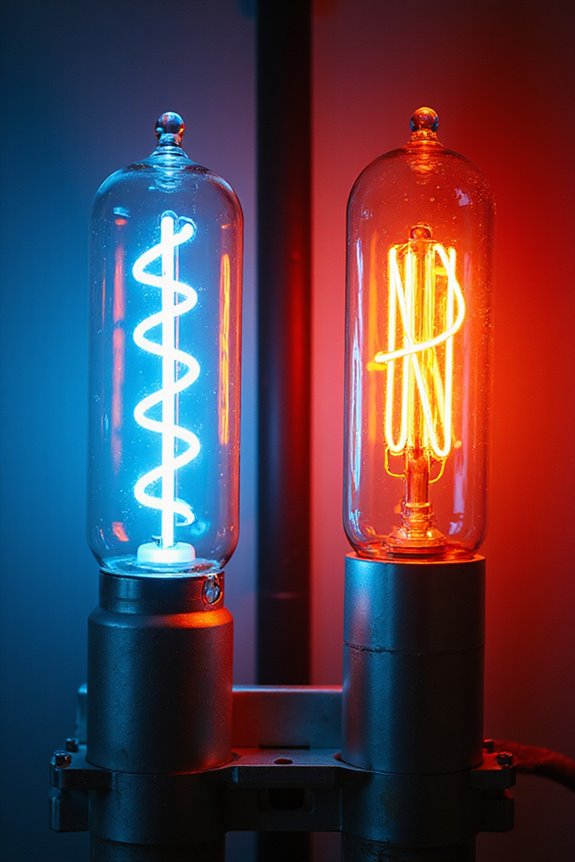
LED and glass neon signs not only differ in visual appeal but also in energy efficiency and environmental impact. When we consider energy consumption, LED neon lights use about 150 watts, markedly less than glass neon’s 400 watts. Over 24 hours, that difference translates to 1800 watt-hours for LEDs versus 4800 watt-hours for glass.
- Energy Efficiency: LEDs convert around 90% of energy into light, while glass neon only achieves about 20%.
- Carbon Footprint: This energy efficiency leads to lower greenhouse gas emissions.
Additionally, LEDs don’t contain toxic gases, making them safer for the environment. Their low heat output also reduces cooling needs indoors. For those who care about sustainability, choosing LEDs means less energy waste and a smaller environmental footprint. Furthermore, compact designs like LEDs can fit better in various settings without compromising audio quality.
Durability, Maintenance, and Lifespan
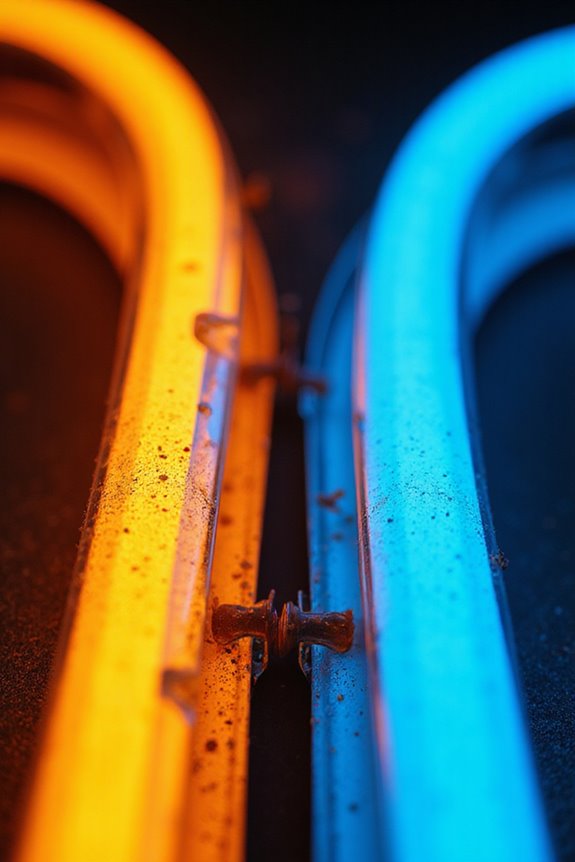
Durability, maintenance, and lifespan play essential roles when choosing between LED and glass neon signs. LED signs shine here, as they’re made of flexible PVC or silicone, providing excellent weather resilience. They typically last 50,000–100,000 hours, requiring minimal maintenance. You’ll rarely have to worry about upkeep.
In contrast, glass neon signs are fragile, lasting only 8,000–15,000 hours. They need regular professional checks for issues like gas leaks and necessitate re-gassing, leading to higher maintenance frequency and costs. Additionally, environmental factors can impact their longevity. Furthermore, the speaker configuration of the setup you choose can significantly affect its durability and performance.
Installation and Cost Considerations
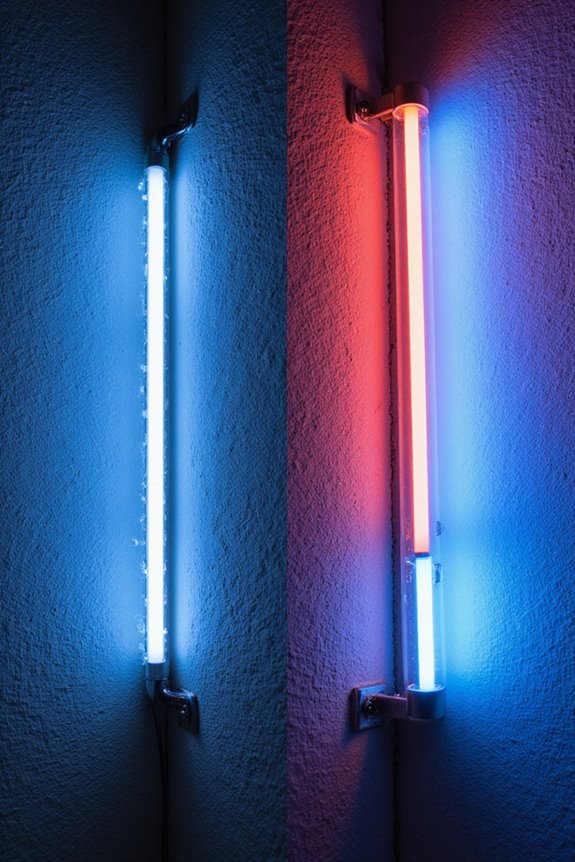
When considering installation and cost for neon signage, it’s essential to weigh the differences between LED and glass options. Here’s a concise cost evaluation:
- Installation Process: LED neon is lightweight and flexible, allowing for quicker installation on various surfaces. In contrast, glass neon requires specialized skills and more extensive mounting hardware, increasing labor time.
- Cost Comparison: LED signs cost around $100–$400 per linear foot, while glass neon ranges from $200–$2,400. Additionally, LED lights consume 80% less power, leading to considerably lower electricity bills and overall ownership costs. Moreover, the audio quality in LED neon can enhance visibility, making it a more appealing option for businesses.
Functional and Design Flexibility
Functional and design flexibility are key factors to take into account when choosing between LED and glass neon signs.
When it comes to design adaptability, LED neon shines with intricate shapes, including detailed curves created from flexible silicone tubing. This shape versatility allows for 3D styles and unique designs suitable for various surfaces. You can easily customize colors through RGB controls, offering dynamic shifts and effects.
In contrast, glass neon is limited by rigid structures, requiring careful manual bending, making complex shapes challenging.
Thus, if you’re looking for signs that can evolve with your brand or personal style, LED neon offers impressive flexibility and the ability to adapt as your needs change.
Safety and Environmental Concerns
Moving beyond design and functionality, safety and environmental concerns are significant factors to evaluate when selecting between LED and glass neon signs.
Safety Hazards
- Glass neon tubes can burn you due to high heat.
- They contain toxic gases like mercury, posing risks if broken.
- Fragility increases injury potential from sharp glass shards.
In contrast, LED neon signs:
- Don’t generate significant heat, eliminating burn risks.
- Are made from unbreakable materials, reducing injury risks.
- Operate at lower voltages (24V/120V), minimizing fire hazards.
Environmental Impact
Glass neon’s use of rare gases and high energy consumption contributes to a larger carbon footprint. Conversely, LED signs are energy-efficient, made from recyclable plastics, and last much longer, making them the safer choice for both you and the environment.
Usage and Application Scenarios
In the domain of signage, usage and application scenarios for LED and glass neon signs vary greatly based on context and desired effect.
Commercial and Retail Environments
– Glass neon suits upscale establishments for its artisanal glow, while LED neon aligns with modern retail due to cost-effectiveness and energy efficiency.
Events and Outdoor Displays
– Glass neon shines at high-profile events, providing stunning visuals. In contrast, LED neon’s portability and durability make it ideal for festivals and trade shows.
Interior Design and Decor
– For decor, glass neon adds a classic touch, whereas LED mimics its vintage appeal but fits modern styles with intricate designs.
Branding and Marketing
– Glass neon enhances brand prestige, but LED allows for dynamic marketing campaigns, aligning with current signage trends and market preferences.
Frequently Asked Questions
Can LED Neon and Glass Neon Be Used Interchangeably?
No, we can’t use LED neon and glass neon interchangeably. While both offer stunning visual impact, their energy efficiency and installation differences make them incompatible unless we redesign our approach entirely for each unique setting.
Are There Any Health Hazards Associated With Glass Neon?
Yes, there are health hazards associated with glass neon. We should prioritize neon safety by being mindful of glass breakage and potential injuries, including cuts and exposure to harmful chemicals. Always handle with care.
What Are the Most Common Applications for Each Type?
We commonly see LED neon signs in commercial use for advertising and home decor, while glass neon shines in artistic expression and nostalgic branding. Each style brings its unique charm to various applications we cherish.
How Do I Choose Between LED and Glass Neon for My Project?
When it comes to choosing between LED and glass neon, we should consider design considerations and light intensity. Let’s weigh our options together and find the perfect fit for our project’s vibe and purpose!
Is It Possible to Recycle LED Neon Signs?
Yes, we can definitely recycle LED neon signs! By prioritizing sustainability practices during sign disposal, we contribute to reducing waste and supporting a circular economy, making responsible choices together for our environment and community.