As an Amazon Associate, we earn from qualifying purchases. Some links on this site are affiliate links at no extra cost to you. Our recommendations are based on thorough research and editorial judgment.

What Is Surround Sound?

Surround sound is an innovative audio technology that enriches your listening experience through multi-channel sound. It creates an immersive, 360-degree auditory environment, enhancing clarity and realism, whether you’re watching movies or playing games. Common configurations include 5.1 and 7.1 setups, which employ multiple speakers for directional audio cues. By integrating advanced formats like Dolby Atmos, it further elevates soundscapes. If you’re curious about how this impacts your home entertainment setup, we have more insights to explore.
Key Takeaways
- Surround sound delivers multi-channel audio to create an immersive listening experience with audio coming from multiple directions.
- It features various channel configurations, such as 5.1 and 7.1, providing enhanced spatial audio capabilities.
- Modern systems utilize advanced formats like Dolby Atmos and DTS:X for richer, three-dimensional soundscapes.
- Proper speaker placement is crucial for effective sound distribution and clarity, especially for dialogue and bass.
- Surround sound enhances emotional engagement with media by simulating real-world auditory experiences.
Definition and Basic Concept
Surround sound is a transformative audio technology that brings a fully immersive listening experience right to your surroundings. It works by delivering multi-channel sound through strategically placed speakers, creating a 360-degree audio environment. This setup allows us to experience true audio immersion, making us feel surrounded by sound.
Key features include:
- Directional audio cues coming from various angles, enhancing realism.
- Utilization of front, side, and rear speakers to produce sound localization, allowing us to pinpoint where sounds originate.
- Height channels in modern systems that can even replicate sounds above or below us.
In this way, surround sound takes our enjoyment of movies, music, and games to unparalleled levels, fostering a sense of belonging in any shared experience. Moreover, the integration of advanced audio formats in systems like the JBL Bar 9.1 enhances the overall listening experience by providing richer soundscapes.
Surround Sound Channel Configurations
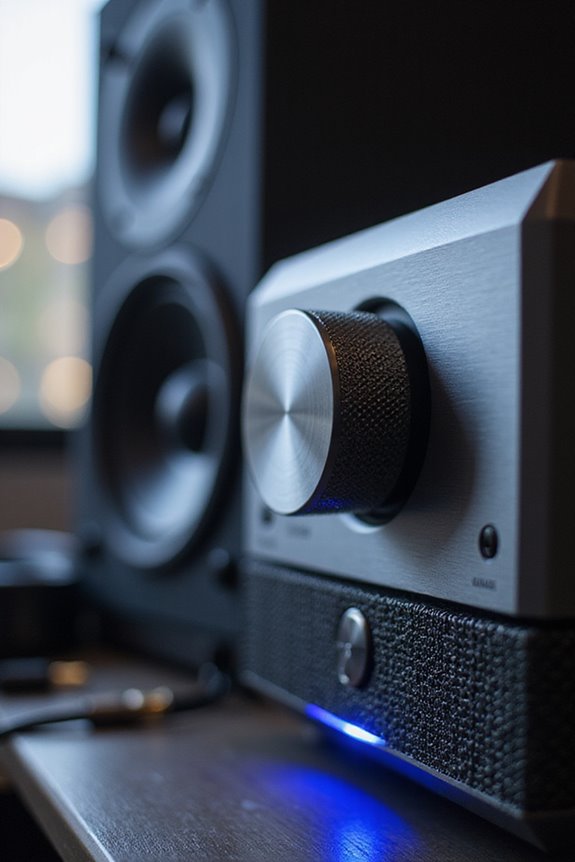
When you’re setting up your home theater or audio system, understanding the different surround sound channel configurations is essential. Let’s explore a few popular setups:
- 5.1: The standard configuration, consisting of five speakers (front left, front right, center, rear left, and rear right), plus one subwoofer. This setup optimizes channels for impressive audio experiences.
- 7.1: Expands 5.1 by adding two side speakers, enhancing spatial audio and immersion.
- 9.1: Introduces height speakers, providing layered sound and a 3D audio experience.
- 11.1 and larger: Incorporate more overhead channels, creating a highly enveloping sound.
These surround sound advancements help us achieve channel optimization and ultimately a richer, more immersive audio experience tailored to our preferences. Many setups feature dedicated subwoofers that significantly enhance bass performance for a more dynamic listening experience.
Technological Evolution and History
The evolution of audio technology has profoundly shaped how we experience sound within our homes, especially in cinematic contexts. We can trace significant historical milestones that paved the way for surround sound. Starting from David Edward Hughes’ microphone in 1875 to Thomas Edison’s phonograph in 1877, these early inventions set the foundation.
In 1940, Disney’s *Fantasia* showcased the first surround sound system, Fantasound, marking a notable technological advancement. As the years progressed, innovations continued with the introduction of quadraphonic sound in the late 1960s and the shift to digital audio in the 1980s. Each step provided us better clarity, consistency, and immersive experiences, making surround sound a staple in modern home entertainment. Today, systems that support Dolby Atmos and DTS:X are integral for achieving a rich sound depth that enhances our viewing experiences.
3D and Object-Based Surround Sound
As we explore object-based surround sound, it’s essential to understand how this innovative approach changes our listening experience. Unlike traditional methods, object-based audio treats sound as independent entities with specific audio metadata. This metadata includes spatial information that denotes precise object positioning in 3D space. Each audio object can dynamically adapt to various playback systems, ensuring an immersive experience whether you’re using stereo headphones or a sophisticated multi-speaker array.
Key features of object-based audio include:
- Flexible Adaptation: Sounds can be localized accurately to the appropriate speaker.
- Dynamic Rendering: Audio objects adjust to the speaker layout, preserving spatial intent.
- Enhanced Immersion: Height channels improve the sense of vertical space. Additionally, Dolby Atmos technology enhances the audio experience by creating a three-dimensional sound environment.
Practical Home Theater Applications

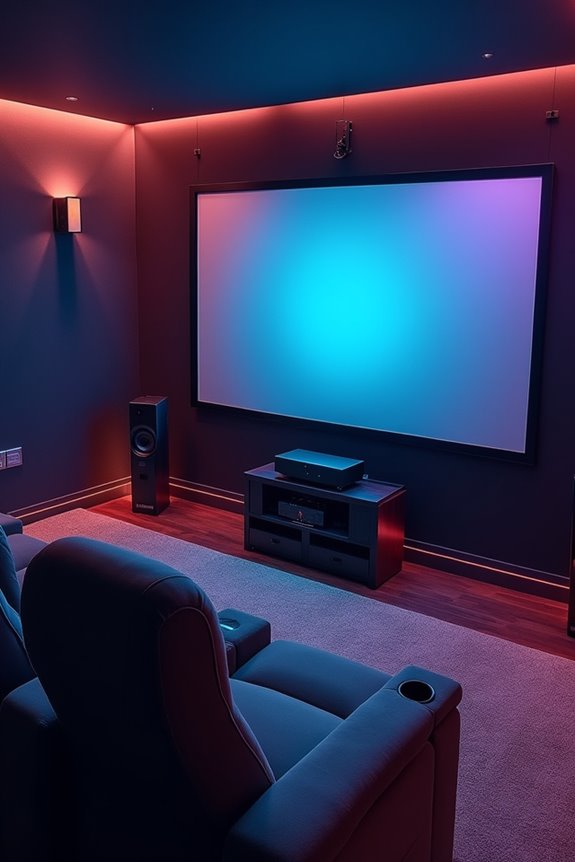
In a practical home theater setup, achieving an immersive audio experience requires attention to detail in both room configuration and speaker placement.
- Front Speakers: Aim for ear level, equidistant from your main viewing spot.
- Center Channel: Position it above or below the TV for clear dialogue.
- Rear Surround Speakers: Place these behind your seating, angled towards you and at about a foot above ear level.
- Subwoofer: Keep it on the floor, near the TV, to optimize bass.
Using an AV receiver for sound calibration is key. Most receivers have automated systems to optimize audio settings based on your room’s acoustics. Proper wire connections and speaker placements enhance your home theater experience, ensuring you’ll feel every moment. Additionally, consider advanced audio technologies to further refine the sound quality in your setup.
Surround Sound Impact and Experience
Surround sound considerably transforms how we experience audio in media, providing a depth that standard stereo setups simply can’t match. It delivers a 360-degree auditory environment, enveloping us and enhancing our sense of presence. This richer audio landscape considerably boosts emotional engagement, allowing us to connect deeply with what we watch.
- Experiments show surround sound increases physical and emotional immersion.
- It simulates real-world auditory experiences, leading to more effective cognitive processing.
- The spatial cues support stronger identification with on-screen action.
With surround sound, we find ourselves more invested in narratives, improving our enjoyment and retention of audiovisual content. As technology advances, our collective demand for immersive experiences shapes the future of home entertainment.
The Role of Speaker Placement
When setting up your surround sound system, speaker placement is essential for achieving the best audio experience. Here’s how to guarantee ideal positioning:
- Front Speakers: Position left and right speakers 25-30 degrees from your listening spot, forming an equilateral triangle. They should be 3-4 feet apart.
- Center Channel: Mount directly at ear level, either above or below the screen, tilting if necessary for clarity.
- Surround Speakers: Aim for 90-110 degrees from your position. Ideally, place them 2-3 feet above ear level.
- Rear Surrounds: For 7.1 systems, place these behind you, 135-150 degrees off-axis, about 2 feet high.
Types of Surround Sound Systems
There’s a variety of surround sound systems available to enhance your audio experience, each catering to different spaces and preferences. They include:
- 5.1 Surround Sound: The most common setup with six channels plus a subwoofer.
- 7.1 Surround Sound: Adds two side speakers for a more immersive effect.
- 6.1 Surround Sound: Features a rear center speaker, better than 5.1 for depth.
- 9.1 Surround Sound: Offers nine speakers for an enveloping sound experience.
- 11.1 Surround Sound: Includes height speakers for a three-dimensional audio feel.
Object-based options like Dolby Atmos and DTS:X provide even more flexibility. These systems often require compatible AV receivers. Brands like Yamaha and Onkyo offer great choices for surround sound setups, ensuring you find the right fit!
Benefits of Surround Sound in Home Entertainment
Incorporating a surround sound system can greatly elevate your home entertainment experience. The surround sound benefits include creating immersive experiences that envelop you in 360-degree audio. This enhances both the realism and emotional engagement with movies and music.
Key advantages of surround sound systems include:
- Enhanced Audio Quality: Clearer dialogue and lively sound effects come from distinct audio channels.
- Sound Customization: You can adjust settings to enhance bass or vocals, tailoring the sound to your preferences.
- Realistic Environments: These systems replicate the cinematic feel, making you feel as if you’re part of the action.
With surround sound, you’ll enjoy a more thrilling and engaging experience that transforms how you consume media at home.
Future Trends in Surround Sound Technology
As we look to the future, several exciting trends in surround sound technology are emerging that promise to enhance how we experience audio.
- Immersive Audio Formats: Technologies like Dolby Atmos and DTS:X provide 3D soundscapes, making audio feel more real.
- AI Personalization: Spatial audio is evolving with AI-generated profiles tailored to your ear shape and preferences, enhancing immersion.
Additionally, we’re seeing a shift towards smart integration, where surround sound systems work seamlessly with devices like Alexa and Google Assistant. Wireless streaming is simplifying our setups too.
Moreover, innovations in cloud-enabled audio allow us to access high-fidelity sound quickly. As we embrace these advancements, our listening experiences will become more personalized, immersive, and interconnected than ever before.
Frequently Asked Questions
Do I Need a Special Receiver for Surround Sound Systems?
Absolutely, we do need a special receiver for surround sound systems. Many of us might be surprised that over 70% of home theater enthusiasts swear by specific receiver types to support various surround sound formats for ideal experience.
How Can I Improve Surround Sound in My Room?
To improve our surround sound, let’s focus on ideal speaker placement and enhancing room acoustics. Position speakers thoughtfully and treat reflective surfaces to create a more immersive listening experience we can all enjoy together.
Can I Use Wireless Speakers for Surround Sound?
Absolutely, we can join the wireless technology wave for our surround sound! A well-planned speaker setup allows us to enjoy immersive audio without the clutter, creating a seamless connection to our favorite entertainment experiences.
What Content Supports Surround Sound Playback?
We can enjoy many types of content that support surround sound formats, like movies, games, and music. Plus, it’s crucial to check audio source compatibility to guarantee we get that immersive experience we crave!
Is Surround Sound Worth the Investment for Casual Users?
Absolutely, we think surround sound’s worth the investment for casual users. It transforms our audio experience, making entertainment more engaging and immersive, while adding long-term value to our enjoyment and connection with movies and games.