As an Amazon Associate, we earn from qualifying purchases. Some links on this site are affiliate links at no extra cost to you. Our recommendations are based on thorough research and editorial judgment.

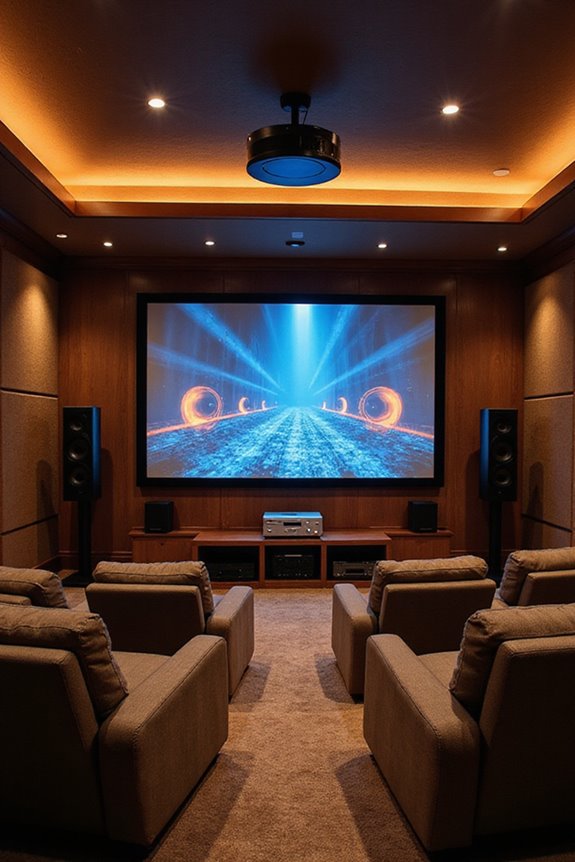
What Is Speaker Crossover?

A speaker crossover is an electronic circuit that splits audio signals into distinct frequency ranges. This guarantees each driver, like woofers and tweeters, receives suitable frequencies for the best sound quality. There are different types: passive crossovers use components like capacitors and inductors, while active crossovers offer more control and precision. These devices are essential for optimizing audio in systems such as home theaters and professional setups. Want to learn about the benefits and how to choose the right crossover?
Key Takeaways
- A speaker crossover is an electronic filter that divides audio signals into low, mid, and high frequency ranges for optimal sound quality.
- It ensures each speaker driver, like woofers or tweeters, receives only the appropriate frequencies, reducing distortion and enhancing the listening experience.
- There are several types of crossovers, including passive, active, digital, parallel, series, and hybrid, each with unique functionalities and applications.
- Crossovers improve clarity, protect speaker components, and increase system efficiency by allowing drivers to operate within their ideal frequency ranges.
- Choosing the right crossover depends on driver compatibility, desired crossover slopes, and specific system needs to optimize performance and longevity.
Definition of Speaker Crossovers
A speaker crossover is an essential component in audio systems that helps optimize sound quality. It’s an electronic filter circuit that divides audio signals into multiple frequency ranges, guaranteeing each speaker driver only receives the frequencies it’s designed to handle. This clever crossover design can notably enhance your listening experience.
There are two main types of speaker crossovers: passive and active.
- Passive Crossovers: Integrated into the speaker, no external power needed.
- Active Crossovers: Require power and offer more frequency adjustment flexibility.
Each crossover uses capacitors, inductors, and resistors to filter frequencies effectively. This precision prevents distortion, improves efficiency, and ensures that sound optimization is achieved, allowing us to revel in a rich, immersive audio experience. Systems with advanced audio technologies often utilize sophisticated crossovers to enhance overall sound quality.
Function of Speaker Crossovers
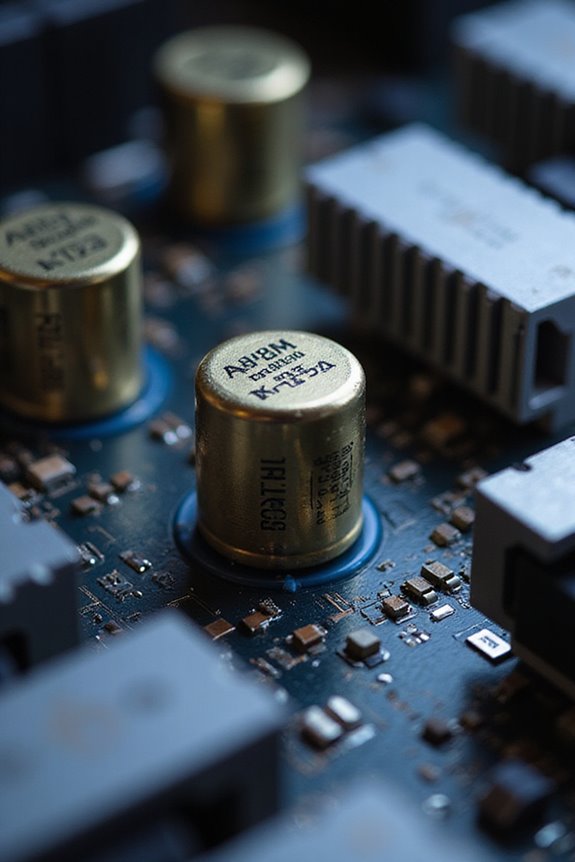
Understanding the function of speaker crossovers can greatly enhance your audio experience. These components split full-range audio signals into three distinct frequency bands: low, mid, and high. By routing each range to the appropriate drivers—woofers, midranges, or tweeters—we guarantee ideal sound reproduction.
Key benefits include:
- Frequency Separation: This prevents drivers from handling frequencies they can’t manage, reducing distortion and potential damage.
- Sound Clarity: Crossovers enable clearer, balanced audio, enhancing vocal and instrument clarity, and allowing for seamless shifts between frequency bands. Additionally, implementing a 5.1 surround sound system can further elevate your overall audio experience.
Types of Speaker Crossovers
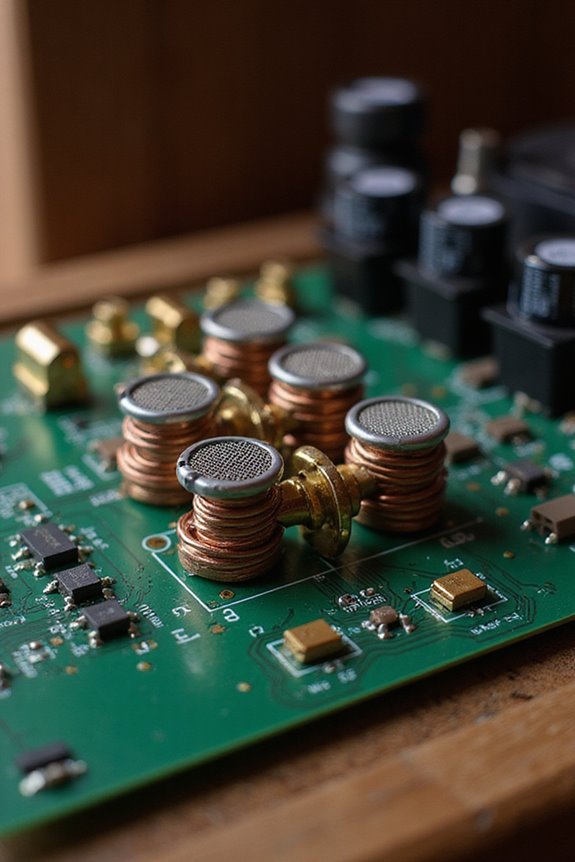
When we explore types of speaker crossovers, it’s essential to recognize that each design has unique features suited for different audio applications. Here’s a closer look at a few options:
- Active Crossovers: Use electronics to split audio signals before amplification, offering precise control over frequency response. Common in high-end systems.
- Digital Crossovers: Utilize DSP for accurate frequency division, allowing adjustments in phase and equalization for optimized sound.
- Parallel Crossovers: Feature filters for each frequency band, simplifying design and reducing interaction between components.
- Series Crossovers: Connect filters in sequence, influencing driver load and requiring careful tuning to balance frequency responses.
- Hybrid Crossovers: Combine active and passive elements, allowing flexible control while maintaining cost-effectiveness.
Additionally, understanding multi-channel systems can provide insights into how crossovers work to enhance audio quality and immersion.
Choosing the right crossover design enhances your audio experience greatly.
Passive Crossovers
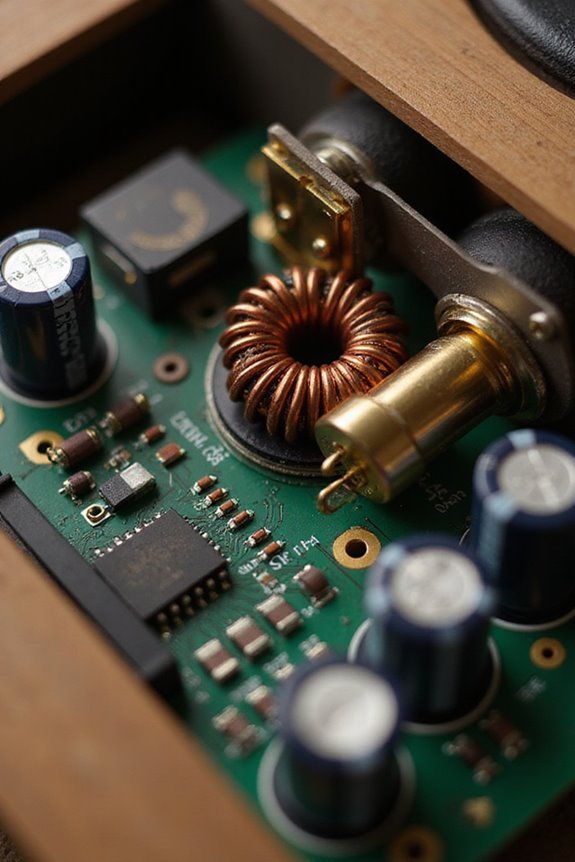
Passive crossovers play an essential role in audio systems by efficiently splitting amplified audio signals into designated frequency ranges. They sit between the amplifier and speaker drivers, ensuring that each driver only gets the frequencies it can handle, helping to reduce distortion and potential damage.
These crossovers utilize basic components like inductors, capacitors, and resistors for effective signal routing. Here’s a quick breakdown:
- Inductors block high frequencies, allowing low frequencies to pass.
- Capacitors do the opposite by blocking low frequencies while passing high frequencies.
- Resistors fine-tune signal levels.
Despite introducing some power loss, passive crossovers simplify installation, require no external power, and integrate well within speaker enclosures, making them convenient for many audio applications. Additionally, understanding speaker placement can greatly enhance the overall sound quality in a home theater system.
Active Crossovers
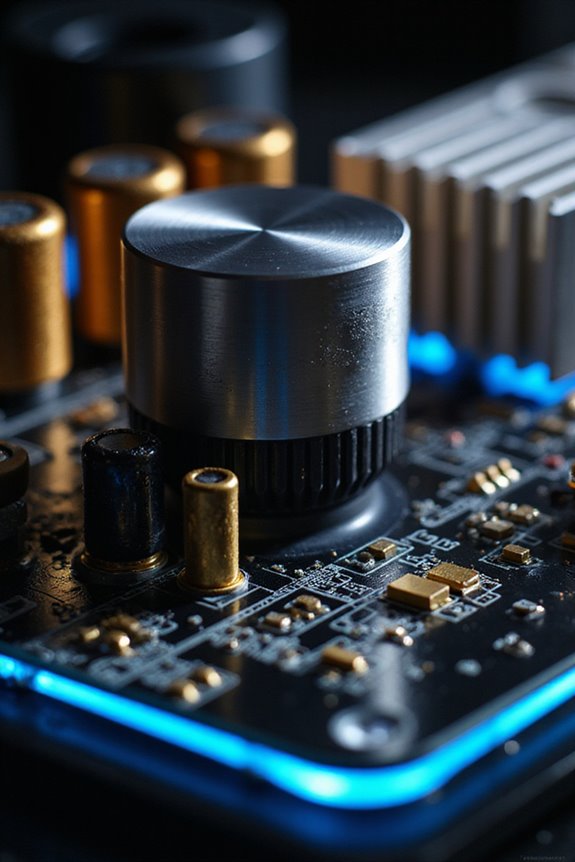
Active crossovers are an advanced solution for managing audio signals, ensuring each speaker driver receives the appropriate frequency range for ideal performance. Unlike passive versions, these active systems use electronic components like operational amplifiers to split audio signals at line-level, allowing for advanced filtering.
Key advantages include:
- Precise electronic filtering with steep slopes, enhancing frequency division.
- Dynamic tuning capabilities that allow you to adjust crossover frequencies and slopes effortlessly.
- Minimal noise and distortion, maintaining clarity in your audio experience.
You’ll often find active crossovers in professional audio and high-end home systems. They excel at integrating subwoofers and managing driver isolation, ultimately maximizing performance. With their flexibility, they adapt well to various acoustic environments, ensuring the best sound quality possible. Additionally, advanced calibration technology in receivers can further optimize sound performance in your setup.
Two-Way Crossovers
Two-way crossovers play an essential role in optimizing audio performance, particularly in speaker systems designed to deliver clear and balanced sound. They split an audio signal into two frequency ranges: low-mid for woofers and high for tweeters. This clever frequency allocation prevents overlap between drivers, reducing distortion for improved sound clarity.
Key Components:
- Inductors: Block high frequencies, send lows to the woofer.
- Capacitors: Block lows, allow highs to reach the tweeter.
- Resistors: Help with impedance matching and adjusting volume levels.
The crossover point, where low-pass and high-pass filters meet, guarantees each driver operates within its best range. This straightforward crossover design offers effective performance for hi-fi systems, PA systems, and portable speaker designs.
Three-Way Crossovers
When we consider audio systems, three-way crossovers expand on the functionality of two-way systems by dividing sound into three distinct frequency bands: low, midrange, and high. This setup allows for greater control and accuracy in sound reproduction. Here are some three-way advantages:
- Dedicated drivers for each frequency band improve efficiency and sound quality.
- You’ll enjoy tighter bass from the woofer, clearer midrange for vocals and instruments, and extended highs from the tweeter.
- Crossover settings are precisely chosen to guarantee smooth changes, avoiding frequency gaps.
Components of Speaker Crossovers
Speaker crossovers are essential components that help shape the audio experience by managing how sound is divided among different frequency ranges. In a typical crossover design, we use three main components: inductors, capacitors, and resistors.
- Inductors limit high-frequency signals, allowing low frequencies to pass, creating low-pass filters.
- Capacitors block low frequencies, enabling high frequencies to reach tweeters, functioning as high-pass filters.
- Resistors balance output levels across different drivers, guaranteeing smooth frequency shifts.
Together, these components guarantee proper frequency allocation, maintaining sound clarity and protecting each driver type. Passive crossovers do this without external power, making them simple yet effective choices for audio setups. Understanding these components can enhance your audio experience considerably.
Technical Details of Crossovers
Understanding the technical details of crossovers can greatly enhance our audio setups. Crossovers are essential for dividing audio signals into frequency ranges. Each range is aimed at specific drivers:
- Highpass filters protect tweeters by allowing only high frequencies.
- Lowpass filters direct bass to woofers to avoid distortion.
- Bandpass filters are used for midrange drivers in 3-way systems.
Crossover tuning involves selecting the right crossover frequency and slope for seamless sound. Common slopes include 12 dB/octave or 24 dB/octave to manage how quickly unwanted frequencies are reduced.
We should also consider filter design and component quality to guarantee clarity and performance. High-quality capacitors and inductors minimize distortion, guaranteeing our systems sound their best.
Applications of Speaker Crossovers
In multi-driver audio systems, crossovers play an essential role in delivering quality sound. They efficiently direct frequencies to woofers, midrange speakers, and tweeters. This separation maximizes each driver’s performance while reducing distortion.
You’ll find crossovers in various applications, including:
- Hi-fi speakers for home and car audio, providing realistic sound
- Professional audio gear to allocate frequencies for clarity
- Home theater systems ensuring balanced sound distribution
Advanced configurations often utilize active crossovers, enhancing signal routing for precise tuning. These systems can accommodate complex multi-way designs, supporting smooth frequency shifts and accurate sound imaging. By incorporating these technologies, we enhance our listening experiences, tailored perfectly to our unique environments and preferences.
Benefits of Using Speaker Crossovers
When we utilize speaker crossovers, we reveal numerous benefits that greatly enhance our audio experience. These include:
- Improved Sound Clarity and Detail: Crossover designs route frequency bands to the correct drivers, minimizing distortion and enhancing clarity. This guarantees balanced tonal accuracy across the spectrum.
- Protection of Speaker Components: Crossovers prevent unsuitable frequencies from reaching specific drivers, extending lifespan and reducing mechanical strain.
- Enhanced System Efficiency: By operating within their ideal frequency ranges, drivers achieve maximum speaker performance and better energy use.
- Increased Customization and Control: Active crossovers offer adjustable frequency points, allowing you to tailor sound tuning based on your preferences.
- Improved Overall Listening Experience: A well-designed crossover creates a more immersive soundstage, making your listening sessions more engaging and enjoyable.
Distinctions Between Active and Passive Crossovers
Active and passive crossovers each have distinct operational methods that impact sound quality and system structure.
- Passive Crossovers: These use resistors, coils, and capacitors to filter the amplified signal without needing extra power. They’re simpler to install, but have fixed crossover points, which limits flexibility.
- Active Crossovers: In contrast, they split the audio signal before amplification, requiring their own power. They provide greater control, allowing for precise tuning of frequencies and adding features like equalization.
Active systems improve audio efficiency by reducing distortion and optimizing power delivery for each driver. However, they can be more complex to install due to additional wiring and setup. Understanding these distinctions helps us choose a suitable crossover design for our audio systems.
Choosing the Right Crossover for Your System
Choosing the right crossover for your audio system is essential to achieving maximum sound quality. To enhance your listening experience, consider these key factors in crossover adjustments and frequency optimization:
- Driver Compatibility: Match crossover points to your speakers’ capabilities. Typical ranges include 70-80 Hz for subwoofers and 3-3.5 kHz for tweeters.
- Crossover Slopes: A gradual slope, like 12 dB/octave, guarantees smooth shifts, minimizing distortion.
- System Type: Different setups, such as home audio, car systems, and professional rigs, require tailored crossover frequencies.
Frequently Asked Questions
How Do I Install a Speaker Crossover?
To install a speaker crossover, let’s choose the right crossover types, plan our wiring path, and secure it properly. We’ll guarantee everything’s connected with care, making adjustments for ideal sound quality together.
Can I Build My Own Custom Crossover?
Absolutely, we can build our own custom crossover! Think of it like crafting a fine recipe; careful crossover design and component selection help us achieve that perfect audio flavor tailored just for our ears.
What Are the Signs of a Faulty Crossover?
We can spot a faulty crossover by monitoring for distortion, imbalances, or unusual warmth in speakers. Let’s use troubleshooting tips and consider crossover repairs to restore our audio experience to its intended glory.
Do Crossovers Affect Speaker Impedance?
Like a delicate dance, crossovers greatly affect speaker impedance. In our crossover design, we’re mindful of speaker resistance to guarantee audio performance remains clear, so we can all enjoy immersive sound together.
Are There Wireless Crossovers Available?
Yes, there are wireless crossovers available that leverage wireless technology to enhance crossover efficiency. These systems let us enjoy flexible speaker placement and improved sound quality without the hassle of tangled wires.