As an Amazon Associate, we earn from qualifying purchases. Some links on this site are affiliate links at no extra cost to you. Our recommendations are based on thorough research and editorial judgment.

What Is Speaker Power Handling?

Speaker power handling refers to how much electrical power a speaker can handle without damage. It’s vital for performance and involves several key ratings. The RMS rating indicates continuous power, while peak power shows short burst capability. Thermal handling relates to heat tolerance, and excursion limits define safe cone movement. Properly matching speakers to amplifiers is essential to prevent damage and maintain sound quality. There’s more to explore about ensuring durability and performance in your audio setup.
Key Takeaways
- Speaker power handling refers to the maximum electrical power a speaker can safely endure without damage.
- It is categorized into RMS, peak, and program power handling ratings for different usage scenarios.
- RMS power handling indicates continuous power a speaker can manage, ensuring reliability during extended use.
- Peak power handling reflects short bursts of power, typically four times the RMS rating, suitable for transient signals.
- Proper power handling ensures thermal limits are respected, preventing overheating and potential damage to speaker components.
Understanding Power Handling
Understanding power handling is crucial when it comes to getting the best performance from your speakers. When we talk about power handling, we’re referring to the maximum electrical power a speaker can endure without damage. It’s essential to know the thermal limits, as exceeding them can cause irreversible harm, like burning or melting the voice coil.
Key points to take into account include:
- Thermal Power Limits: Most electrical power is lost as heat. Efficient dissipation is necessary.
- RMS vs. Peak Power: RMS indicates safe continuous power, while peak power reflects short bursts.
- Impedance Impact: Lower impedance means higher power draw, affecting overall power handling.
Matching your speakers with the right amplifier is crucial for peak sound quality and longevity. Additionally, understanding advanced surround sound formats can enhance your overall audio experience by ensuring your system is optimized for various types of media.
Types of Power Handling
When you choose speakers, knowing the different types of power handling can greatly influence your sound experience. Let’s break down the key types:
- RMS Power Handling: This measures continuous power a speaker can handle safely, representing sustainable levels for long-term use. It’s often the most reliable rating for matching speakers and amplifiers.
- Peak Power Handling: This indicates the maximum power for short bursts, typically about four times the RMS value. It’s more of a marketing figure.
- Program Power Handling: This falls between RMS and peak ratings, measuring the maximum power for more extended bursts and giving practical amplifier guidance.
Understanding these types of power handling helps enhance your audio experience, especially when measuring peak performance! Additionally, proper power handling capacity is crucial for ensuring distortion-free audio, especially at higher volumes.
Thermal Power Handling Explained
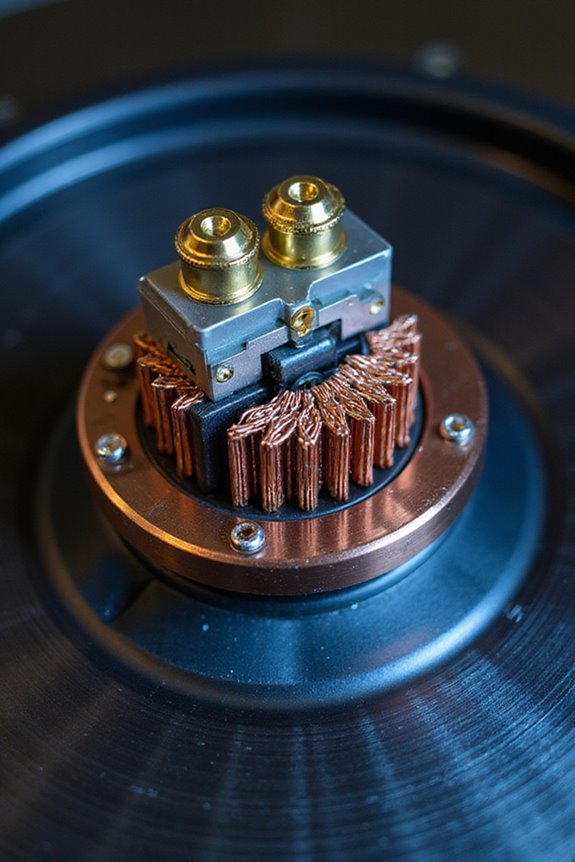
Thermal power handling is essential for ensuring your speakers perform well without risking damage from overheating. It refers to the maximum continuous power a speaker’s voice coil can endure before overheating occurs. The inefficiency of speaker design means that most electrical power generates heat rather than sound, primarily in the voice coil winding.
Key features include:
- Voice Coil Design: Materials like copper or aluminum dissipate heat, but excess heat can melt insulation or deform the coil.
- Thermal Efficiency: Effective heat transfer involves components such as the voice coil former and T-yoke, ensuring proper cooling.
Choosing the right amplifier is vital. This helps prevent thermal overload, maximizing sound quality while protecting your speakers. Additionally, understanding the amplification requirements of your speakers can also aid in preventing overheating issues.
Excursion Power Handling Overview
Excursion power handling is a crucial aspect of speaker performance that you shouldn’t overlook. It defines how well a speaker’s cone can move without damaging itself. Understanding excursion limits is essential to prevent failure.
- Xmax explanation: This refers to the maximum linear movement of the cone with less than 10% distortion.
- Xlim is where the excursion limit lies, indicating the highest movement without mechanical damage.
Low frequencies require greater cone movement, increasing the risk of over-excursion damage if driven too hard. Remember, providing too much power can lead to physical harm like cone tearing or surround detachment. Always consider both thermal and excursion limits to make sure the speakers operate safely and effectively in your audio setup for that ideal listening experience. Additionally, understanding resolution support can help in optimizing audio-visual performance in your home theater system.
RMS vs. Peak Power Ratings
Understanding power ratings is key to optimizing your audio experience. When we talk about RMS, or Root Mean Square power, we’re discussing the continuous power a speaker can handle without distortion, reflecting average output during normal playback. The rms advantages include cleaner sound at high volumes and better performance in real-world conditions.
On the other hand, peak power represents the maximum output for brief moments. However, it brings peak limitations, as sustained exposure can lead to overheating and damage. Typically, RMS ratings are about half of peak ratings. Consequently, when matching speakers and amplifiers, focusing on RMS guarantees reliability and sound quality instead of just chasing high peak figures. By prioritizing RMS, we safeguard our equipment and enhance our listening experience. Additionally, considering customizable sound options can further improve your audio experience by allowing tailored settings based on your preferences.
The Importance of Impedance
When you’re setting up an audio system, the importance of speaker impedance can’t be overstated. Understanding different impedance types, like 4, 6, 8, and 16 ohms, helps us make informed choices. Lower impedance usually means more current flow, enhancing volume and dynamic range, but it can also lead to overheating or distortion if our amplifier isn’t compatible. Higher impedance reduces strain on the amplifier and can produce cleaner sound, but at the cost of lower volume.
Impedance effects can greatly impact overall performance and sound quality. Mismatched impedance between speakers and amplifiers can result in distortion or damage. Keeping our components within the appropriate impedance range guarantees a balanced, high-quality audio experience that we’ll all appreciate.
Matching Amplifiers and Speakers
Matching amplifiers and speakers is vital for achieving the best sound quality in any audio setup. To guarantee compatibility, you should consider amplifier ratings relative to your speaker’s RMS power handling. Ideally, the amplifier’s output should be between 75% and 150% of the speaker’s rating.
Speaker sensitivity plays an important role, too. Higher sensitivity means you’ll need less power to reach your desired volume, allowing for the best sound without distortion. Misunderstanding these factors could lead to damaging equipment or poor sound quality. Remember, having an amplifier with a bit of headroom is better than one that clips at high volumes. By keeping these guidelines in mind, we can create a setup that sounds amazing and lasts longer.
Practical Power Handling Tips
Guaranteeing that your speakers can handle power properly is key to optimizing audio performance. To enhance speaker longevity, consider these practical power management tips:
- Match Power Ratings: Use an amplifier that slightly exceeds your speaker’s continuous rating—this prevents distortion during dynamic audio playback.
- Stay Within Limits: Operate speakers at about 60% of their rated power. This practice guarantees longevity and maintains sound quality.
- Monitor Excursion: Be aware of your speaker’s excursion limits. Controlling volume and signal dynamics helps prevent mechanical damage.
- Watch for Clipping: Clipping from underpowered amplifiers can cause voice coil damage. Avoid pushing your system near maximum ratings continuously.
Common Causes of Speaker Damage
Speaker damage can occur for a variety of reasons, and understanding these causes is essential for preserving your audio equipment. Here are some common issues we should be aware of:
- Physical Trauma: Dropping speakers can cause cabinet damage and misalign the voice coil, resulting in mechanical failure.
- Environmental Degradation: Moisture exposure can lead to corrosion, while dust intrusion damages the coil by scraping insulation.
- Electrical Hazards: Overpowering a speaker generates excessive heat, potentially burning the voice coil, while underpowering with distortion can stress components.
Evaluating Speaker Specifications
When evaluating speaker specifications, it’s important to explore several key factors that determine performance and safety. Two vital aspects are speaker sensitivity and frequency response.
- Speaker Sensitivity: This measures how efficiently a speaker converts power into sound. Higher sensitivity means louder sound at lower power.
- Frequency Response: This indicates the range of sound frequencies a speaker can reproduce. A wider frequency response leads to richer sound, so you want speakers that cover both low bass and high treble.
Enhancing Speaker Durability
To enhance the durability of our speakers, we need to focus on several key factors that contribute to their longevity and performance.
Cooling Techniques
Implementing larger voice coils and incorporating cooling vents in the assembly can greatly reduce thermal buildup. This helps improve power handling and prevents overheating.
Material Enhancements
Using high-quality materials, like robust surrounds and heat-resistant adhesives, boosts resistance to mechanical wear and thermal stress. Rigid yet lightweight cones also improve efficiency by minimizing unwanted vibrations.
Proper Matching
Finally, it’s crucial to match the speaker’s power handling with the amplifier to avoid damage. Balance in impedance ensures efficient power transfer, reducing heat stress and extending our speaker’s lifespan.
Frequently Asked Questions
How Does Power Handling Affect Sound Quality?
Power handling significantly affects sound quality, ensuring ideal sound dynamics and minimizing distortion levels. When we properly match our speakers, we enjoy clear, rich audio without risking damage, allowing us to share great experiences together.
Can Power Handling Ratings Vary Between Different Speaker Brands?
Absolutely, power handling ratings can widely differ between brands, much like how each individual’s taste in music varies. In our brand comparisons, we should scrutinize those power ratings to guarantee they align with our audio dreams.
What Is the Impact of Environment on Speaker Power Handling?
Weather conditions and acoustics considerations play a huge role in speaker power handling. We must remember that high ambient noise levels demand more from our speakers, ensuring clarity and preventing unwanted distortion in various environments.
How Can I Test a Speaker’s Power Handling Capability?
To truly uncover a speaker’s power handling capabilities, we’ll initiate a journey of speaker testing, including impedance measurement. Together, we’ll guarantee our sound systems are robust and ready to deliver auditory bliss.
Do Passive Speakers Have Different Power Handling Than Active Speakers?
Yes, passive speakers’ power handling differs from active speakers. We must consider speaker impedance and amplifier compatibility. Passive systems allow for flexibility, but active speakers optimize performance with their built-in amp, ensuring consistent power delivery.