As an Amazon Associate, we earn from qualifying purchases. Some links on this site are affiliate links at no extra cost to you. Our recommendations are based on thorough research and editorial judgment.


What Is RF Remote Control?

RF remote controls use radio waves to transmit signals, allowing you to operate devices without needing a direct line of sight. These remotes are common in home automation, security, and automotive systems, functioning effectively through walls and furniture. They offer long-range capabilities, typically up to 100 meters, and support multiple devices. Equipped with modulation and decoding technology, RF remotes guarantee reliable control of various appliances. Let’s explore their components and applications further.
Key Takeaways
- RF remote controls use radio waves for signal transmission, allowing operation without direct line of sight to devices.
- They are commonly used in home automation, industrial machinery, and smart devices for convenience and security.
- RF remotes can operate multiple devices simultaneously, reducing clutter and enhancing user experience.
- Typical frequencies for RF remotes include 315 MHz, 433 MHz, and 2.4 GHz, with ranges up to 100 meters.
- Security features like rolling codes and strong cryptography are essential to protect against interception and command injection.
Definition of RF Remote Control
When we talk about RF remote controls, we’re referring to a technology that greatly enhances how we interact with various devices. Unlike infrared (IR) remotes, RF remotes use radio waves to transmit signals, which allows for more flexibility. They can operate without needing a direct line of sight, enabling control through walls and furniture, making them ideal for home automation systems, industrial machinery, and smart home devices.
Historically, RF remotes have evolved to support longer ranges—up to 50 meters—and higher data rates. This applications overview shows how RF technology is used across many areas, catering to our needs for reliable communication without obstacles. As a result, they’re becoming increasingly popular in both everyday and advanced tech environments. Many universal remotes now incorporate features like dedicated streaming hotkeys, showcasing the versatility of remote control technology.
Components of RF Remote Control
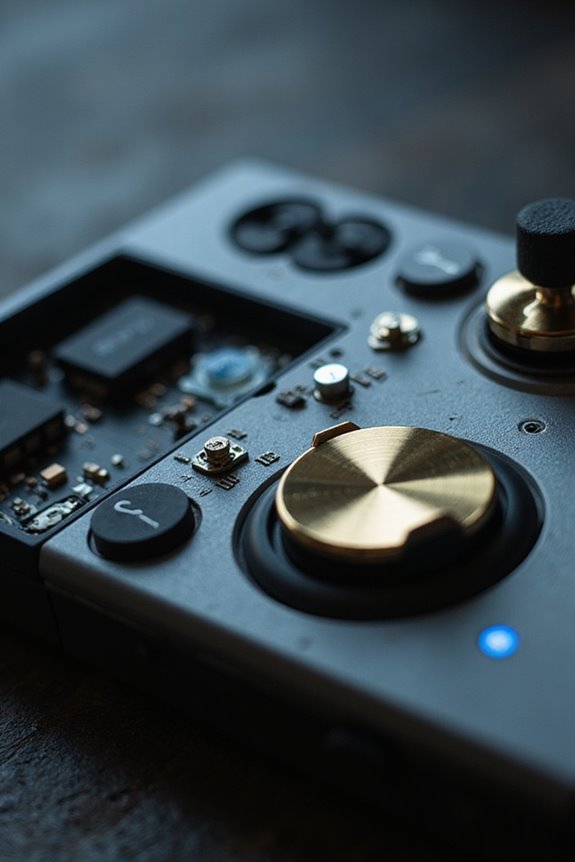
Understanding the components of RF remote controls is vital for appreciating how this technology operates. The key elements include:
- Transmitter Design: This component sends out radio signals using frequencies like 315 MHz, 433 MHz, or 2.4 GHz. It contains an RF oscillator, modulation circuits, and an integrated antenna, which are all important for effective communication.
- Receiver Technology: The receiver interprets these signals into actionable commands, employing RF decoding modules and microcontrollers. Decoder chips guarantee accurate signal processing through demodulation and error checking.
These components work together seamlessly, allowing us to control various devices effortlessly. With user-friendly interfaces, reliable antennas, and fundamental electronic components like resistors and capacitors, RF remote controls create a connected experience you can appreciate every day. Additionally, many universal remotes are designed to enhance usability with ergonomic forms and backlit buttons, making them more accessible for users.
How RF Remote Controls Work

RF remote controls function through a combination of signal transmission and processing techniques, making them powerful tools for controlling a variety of devices. Here’s how they work:
- Signal Transmission: When you press a button, the remote’s microcontroller converts this action into digital signals. These signals modulate an RF carrier frequency, which is then broadcast via an antenna.
- Signal Reception: The receiver’s antenna captures the transmitted RF signal. A demodulator extracts the digital command, which a microcontroller interprets into actionable instructions.
- Range Measurement: RF signals can travel tens to hundreds of meters, easily passing through walls and obstacles. This flexibility allows you to control devices out of direct sight, enhancing your overall remote experience. Additionally, acoustic panels can improve sound clarity in home theaters, which may be controlled by RF remote systems for a seamless experience.
Advantages of RF Remote Control
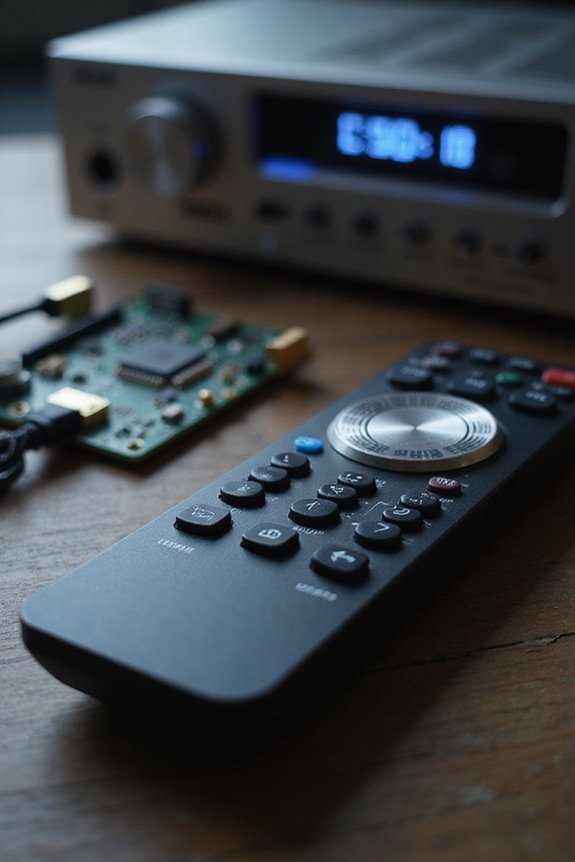
One of the standout features of RF remote controls is their remarkable convenience and ease of use. We can control devices without needing a direct line of sight, so you’re free to operate them through walls or from another room. Here are some amazing user benefits you might appreciate:
- Multi-device control eliminates clutter, allowing you to manage numerous appliances with one remote.
- Customization options enhance user experience, letting you assign specific functions to quick-access buttons.
- Impressive long-range capabilities let you control devices from up to 100 meters away.
- Longer battery life means fewer replacements, making your life simpler and more sustainable.
- With limited edition collectibles available, enthusiasts can enjoy enhanced experiences while managing their favorite devices.
With these advantages, we can elevate your daily routines and make managing your devices a breeze.
Frequency Ranges Used in RF Remote Control
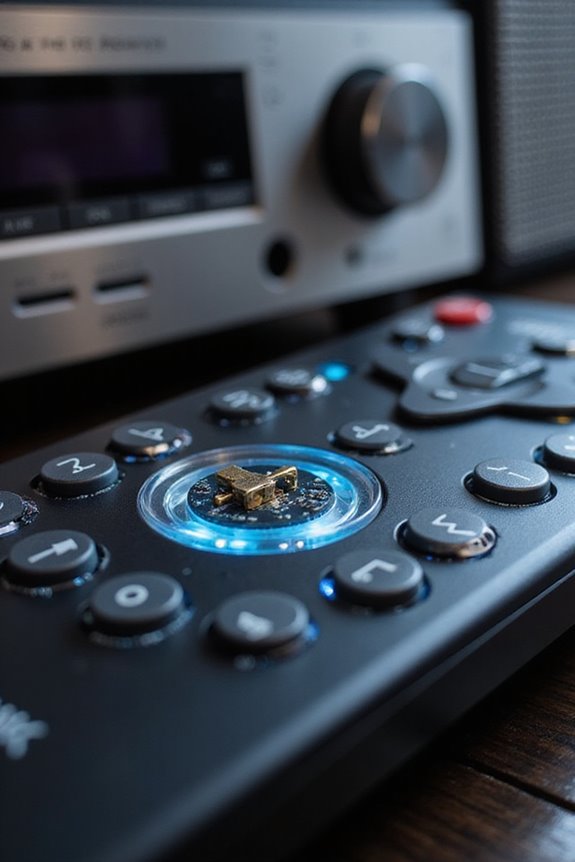
When it comes to RF remote controls, the frequency ranges used are key to their performance and functionality. Here’s a breakdown of common frequencies:
- 433 MHz: Widely used for short to medium distances, ideal for home automation and security applications.
- 868 MHz and 915 MHz: Preferred for longer-range, industrial use due to better interference management.
Lower frequencies like 433 MHz typically propagate further than higher ones, but higher frequencies can support faster data rates. When selecting frequencies, we must balance range, data needs, and the potential for interference. Regulatory compliance also matters; certain bands are unlicensed, while others require adherence to regional rules. Understanding frequency selection helps us optimize our devices for the best user experience. Additionally, many universal remotes offer multi-device control features that enhance their usability across various entertainment systems.
Transmission Power and Its Impact
Understanding the impact of transmission power is essential for optimizing the performance of RF remote controls. Transmission power levels typically range from milliwatts (mW) to a few hundred mW. For example, a 79 mW transmitter can enable communication over 600 feet, while lower power outputs may only cover tens of meters indoors.
When we look at modulation techniques, power increases lead to a stronger signal-to-noise ratio (SNR), enhancing reliability. However, more power can also raise interference risks, especially in crowded environments. It’s vital to balance desired range and battery life, as higher power demands more energy, impacting battery efficiency. Ultimately, understanding these transmission characteristics helps us choose the right RF remote control for our needs.
Common Applications of RF Remote Control
RF remote controls find their way into various industries and everyday applications, making life easier and operations more efficient. In industrial automation, they allow safe operation of heavy machinery while enhancing precision. In automotive systems, they support keyless entry and remote start features, improving security.
Healthcare and medical devices utilize these remotes to wirelessly operate equipment from a distance, fostering better caregiver efficiency.
In home and building automation, they control lights, thermostats, and security systems, creating seamless experiences. Convenience features like programmable timers enhance user satisfaction.
Moreover, RF remote controls play an essential role in security systems, ensuring secure access to gated areas or garage doors. They’re integral to modern technology in many aspects of our lives.
RF Remote Control in Consumer Electronics
How can we make our everyday electronics more convenient? RF remote control offers a user-friendly solution for managing multiple consumer devices like TVs, audio systems, and streaming boxes. Unlike traditional remotes, RF technology doesn’t require direct line-of-sight, letting us enjoy control from different rooms or even through furniture.
Benefits of RF Remotes:
- Greater Range: RF signals can penetrate walls, providing flexibility in operation.
- Multi-device Control: One RF remote can manage several devices, streamlining our experience.
- Reliable Performance: With higher interference immunity, RF remotes outperform infrared, Wi-Fi, or Bluetooth in most home environments.
As we move towards a smarter living space, RF remote technology enhances our interaction with consumer electronics, making life easier and more intuitive.
RF Remote Control in Automotive and Security Systems
In today’s fast-paced world, convenience and security are key components in our automotive and security systems. We rely on RF remote controls for various applications that enhance our daily experiences.
Automotive Convenience:
- Keyless entry allows us to lock or gain access to car doors without using mechanical keys.
- Remote start systems enable us to start engines from a distance, improving climate control.
Security Enhancement:
- RF remotes in alarm systems let us arm and disarm security devices remotely, ensuring peace of mind.
- Access control systems use RF key fobs for secure entry to restricted areas.
With features like rolling code encryption and seamless integration with vehicle networks, RF remote controls provide a reliable and convenient solution for both automotive and security needs.
RF Remote Control in Industrial Applications
As we explore RF remote control applications in industrial contexts, it becomes evident that these devices play a significant role in enhancing operational safety and efficiency.
- Improved Industrial Safety: RF remote controls allow you to operate heavy machinery from a safe distance, reducing risks in hazardous environments like oil drilling or construction. With emergency stop functions, they meet SIL 2 or SIL 3 safety standards, ensuring a quick response during emergencies.
- Enhanced Remote Ergonomics: Operating multiple machines simultaneously boosts productivity, reducing downtime without relocating operators. You’ll find RF controls in cranes, lifting equipment, and logistics, optimizing processes.
These ruggedized devices are built to last in harsh conditions, ensuring reliability and secure communication essential for safe industrial operations.
Limitations of RF Remote Control
While RF remote controls offer significant benefits in various applications, they come with several limitations that can impact performance and usability. For instance, we face interference challenges from devices like Wi-Fi routers and microwaves. This interference can lead to missed commands, degrading your experience.
Additionally, the signal range is often limited by environmental factors, such as walls or metal objects, affecting effective connectivity. Battery optimization is another concern; frequent replacements can be inconvenient and costly. Power-hungry features can consume energy quickly, decreasing battery life.
To maintain consistent performance, careful attention is needed for receiver placement, ensuring peak signal delivery. Understanding these limitations helps us appreciate the context in which RF remotes operate.
Security Considerations for RF Remote Control
Security in RF remote controls is critical, especially considering the vulnerabilities that can be exploited. We face three main flaws: no rolling code, weak cryptography, and insufficient software protection. These create risks like command injection and replay attacks, which let unauthorized users control systems without permission.
To enhance security, we should conduct vulnerability assessments and implement robust security protocols. Here are essential measures:
- Rolling Codes: Prevents replay attacks by changing the code.
- Strong Cryptography: Secures command transmissions, making interception nearly impossible.
- Software Protections: Includes firmware integrity checks and secure updates.
Frequently Asked Questions
Can RF Remote Controls Work Through Walls and Obstacles?
Yes, RF remote controls can work through walls and obstacles, thanks to their wall penetration capabilities. However, we should be mindful of potential signal interference, which can affect performance and range in complex environments.
How Do RF Remote Controls Differ From Infrared Remotes?
RF remotes are like wizards, effortlessly casting commands through walls, while infrared remotes cling tightly to line-of-sight. With frequency modulation, RF risks signal interference, but that flexibility makes us feel so connected to our tech!
What Factors Affect the Range of RF Remote Control?
When it comes to RF remote controls, we’ve found that factors like signal interference and the choice of frequency bands profoundly affect range. Understanding these can help us optimize our remote control experiences together.
Are RF Remote Controls Compatible With All Devices?
No, RF remote controls aren’t universally compatible. Each device has its quirks, often tied to specific remote brands. Let’s navigate these compatibility challenges together, ensuring we find the right connection for our shared tech adventures!
How Can I Enhance the Security of My RF Remote Control?
To enhance our RF remote control security, we should employ secure transmission techniques and strong encryption methods. By integrating these practices, we can markedly reduce unauthorized access and guarantee our communications remain private and protected.